Source scans · vol_II_p093
recto · open full
scan recto
verso · open full
scan verso
Bṛhaddeśī · Volume II
pp. 168–169folio 093
Devanāgarī (Bṛhaddeśī)
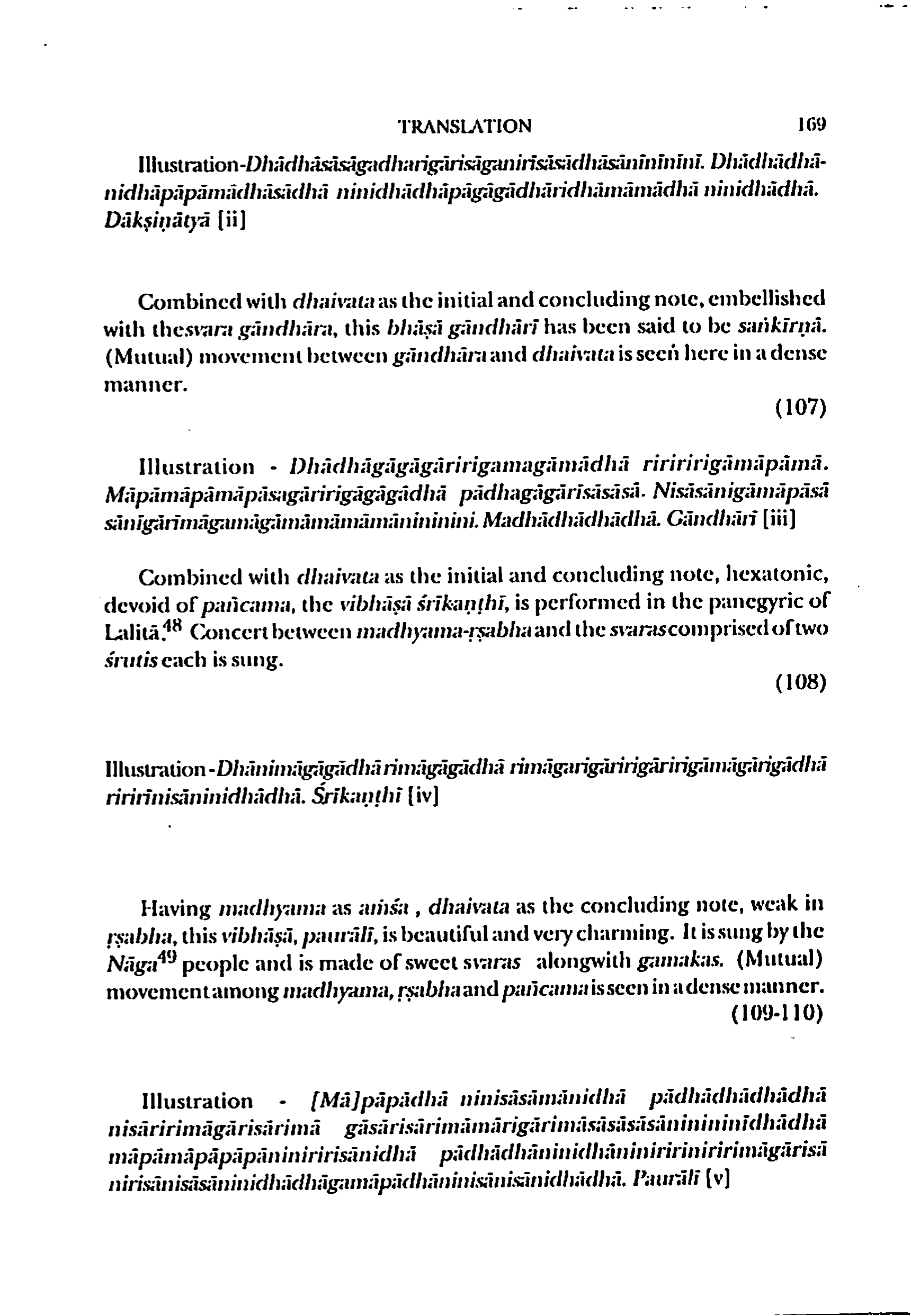
उदाहरणम् - धाधासासागधरिगारिसागनिरीसासाधासानीनीनी धाधाधानिधापापामाधासाधा निनिधाधापागागाधारिधामामाधा निनिधाधा । दाक्षिणात्या । [२]
धैवताद्यन्तसंयुक्ता गान्धारस्वरभूषिता ।
गन्धारधैवतस्यात्रगान्धारो•क्षेति गमनं दृश्यते घनम् ॥
भाषा ह्येषाहा + तु सङ्कीर्णा गान्धारी समुदाहता ॥१०७॥4 उदाहरणम् – धाधागागागिरिगमगामाधा रिरिरिरगामापामा मापामापामापासगारिरिगागागाधापाधागागा रीसासासानिसासानिगामापासासानीगारीमागमागामा मामामानिनिनिन। मधाधाधाधा। गान्धारी । [३]
धैवताद्यन्तसंयुक्ता षाडवा पञ्चमोज्झिता॰माहिता
मध्यमर्षभसंवादो द्विश्रुतीनां च गीयते ॥
१८विभाषा चैव श्रीकण्ठी॰कण्ठे प्रयोगे ललितास्तुते31 ॥१०८॥ उदाहरणम् -धानिमागागाधा रिमागागाधा रिमागरिगारिरिगारिरिगामागारिगाधा रिरिरीनिसा- निनिधाधा। श्रीकण्ठी । [४]
९९मध्यमांशा धैवतान्ता10 ऋषभेण तु दुर्बला(तु)
मध्यमर्षभपञ्चमानां•पञ्चमगमनं गमनं दृश्यतेदुश्यतेन्धनम् घनम्9 ॥१०९॥
एषा विभाषा पौराली रम्या चातिमनोहराचा(नि?ति)
गीयते नागलोकेन गमकैर्मधुरस्वरा112गधकै ॥११०॥ उदाहरणम् - [मा]पापाधा निनिसासामानिधा पाधाधाधाधा निसारिरिमागारिसारिमागासारिसारि- मामारिगारिमा सासासासानिनिनिनीधाधा मापामापापापानिनिरिरिसानिधा पाधाधानिनिधा निनिरि- रिनिरि रिमागारिसा निरिसानिसासानिनिधाधा गमापाधानिनिसानिसानिधाधा। पौराली । [५]
ordered sequence list
udāharaṇam svara sequence — Example phrase following verse, labeled [2], associated with dākṣiṇātyā
d · h · a
d · h · a
s · a
s · a
g · a
d · h · a
g · a
r · i
s · a
g · a
n · i
r · i
s · a
s · a
s · a
n · i
n · i
n · i
n · i
d · h · a
d · h · a
d · h · a
n · i
p · a
p · a
p · a
d · h · a
s · a
n · i
n · i
d · h · a
p · a
d · h · a
g · a
g · a
g · a
d · h · a
r · i
s · a
s · a
n · i
r · i
n · i
r · i
s · a
d · h · a
g · a
— udāharaṇam ... [2]
ordered sequence list
udāharaṇam svara sequence — Example phrase following verse 107, labeled [3], gāndhārī
d · h · a
d · h · a
n · i
r · i
r · i
r · i
g · a
m · a
p · a
p · a
m · a
m · a
m · a
p · a
g · a
r · i
r · i
r · i
g · a
m · a
r · i
s · a
s · a
n · i
n · i
n · i
r · i
g · a
p · a
p · a
s · a
s · a
n · i
g · a
r · i
p · a
m · a
m · a
m · a
n · i
n · i
n · i
n · i
m · a
d · h · a
d · h · a
?
— udāharaṇam ... [3]
ordered sequence list
udāharaṇam svara sequence — Example phrase following verse 108, labeled [4], śrīkaṇṭhī
d · h · a
n · i
m · a
g · a
m · a
g · a
r · i
m · a
g · a
r · i
g · a
r · i
g · a
m · a
g · a
r · i
g · a
r · i
d · h · a
r · i
r · i
r · i
n · i
s · a
n · i
n · i
d · h · a
n · i
s · a
— udāharaṇam ... śrīkaṇṭhī [4]
ordered sequence list
udāharaṇam svara sequence — Example phrase following verse 110, labeled [5], pauralī
m · ā
p · a
p · a
d · h · a
p · a
d · h · a
p · a
d · h · a
p · a
n · i
s · a
r · i
r · i
m · a
s · a
r · i
g · a
s · a
r · i
s · a
r · i
s · a
r · i
s · a
s · a
r · i
m · a
m · a
r · i
s · a
s · a
s · a
n · i
n · i
n · i
d · h · a
d · h · a
m · a
p · a
m · a
p · a
n · i
r · i
n · i
?
n · i
n · i
r · i
m · a
r · i
m · a
s · a
r · i
m · a
s · a
n · i
r · i
s · a
n · i
n · i
d · h · a
g · a
m · a
p · a
n · i
n · i
s · a
s · a
n · i
n · i
d · h · a
?
— udāharaṇam [mā]... pauralī [5]
English — Sharma (translation)
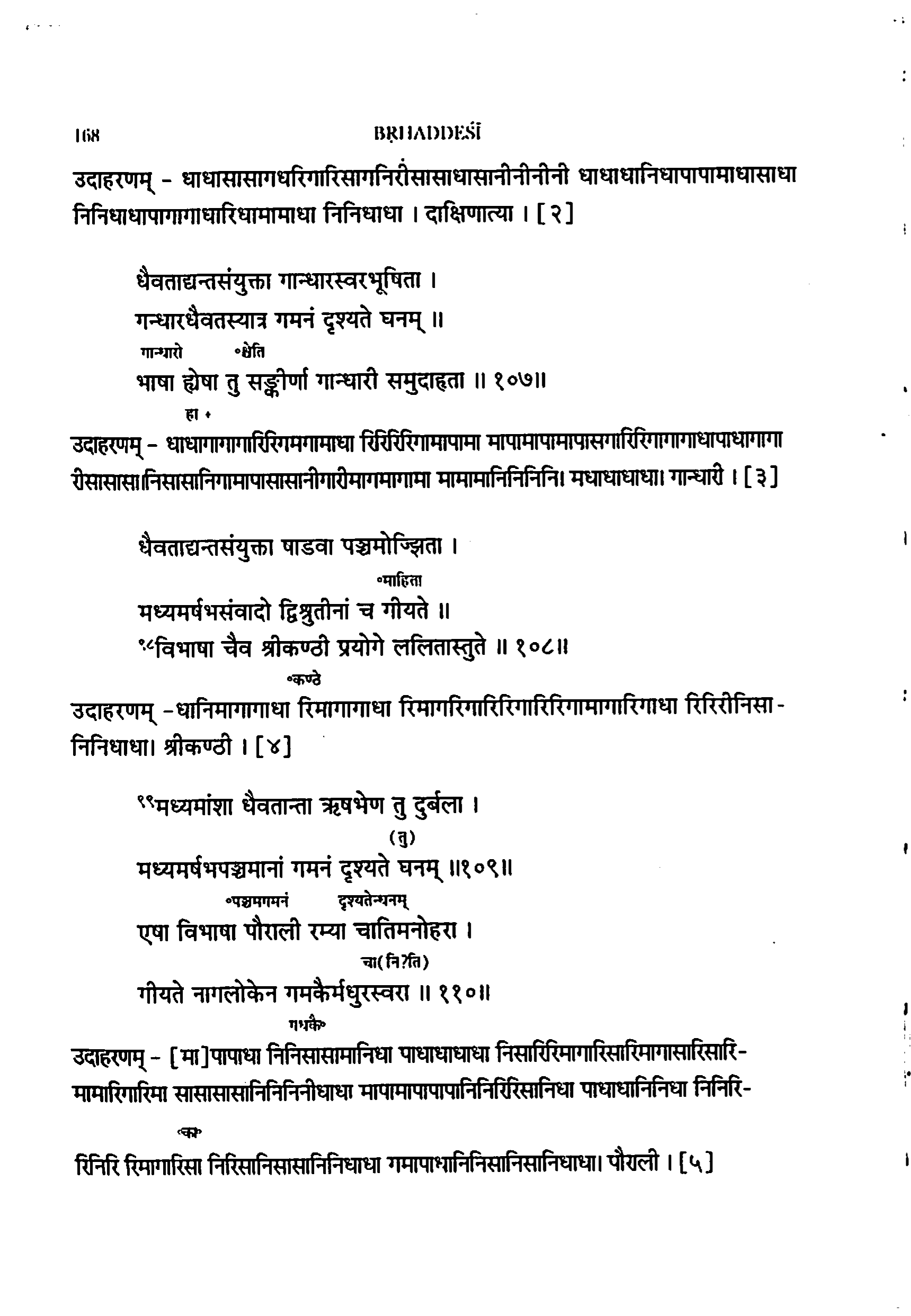
Illustration-Dhādhāsāsāgadharigārisāganirīsāsādhāsānīnīnīnī. Dhādhādhā- nidhāpāpāmādhāsādhā ninidhādhāpāgāgādhāridhāmāmādhā ninidhādhā. Dākşiņātyā [ii] Combined with dhaivata as the initial and concluding note, embellished with thesvara gāndhāra, this bhāṣā gāndhārī has been said to be sankīrṇā.5 (Mutual) movement between gändhära and dhaivata is seen here in a dense manner.6
(107)
Illustration - Dhādhāgāgāgāririgamagāmādhā ririririgāmāpāmā. Māpāmāpāmāpāsagāririgāgāgādhā pādhagāgārīsāsāsā. Nisāsānigāmāpāsā sānīgārīmāgamāgāmāmāmāmānininini. Madhādhādhādhā. Gāndhārī [iii] Combined with dhaivata as the initial and concluding note, hexatonic, devoid of pañcama, the vibhāṣā śrīkaṇṭhī7, is performed in the panegyric of Lalitā31. 48 Concert between madhyama-ṛṣabha and the svaras comprised of two śrutis each is sung.
(108)
Illustration-Dhānimāgāgādhā rimāgāgādhā rimāgarigāririgānināgārigādhā ririrīnisāninidhādhā. Šrīkaņţhī [iv] Having madhyama as amśa, dhaivata as the concluding note, weak in ṛṣabha, this vibhāṣā, paurālī, is beautiful and very charming. It is sung by the Nāga49 people and is made of sweet svaras alongwith gamakas11. (Mutual) movementamong madhyama, ṛṣabha and pañcama is seen in a dense manner.9 <math>(109-110)</math> Illustration - [Mā]pāpādhā ninisāsāmānidhā pādhādhādhādhā nisāririmāgārisārimā gāsārisārimāmārigārimāsāsāsāsāninininīdhādhā māpāmāpāpāpāniniririsānidhā pādhādhāninidhāniniririniririmāgārisā nirisānisāsāninidhādhāgamāpādhāninisānisānidhādhā. Paurāli [v]
1.[attribution] Śrīkaṇṭhī is performed in the context of panegyric of Lalitāविभाषा चैव श्रीकण्ठी प्रयोगे ललितास्तुते
2.[attribution] Paurālī is attributed to the Nāga people and is characterized by sweet svaras with gamakasगीयते नागलोकेन गमकैर्मधुरस्वरा
3.[definition] vibhāṣā is a category of melodic type (bhāṣā) that has multiple named varietiesविभाषा चैव श्रीकण्ठी प्रयोगे ललितास्तुते
4.[enumeration] vibhāṣā is an enumeration that includes at least four varieties: Gāndhārī, Śrīkaṇṭhī, Paurālī, and Dākşiņātyāभाषा ह्येषा तु सङ्कीर्णा गान्धारी समुदाहता ॥ १०७॥
9.[structural] Paurālī shows dense mutual movement among madhyama, ṛṣabha and pañcamaमध्यमर्षभपञ्चमाना गमनं दृश्यते घनम्
10.[structural] aṁśa is a structural property of vibhāṣā types that can be assigned to specific svarasमध्यमांशा धैवतान्ता
11.[structural] gamakas are melodic ornaments that are characteristically employed in certain vibhāṣā typesगमकैर्मधुरस्वरा
1.[attribution]Śrīkaṇṭhī is performed in the context of panegyric of Lalitāthe vibhāṣā śrīkaṇṭhī, is performed in the panegyric of Lalitā
2.[attribution]Paurālī is attributed to the Nāga people and is characterized by sweet svaras with gamakasIt is sung by the Nāga49 people and is made of sweet svaras alongwith gamakas.
3.[definition]vibhāṣā is a category of melodic type (bhāṣā) that has multiple named varietiesthe vibhāṣā śrīkaṇṭhī, is performed in the panegyric of Lalitā
4.[enumeration]vibhāṣā is an enumeration that includes at least four varieties: Gāndhārī, Śrīkaṇṭhī, Paurālī, and Dākşiņātyāthis bhāṣā gāndhārī has been said to be sankīrṇā. (107) Illustration - Dhādhāgāgāgāririgamagāmādhā ... Gāndhārī [iii] Combined with dhaivata as the initial and concluding note, hexatonic, devoid of pañcama, the vibhāṣā śrīkaṇṭhī
5.[structural]Dākşiņātyā is a bhāṣā that is combined with dhaivata as initial and concluding note and embellished with gāndhāraCombined with dhaivata as the initial and concluding note, embellished with thesvara gāndhāra, this bhāṣā gāndhārī has been said to be sankīrṇā.
6.[structural]Gāndhārī shows dense mutual movement between gāndhāra and dhaivata(Mutual) movement between gändhära and dhaivata is seen here in a dense manner.
7.[structural]Śrīkaṇṭhī is hexatonic and devoid of pañcama, with dhaivata as initial and concluding noteCombined with dhaivata as the initial and concluding note, hexatonic, devoid of pañcama, the vibhāṣā śrīkaṇṭhī
8.[structural]Paurālī has madhyama as aṁśa and dhaivata as concluding note, weak in ṛṣabhaHaving madhyama as aṁśa, dhaivata as the concluding note, weak in ṛṣabha, this vibhāṣā, paurālī
9.[structural]Paurālī shows dense mutual movement among madhyama, ṛṣabha and pañcama(Mutual) movementamong madhyama, ṛṣabha and pañcama is seen in a dense manner.
10.[structural]aṁśa is a structural property of vibhāṣā types that can be assigned to specific svarasHaving madhyama as aṁśa, dhaivata as the concluding note
11.[structural]gamakas are melodic ornaments that are characteristically employed in certain vibhāṣā typesand is made of sweet svaras alongwith gamakas