[2. Māngālī]
Having
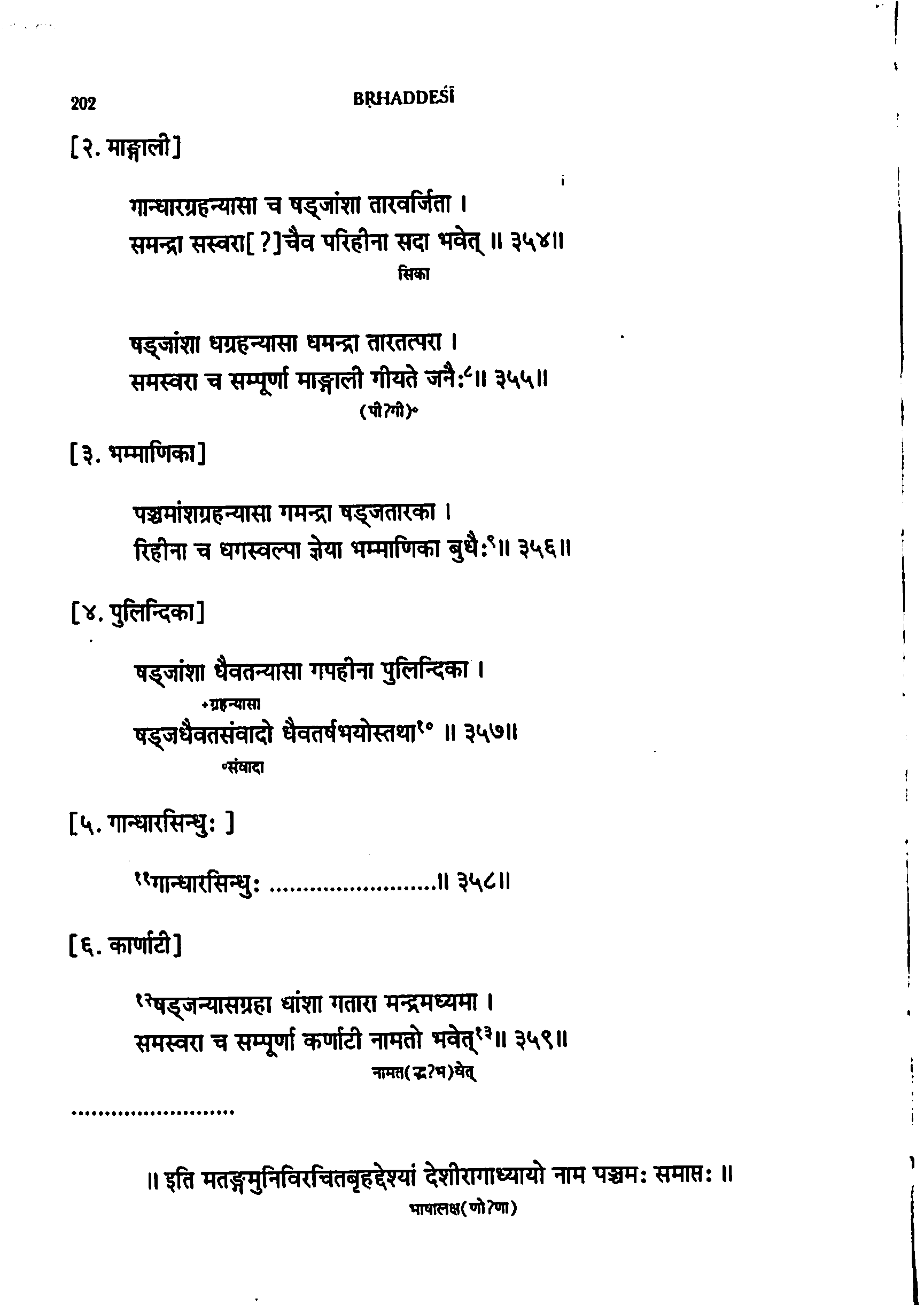
gāndhāra as graha and nyāsa, şadja as amśa, devoid of tāra, sa (şadja)
being mandra (low), it is always devoid of pa-ri (
pañcama-ṛṣabha).
(354)
Having şadja as amsa, dha (dhaivata) as graha (and) nyāsa, having dha
(dhaivata) as low (mandra), leaning towards high (tāra)7, formed with even
svaras and being complete, <math>m\bar{a}ng\bar{a}\bar{u}^{12}</math> is sung by the people.
(355)
Bhammānikā 13 should be known by the wise to have pañcama as amsa, graha
and nyāsa, low ga (gāndhāra) (and) high şadja, being devoid of ri (ṛṣabha) and
with sparse dha-ga (dhaivata- gāndhāra).10
(356)
Pulindikā14 has
dhaivata as nyāsa, is devoid of ga-pa (
gāndhāra-
pañcama)
(and) there is concert between sadja-
dhaivata and similarly between
dhaivata-
rşabha.
(357)
Gāndhārasindhu15 .....
(358)
[6. Kārņāţī]
Having sadja as nyāsa and graha, dha (dhaivata) as amsa, high ga
(gāndhāra) and low madhyama, with even svaras and complete, is (the bhāṣā)
karnāļi1116 by name.3
(359)
,,,,,,,,,,,,,,,,,,,,,,,,,,,,,,,,,,,,,,,
Thus ends the fifth chapter entitled
desi-rāgādhyāya in
Bṛhaddesī composed by
Matanga Muni.