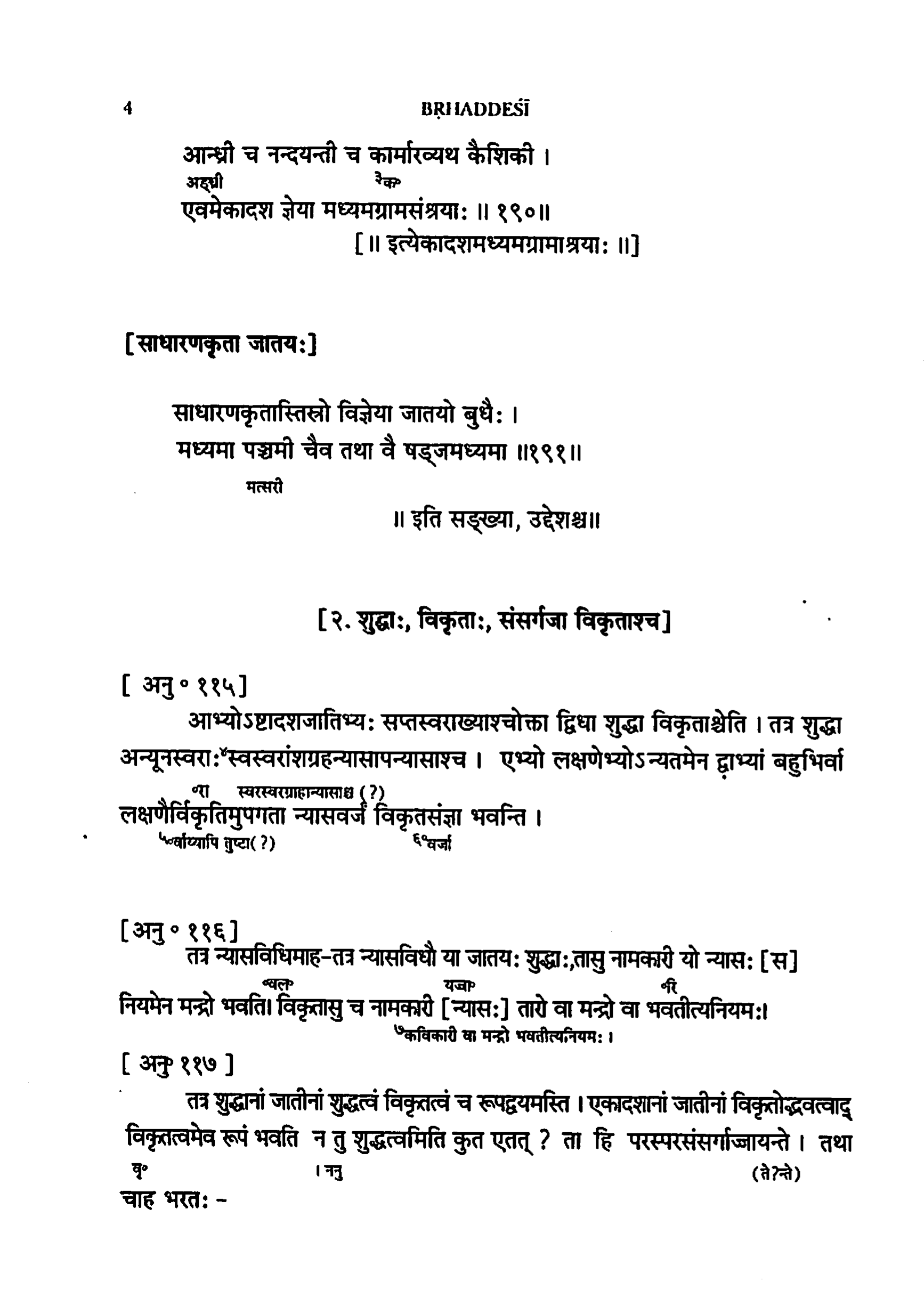
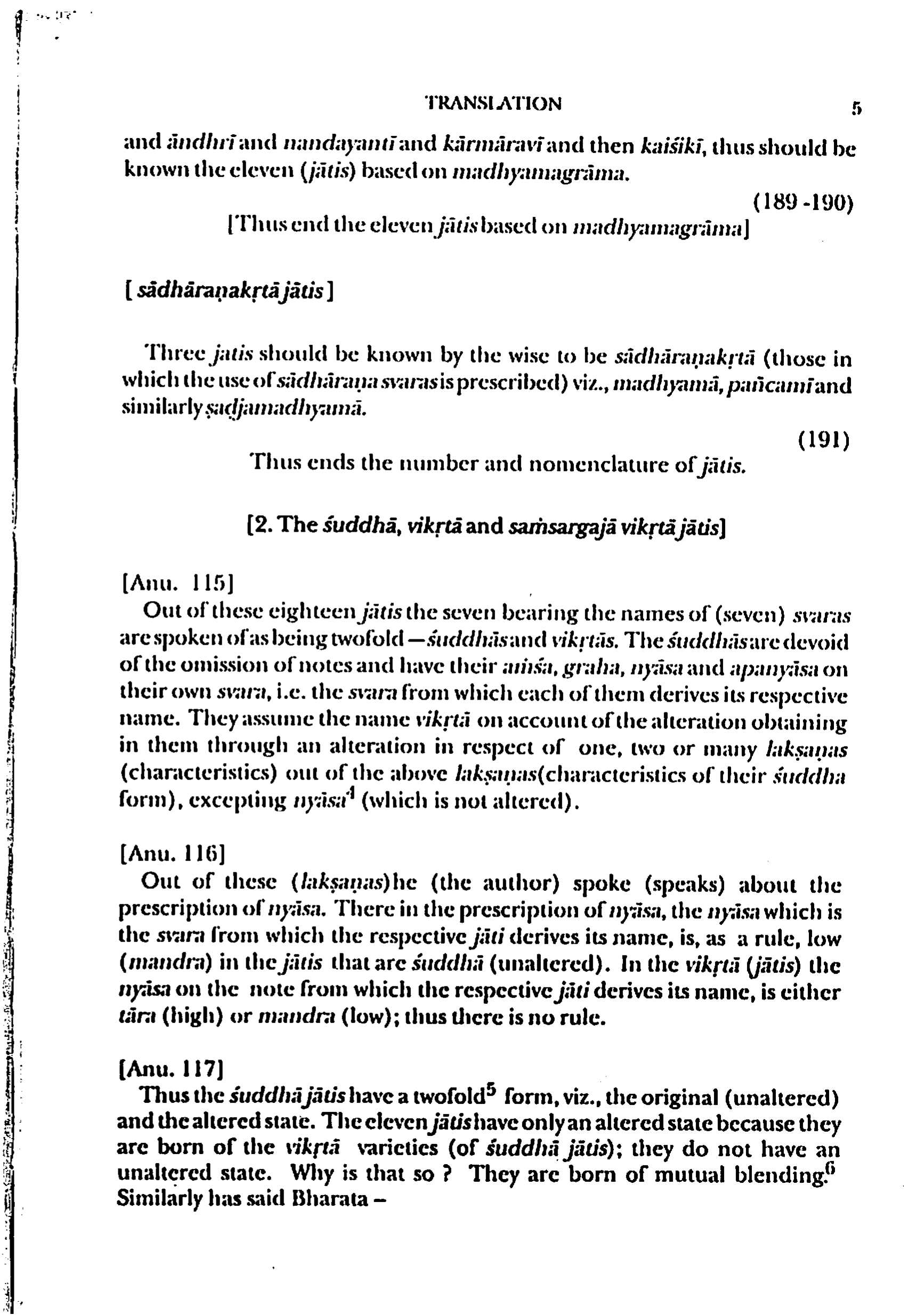
and andhri and
nandayanti and karmaravi and then kaisiki,
thus should be
known the eleven (jātis) based on madhyamagrāma7.
<math>(189 - 190)</math>
Three jatis should be known by the wise to be sadharanakṛtā (those in
which the use of
sādhāraṇa svaras is prescribed) viz.,
madhyamā,
pañcamī and
similarly
şadjamadhyamā.
(191)
Thus ends the number and nomenclature of jātis.
[Anu. 115]
Out of these eighteen jātis the seven bearing the names of (seven) svaras
are spoken of as being twofold - suddhās and vikṛtās.
The suddhās are devoid
of the omission of notes and have their anisa, graha, nyāsa and apanyāsa on
their own svara111, i.e. the svara from which each of them derives its respective
name.
They assume the name vikṛtā on account of the alteration obtaining
in them through an alteration in respect of one, two or many lakṣaṇas
(characteristics)6 out of the above
lakṣaṇas(characteristics of their śuddha
1002 472 7
form), excepting nyāsa4 (which is not altered).
[Anu. 116]
Out of these (
lakṣaṇas) he (the author) spoke (speaks) about the
日本が一次の後の日の行人の行うのできるというますが、まるは、大利の大利の人の自己となりから
prescription of nyāsa. There in the prescription of nyāsa,
the nyāsa which is
the svara from which the respective jāti derives its name, is, as a rule, low
(mandra) in the jātis that are śuddhā (unaltered)8. In the vikṛtā (jātis) the
nyāsa on the note from which the respective jāti derives its name, is either
tāra (high) or mandra (low)3; thus there is no rule9.
[Anu. 117]
Thus the
śuddhā jātis have a twofold
5 form, viz., the original (unaltered)
and the altered state.
The eleven jātis have only an altered state because they
are born of the vikṛtā varieties (of śuddhā jātis); they do not have an
unaltered state. Why is that so? They are born of mutual blending5.
Similarly has said
Bharata -
ر<br>د د د د د د د د د د د د د د د د د د د