Source scans · vol_II_p012
recto · open full
scan recto
verso · open full
scan verso
Bṛhaddeśī · Volume II
pp. 6–7folio 012
Devanāgarī (Bṛhaddeśī)
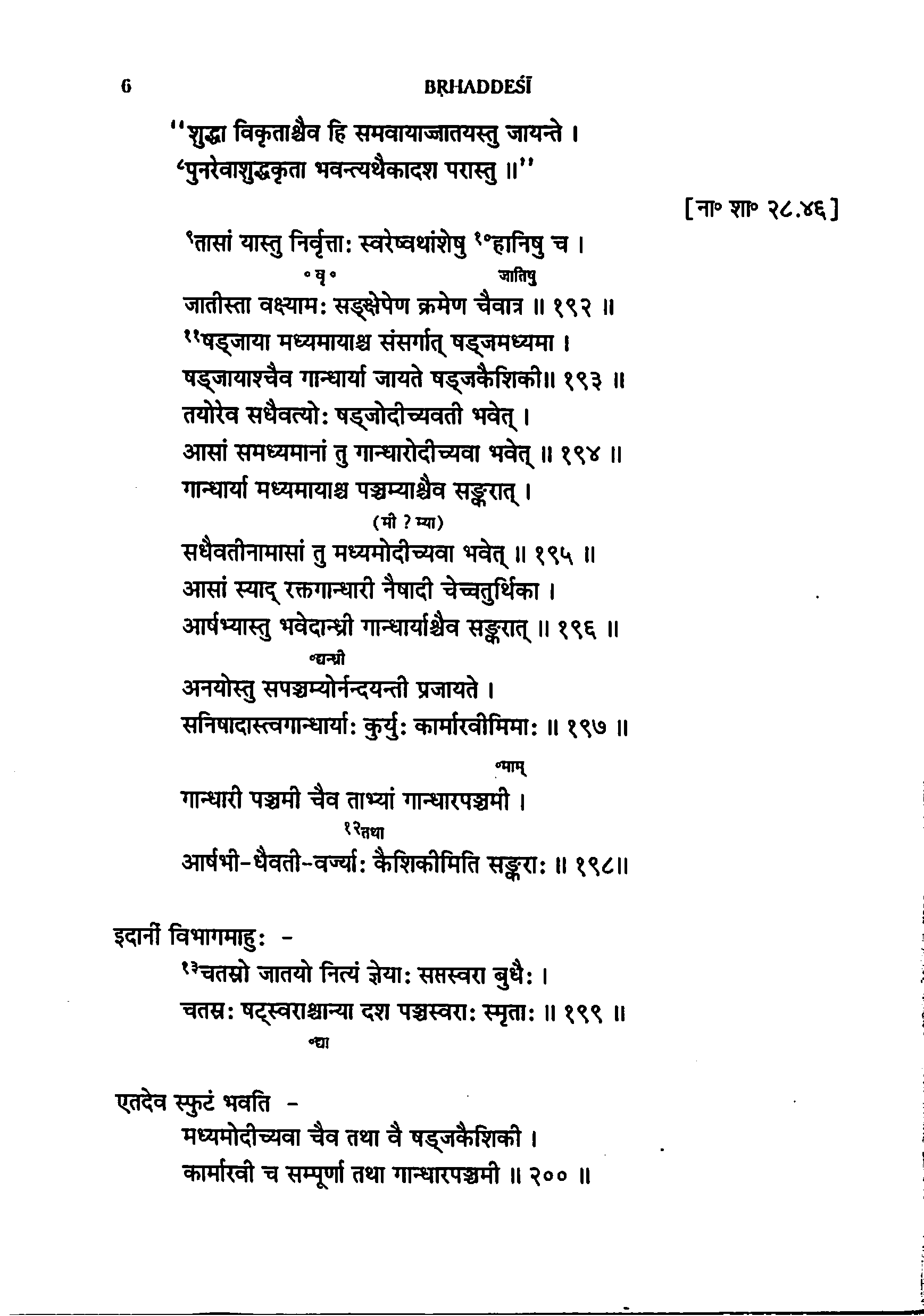
‘‘शुद्धा विकृताश्चैव हि समवायाज्जातयस्तु जायन्ते ।
पुनरेवाशुद्धकृता• व • भवन्त्यथैकादश९तासां यास्तु निर्वृत्ता: स्वरेष्वथांशेषु १°हानिषु च । परास्तु ॥’’जातिषु [ना॰ शा॰ २८.४६]1 जातीस्ता वक्ष्याम: सङ्क्षेपेण क्रमेण चैवात्र ॥१९२॥
११षड्जाया मध्यमायाश्च संसर्गात् षड्जमध्यमा
षड्जायाश्चैव गान्धार्या जायते षड्जकैशिकी॥१९३॥
तयोरेव सधैवत्यो: षड्जोदीच्यवती भवेत्।
आसां समध्यमानां तु गान्धारोदीच्यवा(मी?म्या) भवेत्7 ॥१९४॥
गान्धार्या मध्यमायाश्च पञ्चम्याश्चेव सङ्करात् ।
सधैवतीनामासां तु मध्यमोदीच्यवा भवेत् ॥१९५॥
आसां स्याद् रक्तगान्धारी नैषादी चेच्चतुर्थिका9
आर्षभ्यास्तु भवेदान्ध्री•द्यन्धी गान्धार्याश्चैव सङ्करात्10 ॥१९६॥
अनयोस्त् सपञ्चम्योर्नन्दयन्ती प्रजायते11
सनिषादास्त्वगान्धार्याः कुर्युः कार्मारवीमिमाःग्माम् ॥१९७॥
गान्धारी पञ्चमी चैव ताभ्यां१२तथा गान्धारपञ्चमी13
आर्षभी-धैवती-वर्ज्याः कैशिकीमिति सङ्कराः ॥१९८॥ इदानीं विभागमाहु: -
१३चतस्रो जातयो नित्यं ज्ञेया: सप्तस्वरा बुधै:।
चतस्र: षट्स्वराश्चान्यान्द्या दश पञ्चस्वरा: स्मृता: ॥१९९॥ एतदेव स्फुटं भवति - कार्मारवी च सम्पूर्णा तथा गान्धारपञ्चमी ॥२००॥
English — Sharma (translation)
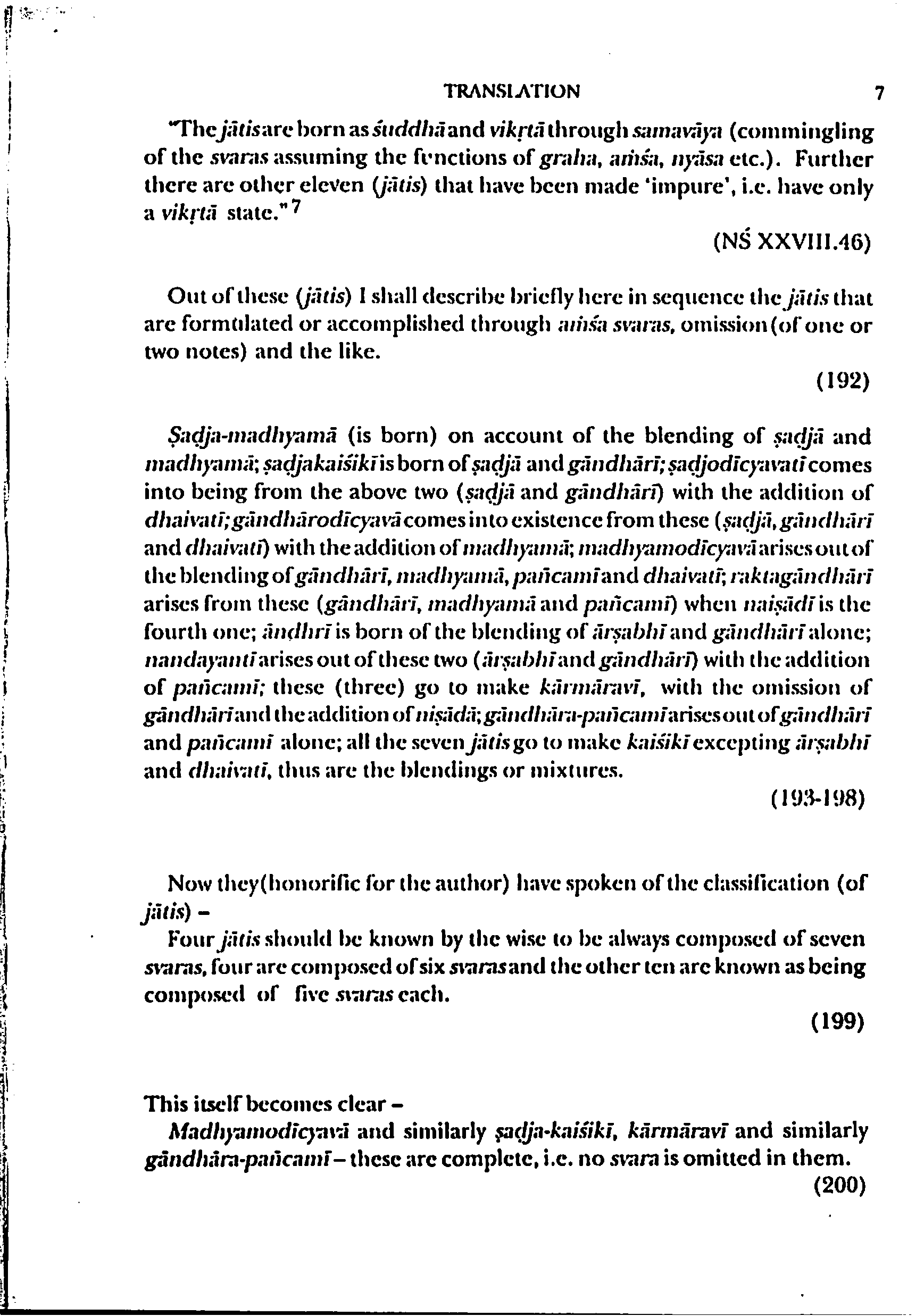
"The jātis are born as śuddhā and vikṛtā through samavāya3 (commingling of the svaras assuming the functions of graha, amśa, nyāsa etc.). Further there are other eleven (jātis) that have been made 'impure', i.e. have only a vikṛtā state."7 (NŚ XXVIII.46) Out of these (jātis) I shall describe briefly here in sequence the jātis that are formulated or accomplished through ainsa svaras, omission (of one or two notes) and the like.
(192)
Ṣadja-madhyamā (is born) on account of the blending of ṣadjā and madhyamā; ṣaḍjakaiśikī is born of ṣaḍjā and gāndhārī5; ṣaḍjodīcyavatī comes into being from the above two (ṣaḍjā and gāndhārī) with the addition of dhaivatī6; gāndhārodīcyavā comes into existence from these (ṣaḍjā, gāndhārī and dhaivatī) with the addition of madhyamā7; madhyamodīcyavā arises out of the blending of gāndhārī, madhyamā, pañcamī and dhaivatī8; raktagāndhārī arises from these (gāndhārī, madhyamā and pañcamī) when naiṣādī is the fourth one9; āndhrī is born of the blending of ārṣabhī and gāndhārī alone; nandayantī arises out of these two (ārṣabhī and gāndhārī) with the addition of pañcami11; these (three) go to make kārmāravī, with the omission of gāndhāri and the addition of niṣādā12; gāndhāra-pañcamī arises out of gāndhārī and pañcami alone13; all the seven jātis go to make kaisiki excepting ārṣabhī and dhaivati, thus are the blendings or mixtures.15 <math>(193-198)</math> Now they (honorific for the author) have spoken of the classification (of jātis) – Four jātis should be known by the wise to be always composed of seven svaras, four are composed of six svaras and the other ten are known as being composed of five svaras each.4
(199)
This itself becomes clear - Madhyamodicyavā and similarly şadja-kaišikī, kārmāravī and similarly gåndhåra-pañcami – these are complete, i.e. no svara is omitted in them.
(200)
1.[citation] The Nāṭya Śāstra XXVIII.46 is cited as source for the statement about śuddhā and vikṛtā jātis[ना॰ शा॰ २८.४६]
7.[relation] gāndhārodīcyavā comes into existence from ṣaḍjā, gāndhārī and dhaivatī with the addition of madhyamāआसा समध्यमाना तु गान्धारोदीच्यवा भवेत्
9.[relation] raktagāndhārī arises from gāndhārī, madhyamā and pañcamī when naiṣādī is the fourth svaraआसा स्याद् रक्तगान्धारी नैषादी चेच्चतुर्थिका
10.[relation] āndhrī is born from the blending of ārṣabhī and gāndhārī aloneआर्षभ्यास्तु भवेदान्ध्री गान्धार्याश्चैव सङ्करात्
11.[relation] nandayantī arises from ārṣabhī and gāndhārī with the addition of pañcamiअनयोस्त् सपञ्चम्योर्नन्दयन्ती प्रजायते
12.[relation] kārmāravī is formed from ārṣabhī, gāndhārī and pañcamī with omission of gāndhāri and addition of niṣādāसनिषादास्त्वगान्धार्या कुर्यु कार्मारवीमिमा
13.[relation] gāndhāra-pañcamī arises from gāndhārī and pañcami svaras aloneगान्धारी पञ्चमी चैव ताभ्या गान्धारपञ्चमी
1.[citation]The Nāṭya Śāstra XXVIII.46 is cited as source for the statement about śuddhā and vikṛtā jātis(NŚ XXVIII.46)
2.[definition]jātis are born as śuddhā and vikṛtā through samavāya, which involves commingling of svaras assuming functions of graha, aṁśa, nyāsa etc.The jātis are born as śuddhā and vikṛtā through samavāya (commingling of the svaras assuming the functions of graha, aṁśa, nyāsa etc.)
3.[enumeration]jātis are classified into śuddhā (pure) and vikṛtā (impure/modified) statesThe jātis are born as śuddhā and vikṛtā through samavāya
4.[enumeration]Four jātis have seven svaras, four have six svaras, and ten have five svaras eachFour jātis should be known by the wise to be always composed of seven svaras, four are composed of six svaras and the other ten are known as being composed of five svaras each.
5.[relation]ṣaḍjakaiśikī is born from the blending of ṣaḍjā and gāndhārī svarasṣaḍjakaiśikī is born of ṣaḍjā and gāndhārī
6.[relation]ṣaḍjodīcyavatī comes into being from ṣaḍjā and gāndhārī with the addition of dhaivatīṣaḍjodīcyavatī comes into being from the above two (ṣaḍjā and gāndhārī) with the addition of dhaivatī
7.[relation]gāndhārodīcyavā comes into existence from ṣaḍjā, gāndhārī and dhaivatī with the addition of madhyamāgāndhārodīcyavā comes into existence from these (ṣaḍjā, gāndhārī and dhaivatī) with the addition of madhyamā
8.[relation]madhyamodīcyavā arises from the blending of gāndhārī, madhyamā, pañcamī and dhaivatīmadhyamodīcyavā arises out of the blending of gāndhārī, madhyamā, pañcamī and dhaivatī
9.[relation]raktagāndhārī arises from gāndhārī, madhyamā and pañcamī when naiṣādī is the fourth svararaktagāndhārī arises from these (gāndhārī, madhyamā and pañcamī) when naiṣādī is the fourth one
10.[relation]āndhrī is born from the blending of ārṣabhī and gāndhārī aloneāndhrī is born of the blending of ārṣabhī and gāndhārī alone
11.[relation]nandayantī arises from ārṣabhī and gāndhārī with the addition of pañcaminandayantī arises out of these two (ārṣabhī and gāndhārī) with the addition of pañcami
12.[relation]kārmāravī is formed from ārṣabhī, gāndhārī and pañcamī with omission of gāndhāri and addition of niṣādāthese (three) go to make kārmāravī, with the omission of gāndhāri and the addition of niṣādā
13.[relation]gāndhāra-pañcamī arises from gāndhārī and pañcami svaras alonegāndhāra-pañcamī arises out of gāndhārī and pañcami alone
14.[structural]graha, aṁśa, and nyāsa are functions assumed by svaras in the process of samavāyacommingling of the svaras assuming the functions of graha, aṁśa, nyāsa etc.
15.[structural]kaisiki is composed of all seven svaras except ārṣabhī and dhaivatiall the seven jātis go to make kaisiki excepting ārṣabhī and dhaivati, thus are the blendings or mixtures.