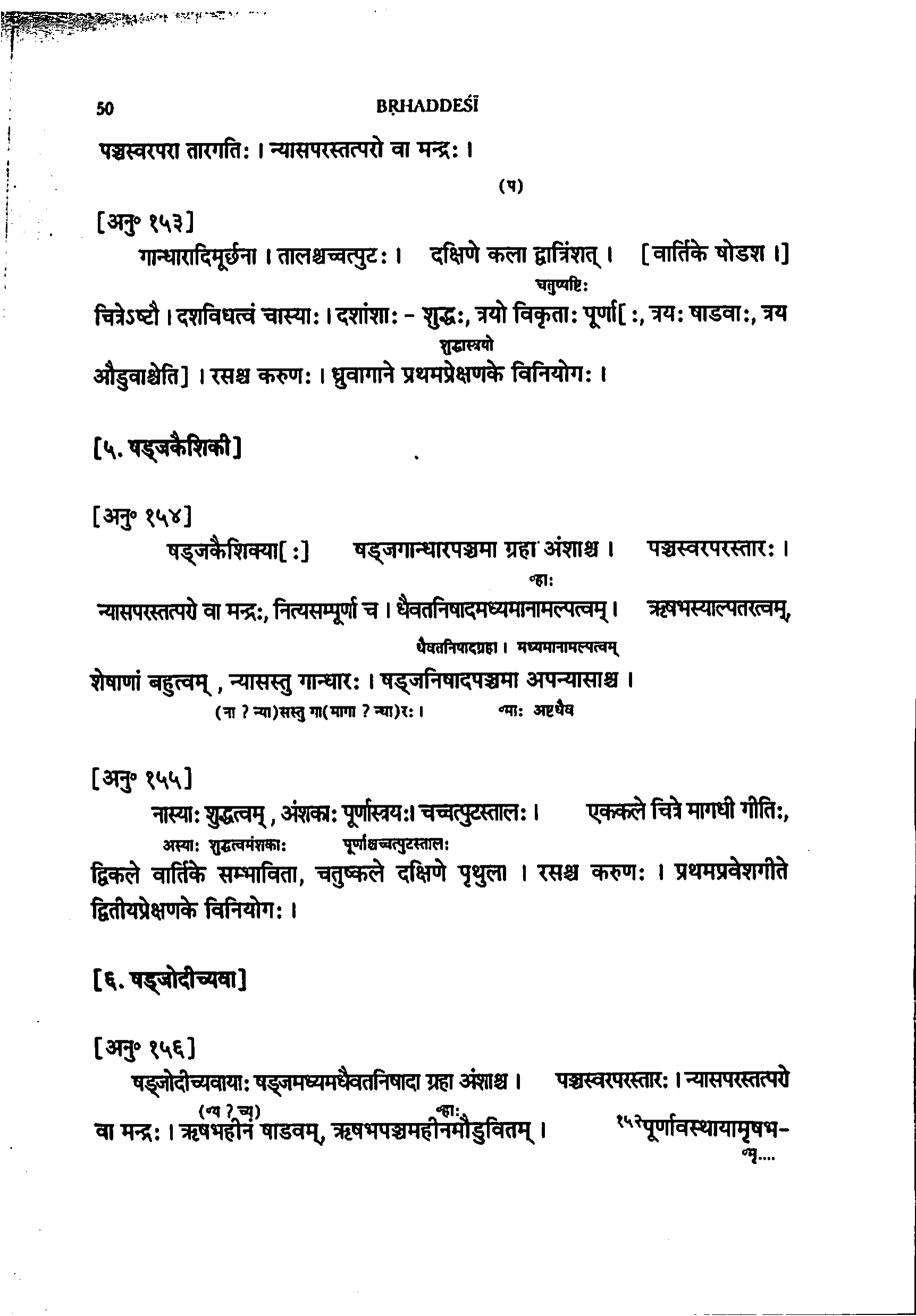
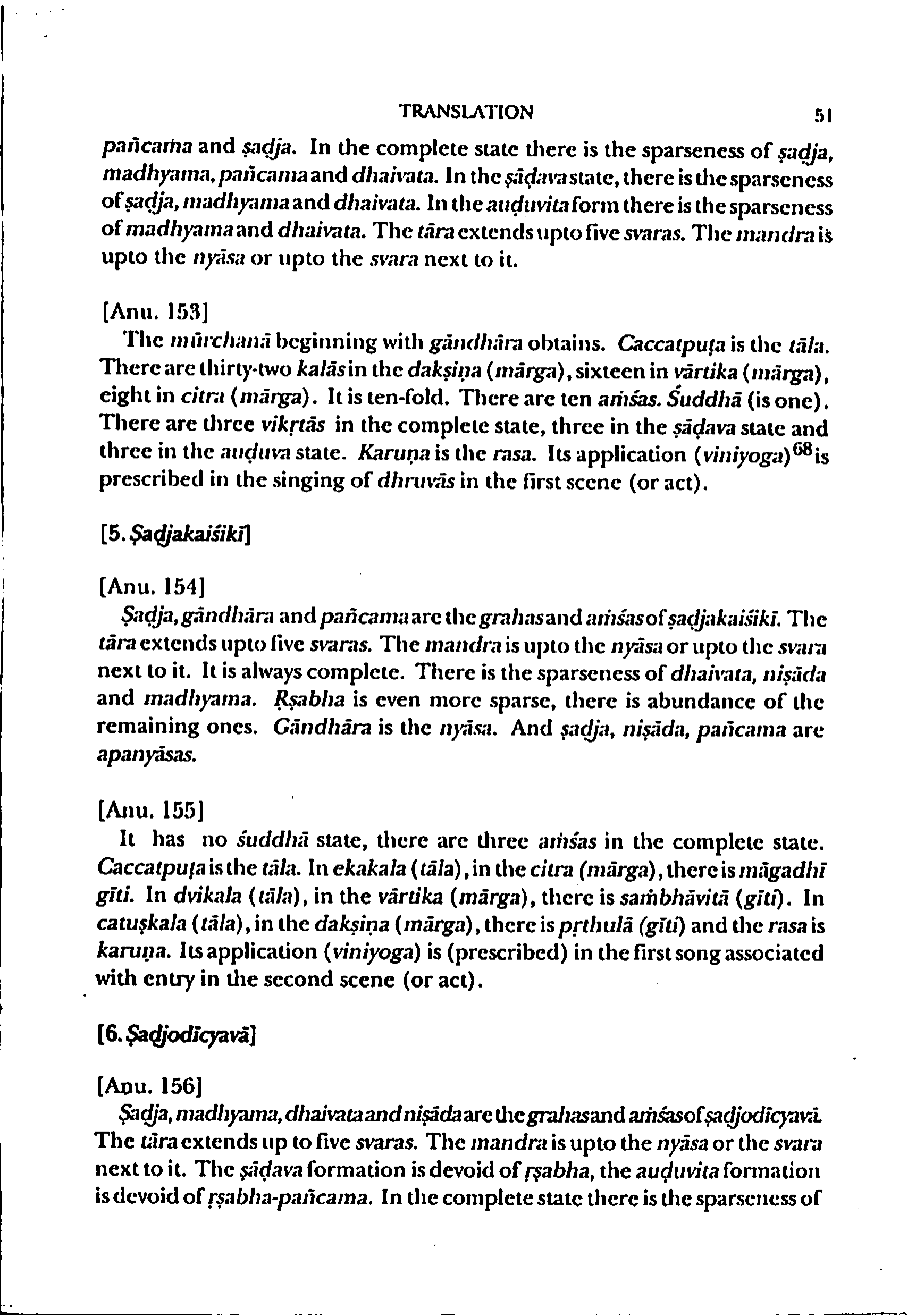
pañcama and șadja. In the complete state there is the sparseness of șadja,
madhyama,
pañcama and
dhaivata. In the ṣāḍava state, there is the sparseness
of şadja,
madhyama and
dhaivata. In the
auduvita form there is the sparseness
of
madhyama and
dhaivata. The tāra extends upto five svaras. The mandra is
upto the nyāsa or upto the svara next to it.
[Anu. 153]
The mūrchanā beginning with gāndhāra obtains.71 Caccatpuṭa is the tāla.3
There are thirty-two kalās in the
dakṣiṇa (mārga), sixteen in
vārtika (mārga),
eight in
citra (mārga).
It is ten-fold.8 There are ten amśas. Šuddhā (is one).
There are three vikṛtās in the complete state, three in the ṣāḍava state and
three in the auduva state. Karuna is the rasa. Its application (
viniyoga) 68 is
prescribed in the singing of
dhruvās in the first scene (or act).
[5. Şadjakaisiki]
[Anu. 154]
Ṣaḍja, gāndhāra and pañcama are the grahas and amsas of ṣaḍjakaisikī.9 The
tāra extends upto five svaras. The mandra is upto the nyāsa or upto the svara
next to it.
It is always complete.10 There is the sparseness of
dhaivata, niṣāda
and
madhyama. Rṣabha is even more sparse, there is abundance of the
remaining ones.
Gāndhāra is the nyāsa.
And şadja, niṣāda, pañcama are
apanyāsas.12
[Anu. 155]
It has no śuddhā state, there are three amśas in the complete state.
Caccatpuța is the tāla. În
ekakala (tāla), in the
citra (mārga), there is
māgadhī
gīti.
In dvikala (tāla), in the vārtika (mārga), there is sambhāvitā (gīti).4 In
catușkala (tāla), in the dakșiņa (mārga), there is pṛthulā (gīti)5 and the rasa is
karuṇa. Its application (
viniyoga) is (prescribed) in the first song associated
with entry in the second scene (or act).
[6. Şadjodicyava]
[Apu. 156]
Şadja, madhyama, dhaivata and nişāda are the grahas and amsas of şadjodīcyavā.15
The tara extends up to five svaras. The mandra is upto the nyasa or the svara
next to it. The şādava formation is devoid of rṣabha,
the auduvita formation
is devoid of ṛṣabha-pañcama14. In the complete state there is the sparseness of