Source scans · vol_II_p035
recto · open full
scan recto
verso · open full
scan verso
Bṛhaddeśī · Volume II
pp. 52–53folio 035
Devanāgarī
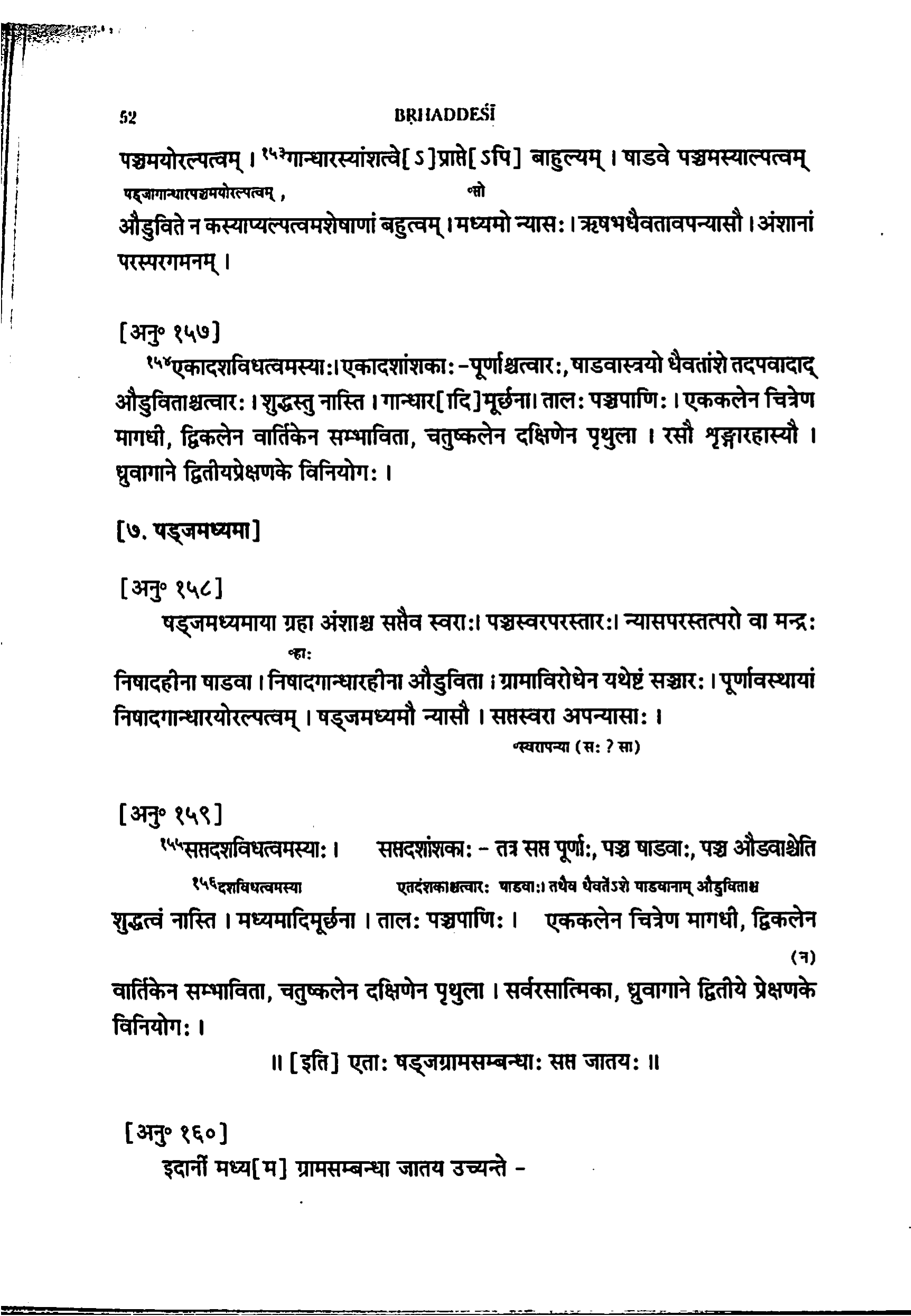
पञ्चमयोरत्पत्वम् । १५३गान्धारस्यांशत्वे[ऽ]प्राप्ते[ऽपि] बाहुत्यम्13षाडवे पञ्चमस्यात्पत्वम्6 पद्जागान्धारपञ्चमयोरलपत्वम्14 , औडुविते न कस्याप्यल्पत्वमशेषाणां बहुत्वम्7 । मध्यमो न्यासः । ऋषभधैवतावपन्यासौ । अंशानां
परस्परगमनम्8
[अनु॰ १५७]
१५४एकादशविधत्वमस्या:। एकादशांशका: -पूर्णाश्चत्वार:, षाडवास्त्रयो धैवतांशे तदपवादाद् औडुविताश्चत्वार:।शुद्धस्तु नास्ति।गान्धार[ादि]मूर्छना9।ताल:पञ्चपाणि:।एककलेन चित्रेण
मागधी3, द्विकलेन वार्तिकेन सम्भाविता4, चतुष्कलेन दक्षिणेन पृथुला5 । रसौ शृङ्गारहास्यौ ।
ध्रवागाने द्वितीयप्रेक्षणके विनियोग:।
[७. पड्जमध्यमा]
[अनु॰ १५८]
षड्जमध्यमाया ग्रहा॰हा: अंशाश्च सप्तैव स्वरा:15। पञ्चस्वरपरस्तार:। न्यासपरस्तत्परो वा मन्द्र: निषादहीना षाडवा । निषादगान्धारहीना औडुविता । ग्रामाविरोधेन यथेष्टं सञ्चार:11पूर्णावस्थायां
निषादगान्धारयोरल्पत्वम्12 । षड्जमध्यमौ न्यासौ । सप्तस्वरा अपन्यासा:10<b>क्खरापन्या</b> (स: ? सा)
[अनु॰ १५९]
सप्तदशांशका: – तत्र सप्त पूर्णा:, पञ्च षाडवा:, पञ्च औडवाश्चेति
१५५सप्तदशविधत्वमस्याः ।
एतदंशकाश्रत्वार:१५६दशिंधत्वमस्या पाडवा:। तथैव थैवतेंऽशे पाडवानाम् औदुविताश शुद्धत्वं नास्ति । मध्यमादिमूर्छना । ताल: पञ्चपाणि: । एककलेन चित्रेण मागधी, द्विकलेन (F) वार्तिकेनविनियोग: । सम्भाविता, चतुष्कलेन दक्षिणेन पृथुला । सर्वरसात्मिका, ध्रुवागाने द्वितीये प्रेक्षणके
॥ [इति] एता: षड्जग्रामसम्बन्धा: सप्त जातय: ॥
[अनु॰ १६०]
इदानीं मध्य[म] ग्रामसम्बन्धा जातय उच्यन्ते1 - ---
English — Sharma (translation)
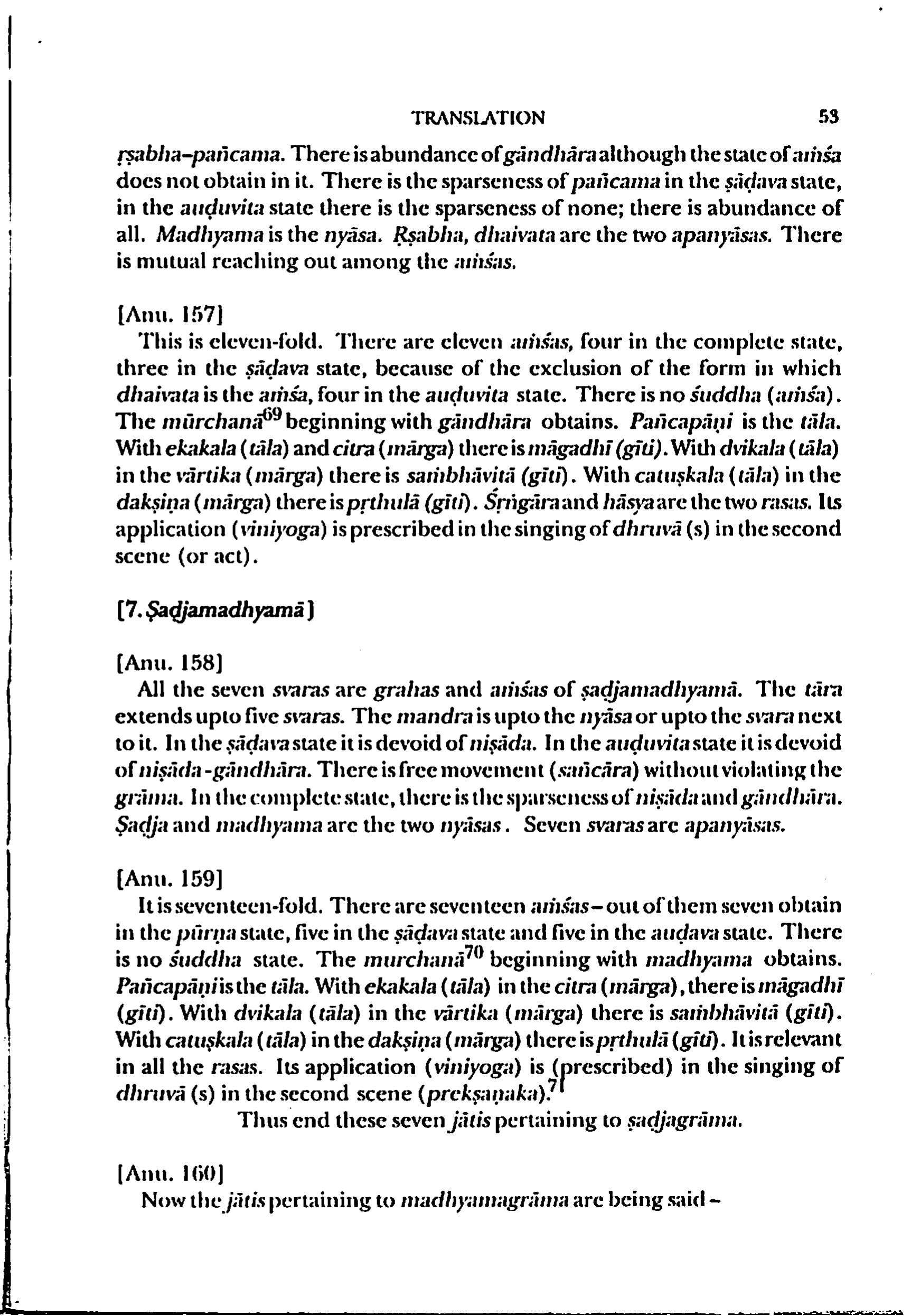
rṣabha-pañcama. There is abundance of gāndhāra although the state of amśa does not obtain in it. There is the sparseness of pañcama in the ṣāḍava state6, in the auduvita state there is the sparseness of none; there is abundance of all7.14 Madhyama is the nyāsa. Ŗṣabha, dhaivata are the two apanyāsas. There is mutual reaching out among the amsas8.
[Anu. 157]
This is eleven-fold. There are eleven amsas, four in the complete state, three in the sādava state, because of the exclusion of the form in which dhaivata is the amśa, four in the auduvita state. There is no śuddha (amśa). The mūrchanā69 beginning with gāndhāra obtains. Paūcapāņi is the tāla. With ekakala (tāla) and citra (mārga) there is māgadhī (gīti)3. With dvikala (tāla) in the vārtika (mārga) there is sambhāvitā (gītī). With catuṣkala (tāla) in the dakşina (mārga) there is pṛthulā (gīti)5. Śṛṅgāra and hāsya are the two rasas. Its application (viniyoga) is prescribed in the singing of dhruvā (s) in the second scene (or act).
[Anu. 158]
All the seven svaras are grahas and anisas of şadjamadhyamā.15 The tāra extends upto five svaras. The mandra is upto the nyāsa or upto the svara next to it. In the ṣāḍava state it is devoid of niṣāda. In the auḍuvita state it is devoid of niṣāda-gāndhāra. There is free movement (sancāra) without violating the grāma11. In the complete state, there is the sparseness of niṣāda and gāndhāra12. Ṣadja and madhyama are the two nyāsas. Seven svaras are apanyāsas10.
[Anu. 159]
It is seventeen-fold. There are seventeen amsas – out of them seven obtain in the pūrņa state, five in the ṣāḍava state and five in the auḍava state. There is no śuddha state. The murchanā70 beginning with madhyama obtains. Pañcapāṇiis the tāla. With ekakala (tāla) in the citra (mārga), there is māgadhī (gīti). With dvikala (tāla) in the vārtika (mārga) there is sambhāvitā (gīti)4. With catușkala (tāla) in the dakșiņa (mārga) there is pṛthulā (gīti). It is relevant in all the rasas. Its application (viniyoga) is (prescribed) in the singing of dhruvā (s) in the second scene (prekṣaṇaka).71 Thus end these seven jātis pertaining to sadjagrāma.2
[Anu. 160]
Now the jātis pertaining to madhyamagrāma are being said1 -
1.[attribution]Madhyamagrāma is a second major grāma system, now being introduced in the textइदानी मध्य[म] ग्रामसम्बन्धा ज?ातय उच्यन्ते
2.[enumeration]There are seven jātis pertaining to sadjagrāmaइति एताः षड्जग्रामसम्बन्धाः सप्त ज?ातयः
3.[relation]Māgadhī gīti is produced with ekakala in citra mārgaएककलेन चित्रेण मागधी
4.[relation]Sambhāvitā gīti is produced with dvikala in vārtika mārgaद्विकलेन वार्तिकेन सम्भाविता
5.[relation]Pṛthulā gīti is produced with catuṣkala in dakșiṇa mārgaचतुष्कलेन दक्षिणेन पृथुला
6.[structural]In the ṣāḍava state, pañcama has the property of sparsenessषाडवे पञ्चमस्यात्पत्वम्
7.[structural]In the auḍuvita state, there is sparseness of none and abundance of allऔडुविते न कस्याप्यल्पत्वमशेषाणा बहुत्वम्
8.[structural]There is mutual reaching out among the amsasअंशाना परस्परगमनम्
9.[structural]Mūrchanā beginning with gāndhāra obtains in one jātiगान्धार[ादि]मूर्छना
10.[structural]In sadjamadhyamā, seven svaras are apanyāsasसप्तस्वरा अपन्यासाः
11.[structural]There is free movement without violating the grāmaग्रामाविरोधेन यथेष्टं सञ्चारः
12.[structural]In the complete state (pūrņa), there is sparseness of niṣāda and gāndhāraपूर्णावस्थाया निषादगान्धारयोरल्पत्वम्
13.[structural]There is abundance of gāndhāra although the state of aṁśa does not obtain in itगान्धारस्यांशत्वे[ऽ]प्राप्ते[ऽपि] बाहुत्यम्
14.[structural]Pañcama is one of the principal svaras with specific properties in different jāti statesषाडवे पञ्चमस्यात्पत्वम् पद्ज?ागान्धारपञ्चमयोरलपत्वम्
15.[structural]All seven svaras function as both grahas and amsas in sadjamadhyamāषड्जमध्यमाया ग्रहा अंशाश्च सप्तैव स्वराः
1.[attribution] Madhyamagrāma is a second major grāma system, now being introduced in the textNow the jātis pertaining to madhyamagrāma are being said
2.[enumeration] There are seven jātis pertaining to sadjagrāmaThus end these seven jātis pertaining to sadjagrāma.
3.[relation] Māgadhī gīti is produced with ekakala in citra mārgaWith ekakala (tāla) and citra (mārga) there is māgadhī (gīti)
4.[relation] Sambhāvitā gīti is produced with dvikala in vārtika mārgaWith dvikala (tāla) in the vārtika (mārga) there is sambhāvitā (gīti)
5.[relation] Pṛthulā gīti is produced with catuṣkala in dakșiṇa mārgaWith catuṣkala (tāla) in the dakşina (mārga) there is pṛthulā (gīti)
6.[structural] In the ṣāḍava state, pañcama has the property of sparsenessThere is the sparseness of pañcama in the ṣāḍava state
7.[structural] In the auḍuvita state, there is sparseness of none and abundance of allin the auduvita state there is the sparseness of none; there is abundance of all
8.[structural] There is mutual reaching out among the amsasThere is mutual reaching out among the amsas
10.[structural] In sadjamadhyamā, seven svaras are apanyāsasSeven svaras are apanyāsas
11.[structural] There is free movement without violating the grāmaThere is free movement (sancāra) without violating the grāma
12.[structural] In the complete state (pūrņa), there is sparseness of niṣāda and gāndhāraIn the complete state, there is the sparseness of niṣāda and gāndhāra
13.[structural] There is abundance of gāndhāra although the state of aṁśa does not obtain in itThere is abundance of gāndhāra although the state of aṁśa does not obtain in it.
14.[structural] Pañcama is one of the principal svaras with specific properties in different jāti statesThere is the sparseness of pañcama in the ṣāḍava state, in the auduvita state there is the sparseness of none; there is abundance of all.
15.[structural] All seven svaras function as both grahas and amsas in sadjamadhyamāAll the seven svaras are grahas and anisas of şadjamadhyamā.