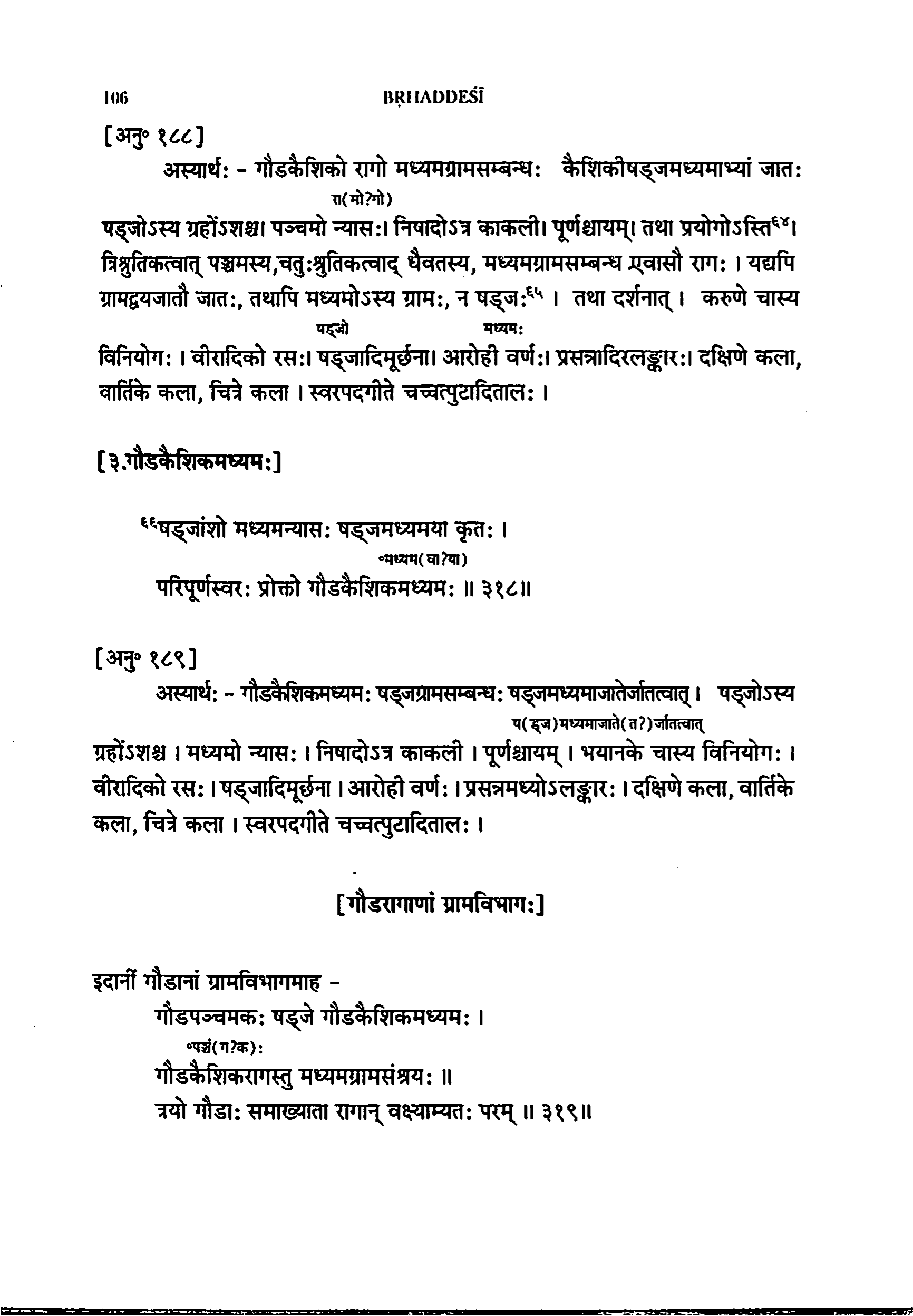
[Anu. 188]
This means-gaudakaiśika rāga is related to madhyamagrāma6 and is born of
kaiśikī and şadjamadhyamā5. Şadja is its graha and amśa.
Pañcama is nyāsa.8
Niṣāda is kākalī here.9 This (rāga) is complete.10 Such is its performance. On
account of
pañcama being comprised of three śrutis,
dhaivata being comprised
of four śrutis, this rāga is related to
madhyamagrāma alone. Although it is born
of the jātis of two grāmas, yet its grāma is
madhyama, not ṣadja, because it is seen
as such. Its application is prescribed in karuna (rasa). Vīra
63 and the like is
the rasa. The
mūrchanā beginning with ṣadja obtains. Ārohin is the varņa,
prasannādi is the
alankāra. The kalā is formed in the
dakṣiṇa (mārga), the kalā
obtains in the
vṛtti (mārga) and the kalā prevails in the
citra (mārga).
A tāla
like caccatputa obtains in the songs comprised of svara and pada.15
Gaudakaisikamadhyama is said to have şadja as its amsa,
madhyama as its
nyāsa and to be formed by ṣaḍjamadhyamā (jāti) and to have complete svaras.
(318)
[Anu. 189]
This means –
gaudakaišikamadhyama is related to şadjagrāma, on account
of being born of şadjamadhyamā jāti.2 Şadja is its graha and amśa.
Madhyama
is the nyāsa.12 Niṣāda is kākalī here and this (rāga) is complete.
Its application
is prescribed in bhayānaka (rasa).3 Vīra and the like is the rasa. The
mūrchanā
beginning with sadja obtains. Arohin is the varna.
Prasannamadhya is the
alankāra. The kalā is formed in the
dakṣiṇa (mārga), the kalā obtains in the
vṛtti (mārga) and the kalā prevails in the
citra (mārga). A tāla like
caccatpuṭa
obtains in the songs comprised of svara and pada.
[The assignment of gaudaragas to gramas]
Now he (the author) has spoken of the assignment of gauda (ragas) to
grāmas-
Gaudapañcama is in ṣadja (grāma) and so is
gaudakaiśikamadhyama.
Gaudakaisika, on the other hand, is based on
madhyamagrāma. The three
gauda (rāgas) have been dealt with.
After this, I will speak of rāgas (pertaining
to vesarā gīti).4
(319)