Source scans · vol_II_p064
recto · open full
scan recto
verso · open full
scan verso
Bṛhaddeśī · Volume II
pp. 110–111folio 064
Devanāgarī (Bṛhaddeśī)
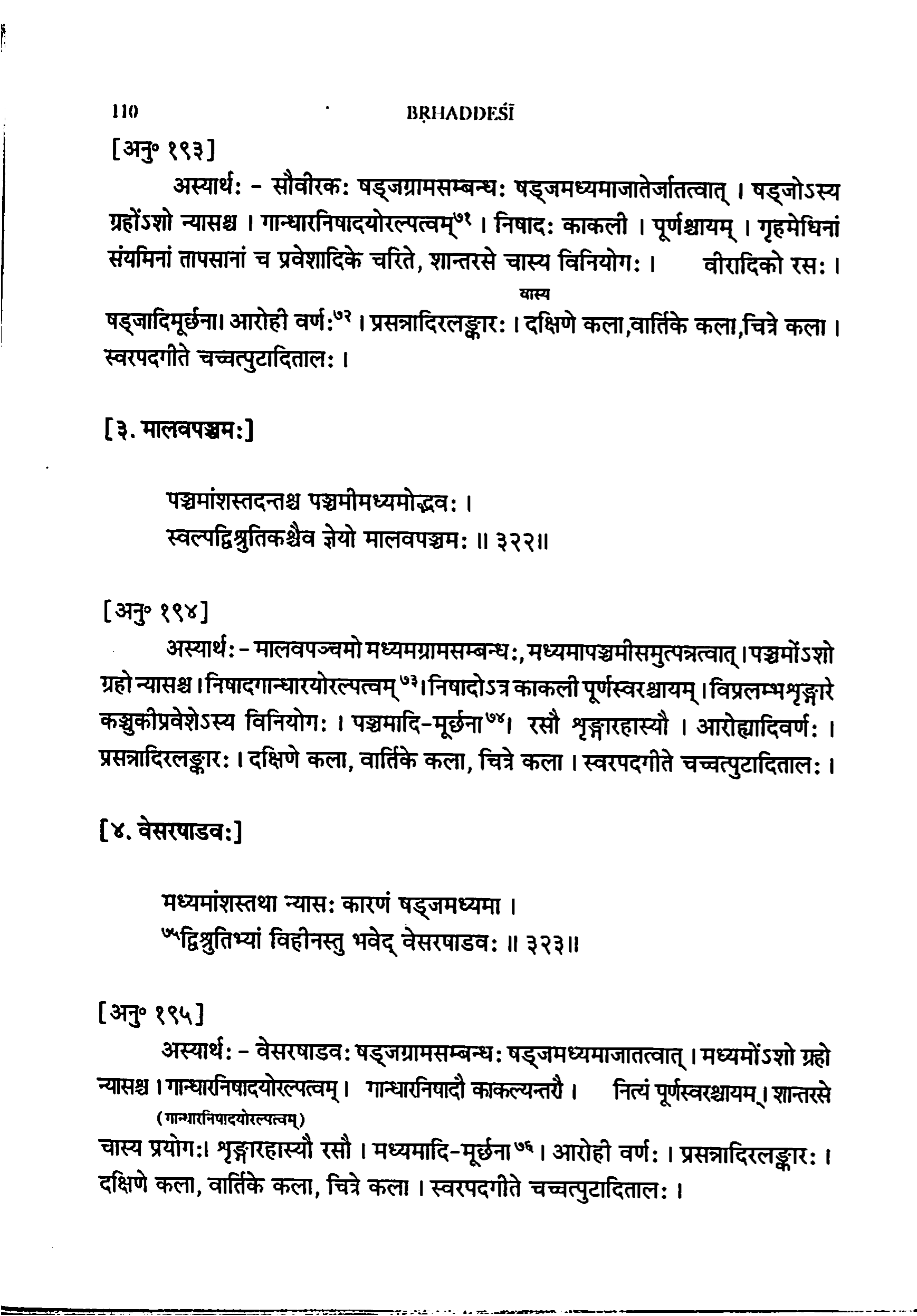
[अनु॰ १९३]
अस्यार्थः - सौवीरकः षड्जग्रामसम्बन्धः षड्जमध्यमाजातेर्जातत्वात्1षड्जोऽस्य ग्रहोंऽशो न्यासश्च6 । गान्धारनिषादयोरल्पत्वम्७१निषाद: काकली । पूर्णश्चायम्4 । गृहमेधिनां
संयमिनां तापसानां च प्रवेशादिके चरिते, शान्तरसेवास्य चास्य विनियोग:। वीरादिको रस:।
षड्जादिमूर्छना। आरोही वर्ण:७२प्रसन्नादिरलङ्कार:14 । दक्षिणे कला,वार्तिके कला,चित्रे कला ।
स्वरपदगीते चच्चत्पुटादितालः15
[३. मालवपञ्चम:]
पञ्चमांशस्तदन्तश्च पञ्चमीमध्यमोद्भव:।
स्वल्पद्विष्ठतिकश्चैव ज्ञेयो मालवपञ्चमः ॥३२२॥
[अन्॰ १९४]
अस्यार्थ: - मालवपञ्चमो मध्यमग्रामसम्बन्ध:, मध्यमापञ्चमीसमुत्पन्नत्वात्2पञ्चमीऽशो ग्रहो न्यासश्च7। निषादगान्धारयोरल्पत्वम् ७३। निषादोऽत्र काकली पूर्णस्वरश्चायम् । विप्रलम्भशृङ्गारे
कञ्चकीप्रवेशेऽस्य विनियोगः12पञ्चमादि-मूर्छना10७४। रसौ शृङ्गारहास्यौ । आरोह्यादिवर्णः ।
प्रसन्नादिरलङ्कार:। दक्षिणे कला, वार्तिके कला, चित्रे कला। स्वरपदगीते चच्चत्पुटादिताल:।
[४. वेसरपाडव:]
मध्यमांशस्तथा न्यासः कारणं षड्जमध्यमा
अद्विश्रुतिभ्यां विहीनस्तु भवेद् वेसरषाडवः ॥३२३॥
[अनु॰ १९५]
अस्यार्थः - वेसरषाडवः षड्जग्रामसम्बन्धः षड्जमध्यमाजातत्वात्3मध्यमों ऽशो ग्रहो न्यासश्च8गान्धारिनषादयोरल्पत्वम्(गान्धारनिपादयोरल्पत्वम्)गान्धारिनषादौ काकल्यन्तरौ5 । नित्यं पूर्णस्वरश्चायम् । शान्तरसे
चास्य प्रयोग:। शृङ्गारहास्यौ रसौ । मध्यमादि-मूर्छना11 % । आरोही वर्ण: । प्रसन्नादिरलङ्कार: ।
दक्षिणे कला, वार्तिके कला, चित्रे कला । स्वरपदगीते चच्चत्पुटादिताल: ।
The state of the state of the state of the state of the state of the state of the state of the state of the state of the state of the state of the state of the state of the state of the state of the state of the state of t
English — Sharma (translation)
14.00
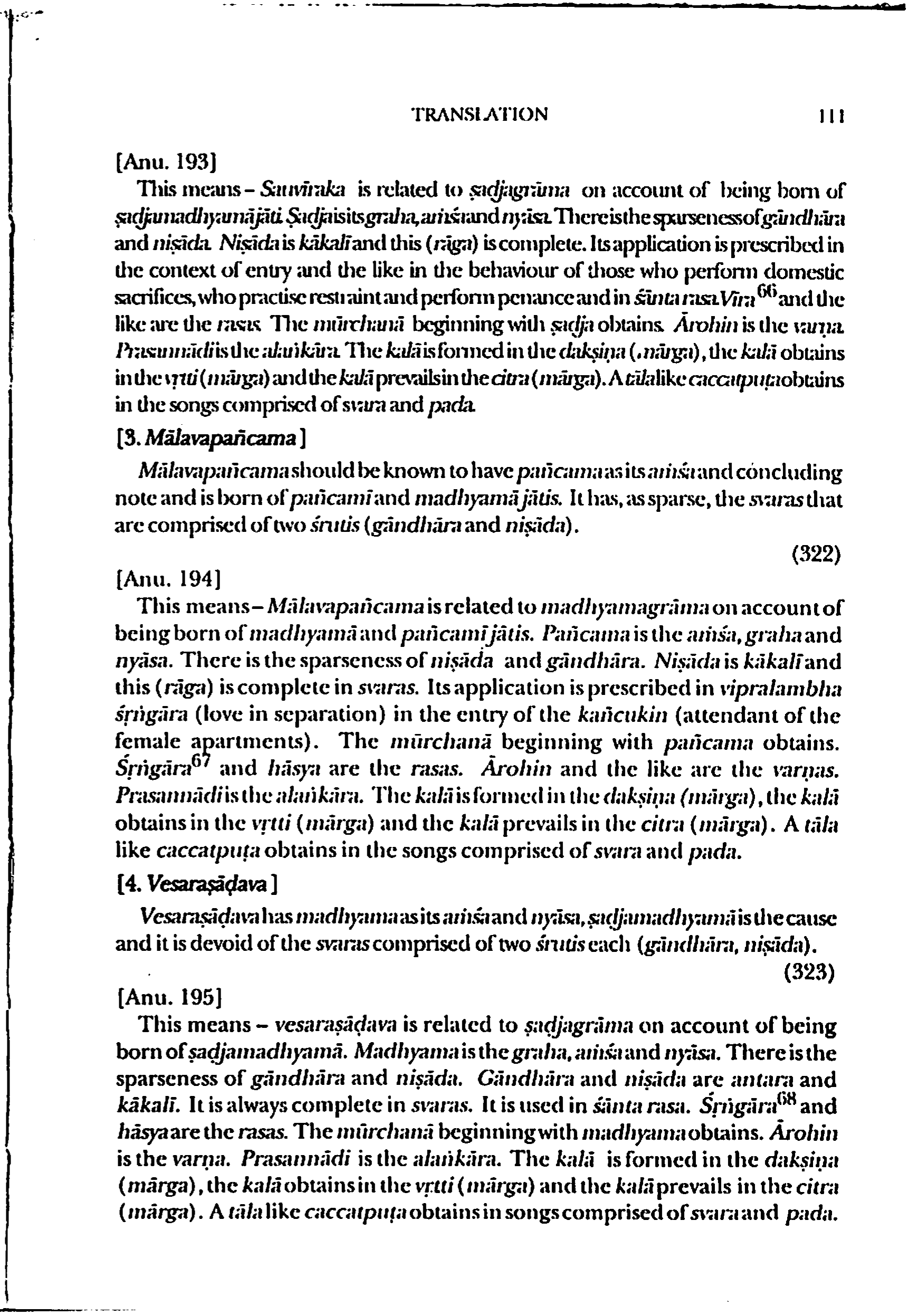
[Anu. 193]
This means - Sauvīraka is related to sadjagrāma on account of being born of ṣaḍjamadhyamājāti1 Ṣaḍjaisitsgraha,amśandnyāsa.6 Thereisthe sparsenessof gāndhāra and niṣāda. Niṣāda is kākalī and this (rāga) is complete.4 Its application is prescribed in the context of entry and the like in the behaviour of those who perform domestic sacrifices, who practise restraint and perform penance and in sinta rasa Vira 66 and the like are the rasas. The mürchanā beginning with sadja obtains.9 Arohin is the varna. Prasumādiis the alarikāra. The kalā is formed in the dakṣiṇa („nārga), the kalā obtains in the vitti (mārga) and the kalā prevailsin the citra (mārga). A tālalike caccatputa obtains in the songs comprised of svara and pada. Mālavapancamashould be known to have pancamaasits anistand concluding note and is born of pañcami and madhyamā jātis. It has, as sparse, the svaras that are comprised of two śrutis (gāndhāra and niṣāda).
(322)
[Anu. 194]
This means-Mālavapañcamais related to madhyamagrāma on account of being born of madhyamā and pañcamī jātis.2 Pañcama is the amśa, graha and nyāsa. There is the sparseness of niṣāda and gāndhāra. Niṣāda is kākalī and this (rāga) is complete in svaras. Its application is prescribed in vipralambha śṛṅgāra (love in separation)12 in the entry of the kañcukin (attendant of the female apartments). The mūrchanā beginning with pañcama obtains.10 Śringāra67 and hāsya are the rasas. Ārohin and the like are the varņas. Prasannādi is the alankāra. The kalā is formed in the dakṣiṇa (mārga), the kalā obtains in the vṛtti (mārga) and the kalā prevails in the citra (mārga). A tāla like caccatputa obtains in the songs comprised of svara and pada. Vesaraṣāḍavahas madhyamaas its amsaand nyāsa, ṣaḍjamadhyamā is the cause and it is devoid of the svaras comprised of two śrutis each (gāndhāra, niṣāda).
(323)
[Anu. 195]
This means - vesaraṣāḍava is related to ṣaḍjagrāma on account of being born of ṣaḍjamadhyamā.3 Madhyama is the graha, amśa and nyāsa. There is the sparseness of gāndhāra and niṣāda. Gāndhāra and niṣāda are antara and kākalī.5 It is always complete in svaras. It is used in sānta rasa.13 Šriigāra68 and hāsyaare the rasas. The mūrchanā beginning with madhyama obtains.11 Ārohin is the varņa. Prasannādi is the alankāra. The kalā is formed in the dakṣiṇa (mārga), the kalā obtains in the vṛtti (mārga) and the kalā prevails in the citra (mārga). A tāla like caccatpuṭa obtains in songs comprised of svara and pada.
1.[relation] Sauvīraka is related to sadjagrāma because it is born of ṣaḍjamadhyamājātiसौवीरकः षड्जग्रामसम्बन्धः षड्जमध्यमाज?ातेर्ज?ातत्वात्
2.[relation] Mālavapañcama is related to madhyamagrāma on account of being born of madhyamā and pañcamī jātisमालवपञ्चमो मध्यमग्रामसम्बन्धः, मध्यमापञ्चमीसमुत्पन्नत्वात्
3.[relation] Vesaraṣāḍava is related to ṣaḍjagrāma on account of being born of ṣaḍjamadhyamāवेसरषाडवः षड्जग्रामसम्बन्धः षड्जमध्यमाज?ातत्वात्
4.[structural] In Sauvīraka, niṣāda is kākalīनिषादः काकली । पूर्णश्चायम्
5.[structural] In Vesaraṣāḍava, gāndhāra and niṣāda are antara and kākalīगान्धारिनषादौ काकल्यन्तरौ
6.[structural] In Sauvīraka, ṣaḍja is the graha, aṁśa and nyāsaषड्ज?ोऽस्य ग्रहोंऽशो न्यासश्च
7.[structural] In Mālavapañcama, pañcama is the aṁśa, graha and nyāsaपञ्चमीऽशो ग्रहो न्यासश्च
8.[structural] In Vesaraṣāḍava, madhyama is the graha, aṁśa and nyāsaमध्यमो ऽशो ग्रहो न्यासश्च
9.[structural] Sauvīraka has a mürchanā beginning with sadjaवास्य षड्ज?ादिमूर्छना
10.[structural] Mālavapañcama has a mürchanā beginning with pañcamaपञ्चमादि-मूर्छना
11.[structural] Vesaraṣāḍava has a mürchanā beginning with madhyamaमध्यमादि-मूर्छना
12.[structural] Mālavapañcama is applied in vipralambha śṛṅgāra (love in separation)विप्रलम्भशृङ्गारे कञ्चकीप्रवेशेऽस्य विनियोगः
14.[structural] Prasannādi is the alaṅkāra used in all three rāgasप्रसन्नादिरलङ्कारः
15.[structural] All three rāgas (Sauvīraka, Mālavapañcama, Vesaraṣāḍava) use a tāla like caccatpuṭa in songs comprised of svara and padaस्वरपदगीते चच्चत्पुटादितालः
1.[relation]Sauvīraka is related to sadjagrāma because it is born of ṣaḍjamadhyamājātiSauvīraka is related to sadjagrāma on account of being born of ṣaḍjamadhyamājāti
2.[relation]Mālavapañcama is related to madhyamagrāma on account of being born of madhyamā and pañcamī jātisMālavapañcamais related to madhyamagrāma on account of being born of madhyamā and pañcamī jātis.
3.[relation]Vesaraṣāḍava is related to ṣaḍjagrāma on account of being born of ṣaḍjamadhyamāvesaraṣāḍava is related to ṣaḍjagrāma on account of being born of ṣaḍjamadhyamā.
4.[structural]In Sauvīraka, niṣāda is kākalīNiṣāda is kākalī and this (rāga) is complete.
5.[structural]In Vesaraṣāḍava, gāndhāra and niṣāda are antara and kākalīGāndhāra and niṣāda are antara and kākalī.
6.[structural]In Sauvīraka, ṣaḍja is the graha, aṁśa and nyāsaṢaḍjaisitsgraha,amśandnyāsa.
7.[structural]In Mālavapañcama, pañcama is the aṁśa, graha and nyāsaPañcama is the aṁśa, graha and nyāsa.
8.[structural]In Vesaraṣāḍava, madhyama is the graha, aṁśa and nyāsaMadhyama is the graha, aṁśa and nyāsa.
9.[structural]Sauvīraka has a mürchanā beginning with sadjaThe mürchanā beginning with sadja obtains.
10.[structural]Mālavapañcama has a mürchanā beginning with pañcamaThe mūrchanā beginning with pañcama obtains.
11.[structural]Vesaraṣāḍava has a mürchanā beginning with madhyamaThe mūrchanā beginning with madhyama obtains.
12.[structural]Mālavapañcama is applied in vipralambha śṛṅgāra (love in separation)Its application is prescribed in vipralambha śṛṅgāra (love in separation)
13.[structural]Vesaraṣāḍava is used in sānta rasaIt is used in sānta rasa.
14.[structural]Prasannādi is the alaṅkāra used in all three rāgasPrasannādi is the alaṅkāra.
15.[structural]All three rāgas (Sauvīraka, Mālavapañcama, Vesaraṣāḍava) use a tāla like caccatpuṭa in songs comprised of svara and padaA tāla like caccatpuṭa obtains in the songs comprised of svara and pada.