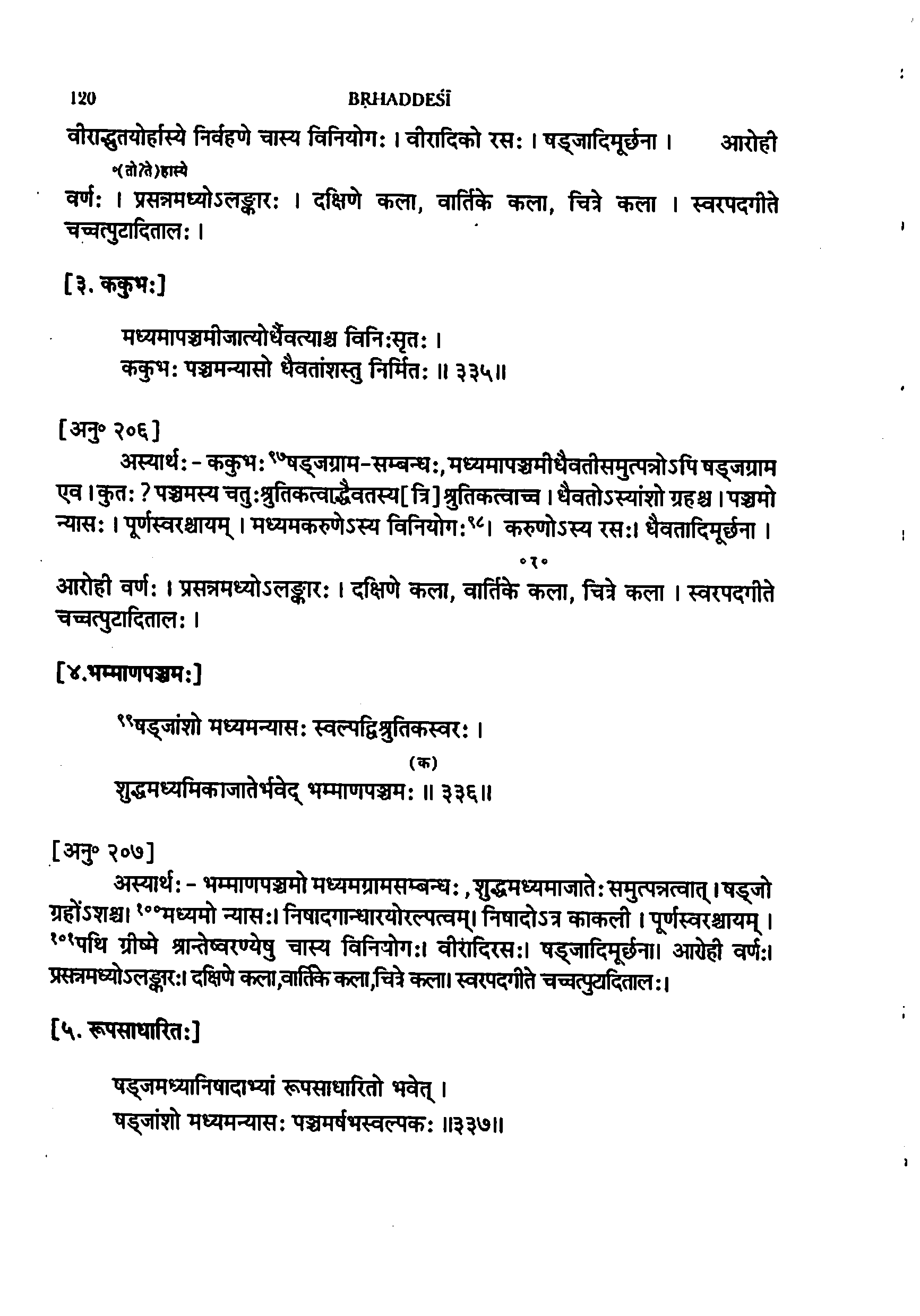
and hāsya (rasas) and
nirvahaṇa (sandhi).
Vīra80 and the like is the rasa.11 The
mūrchanā beginning with ṣaḍja obtains. Ārohin is the varņa.
Prasannamadhya
is the
alankāra. The kalā is formed in the
dakṣiṇa (mārga), the
kalā obtains
in the
vārtika (mārga) and the
kalā prevails in the
citra (mārga). A
tāla like
caccatputa obtains in the songs comprised of svara and pada.
Kakubha comes out of
madhyamā,
pañcamī and
dhaivatī jātis, has
pañcama
as its nyāsa and is formed with
dhaivata as the amśa.
(335)
[Anu. 206]
Its meaning is thus –
Kakubha is related to şadjagrāma. How is it related
to şadjagrāma alone in spite of being born of madhyamā, pañcamī and
dhaivatī?2 On account of
pañcama being comprised of four śrutis and
dhaivata of three śrutis.
Dhaivata is its amśa and graha.
Pañcama is the nyāsa
and this (rāga) is complete in svaras. Its application is prescribed in the medium state of karuṇa (rasa).
Karuṇa is its rasa.6 The mūrchanā beginning
with dhaivata obtains.7 Ārohin is the varņa.
Prasannamadhya is the
alaṅkāra.
The kalā is formed in the
dakṣiṇa (mārga), the kalā obtains in the
vārtika
(mārga) and the kalā prevails in the citra(mārga). A tāla like caccatupṭa
obtains in the songs comprised of svara and pada.
Bhammāṇapañcama comes of
ṣaḍjamadhyamā jāti, has ṣaḍja as its aṅiśa,
madhyama as nyāsa and treats as sparse the svaras comprised of two śrutis each.
(336)
[Anu. 207]
Its meaning is thus –
Bhammāṇapañcama is related to madhyamagrāma on
account of being born of sadja-madhyamā jāti.3 Şadja is the graha and anisa,
madhyama is the nyāsa.8 There is the sparseness of niṣāda and gāndhāra.9 Niṣāda
is kākalī here4 and this (rāga) is complete in svaras.
Its application is prescribed
in (the situation of ) travel on a path in summer, (by those) full of fatigue and
in (the depiction of) forests.10 Vīra and the like is the rasa
83. The
mūrchanā
beginning with ṣadjaobtains. Ārohinisthe varṇa.
Prasannamadhya isthe
alankāra.
The kalā is formed in the
dakṣiṇa (mārga), the kalā obtains in the
vārtika (mārga)
and the kalāprevails in the
citra (mārga). A tāla like
caccatpuṭa obtains in the songs
comprised of svara and pada.
Rūpasādhārita is born of şadjamadhyamā and naiṣādī (jātis).12 It has ṣadja as
its
amśa, madhyama as
nyāsa and is with sparse
pañcama and
ṛṣabha.
(337)