Source scans · vol_II_p070
recto · open full
scan recto
verso · open full
scan verso
Bṛhaddeśī · Volume II
pp. 122–123folio 070
Devanāgarī (Bṛhaddeśī)
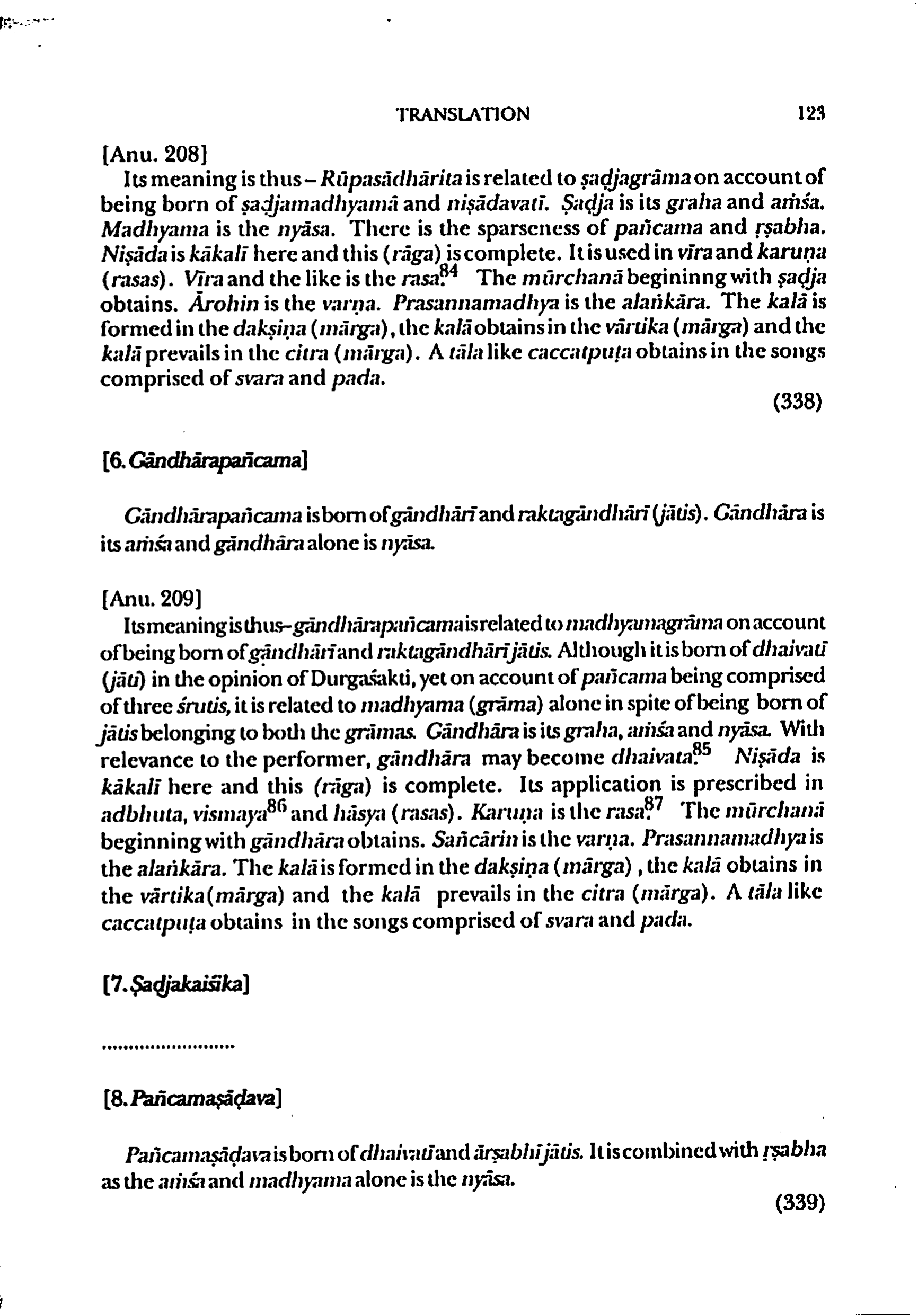
[अनु॰ २०८]
अस्यार्थः - रूपसाधारितः षड्जग्रामसम्बन्धः षड्जमध्यमानिषाद-[वती]-सकाशादुत्पन्नत्वात्2
षङ्जोऽस्य ग्रहोंऽशश्च । मध्यमो न्यास: । पञ्चमर्षभयोरल्पत्वम्(पञ्चमर्पभयोरल्पत्वम्) । निषादोऽत्र काकलीपूर्णश्चायम्।
वीरकरुणेऽस्य प्रयोग: । वीरादिरस: । षङ्जादिमूर्छना । १०२आरोही वर्ण: । अलङ्कार: प्रसन्नमध्य: । दक्षिणे
कला, वार्तिक कला, चित्रे कला। स्वरपदगीते चच्चत्पुयदितालः।
[६. गान्धारपञ्चम:]
गान्धारीरक्तगान्धार्योर्जातो गान्धारपञ्चम:53
गान्धारोऽस्य भवेदंशो न्यासो गान्धार एव च ॥३३८॥
[अनु॰ २०९]
अस्यार्थ: – गान्धारपञ्चमो मध्यमग्रामसम्बन्धः7, गान्धारीरक्तगान्धारीसमुत्पन्नत्वात् । यद्यपि १॰३दुर्गशक्तिमते धैवतीसमुत्पत्रोऽसौ1, तथापि पञ्चमस्य त्रिश्रुतिकत्वादुभयग्रामजातिजातोऽपि मध्य[म]-
सम्बन्ध एव4गान्धारोऽस्य ग्रहोंऽशो न्यासश्च8, प्रयोक्त्रपेक्षया गान्धारो धैवतो भवेत् १०४। निषादोऽत्र काकली।
पूर्णश्चायम्। १०५अद्भुते विस्मये हास्ये चास्य विनियोगः9। करुणो रसः। गान्धारादिमूर्छना सञ्चारीर(स): वर्णः11
अद्भुते( ऽस्य विनियोग:)
प्रसन्नमध्यमोऽलङ्कारः10 । दक्षिणे कला, वार्तिके कला, चित्रे कला। स्वरपदगीते चच्चपुयदितालः।
[७. षड्जकैशिक:]१०६ ..............
[८. पञ्चमषाडवः]
धैवत्यार्षभिकाजात्योर्जात:(भी?भिका) पञ्चमषाडव:6
ऋषभांशसमायुक्तो<b>(</b>श) मध्यमो न्यास एव च12 ॥३३९॥
English — Sharma (translation)
Electric and the
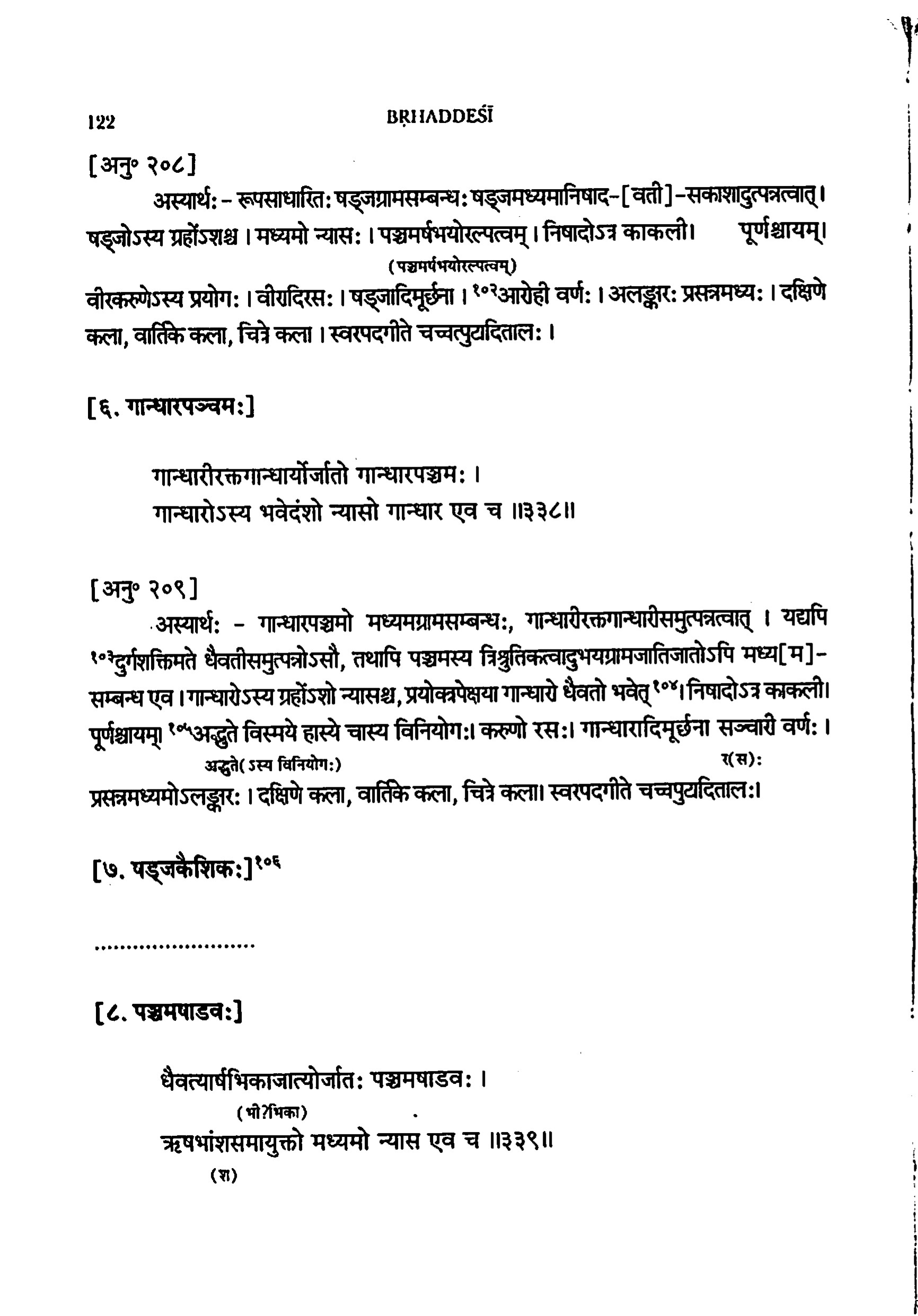
[Anu. 208]
Its meaning is thus - Rūpasādhārita is related to şadjagrāma on account of being born of şadjamadhyamā and niṣādavatī.2 Şadja is its graha and amśa. Madhyama is the nyāsa. There is the sparseness of pañcama and ṛṣabha. Niṣāda is kākalī here and this (rāga) is complete. It is used in vīra and karuņa (rasas). Vīra and the like is the rasa84 The mūrchanā begininng with ṣaḍja obtains. Arohin is the varna. Prasannamadhya is the alankāra. The kalā is formed in the dakṣiṇa (mārga), the kalā obtains in the vārtika (mārga) and the kalā prevails in the citra (mārga). A tāla like caccatpuṭa obtains in the songs comprised of svara and pada.
(338)
Gāndhārapañcama isborn of gāndhārī and raktagāndhārī (jātis). Gāndhāra is its amśa and gāndhāra alone is nyāsa.
[Anu. 209]
Itsmeaning is thus-gāndhārapañcama is related to madhyamagrāma on account of being born of gāndhārī and raktagāndhārī jātis7. Although it is born of dhaivatī (jāti) in the opinion of Durgaśakti1, yet on account of pañcama being comprised of three śrutis, it is related to madhyama (grāma) alone in spite of being born of jātis belonging to both the grāmas.4 Gāndhāra is its graha, amśa and nyāsa. With relevance to the performer, gāndhāra may become dhaivata.85 Niṣāda is kākalī here and this (rāga) is complete. Its application is prescribed in adbhuta, vismaya86 and hāsya (rasas). Karuṇa is the rasa87 The mūrchanā beginning with gāndhāra obtains. Sañcārin is the varņa.11 Prasannamadhya is the alankāra. The kalā is formed in the dakṣiṇa (mārga), the kalā obtains in the vārtika(mārga) and the kalā prevails in the citra (mārga). A tāla like caccatputa obtains in the songs comprised of svara and pada. *************** Pañcamaṣāḍavaisborn of dhaivatī and ārṣabhī jātis. It is combined with ṛṣabha as the amśa and madhyama alone is the nyāsa.
(339)
1.[attribution]Durgaśakti holds an alternative view that Gāndhārapañcama is born of dhaivatīयद्यपि १॰३दुर्गशक्तिमते धैवतीसमुत्पत्रोऽसौ
2.[relation]Rūpasādhārita is related to şadjagrāma and originates from şadjamadhyamā and niṣādavatīरूपसाधारितः षड्जग्रामसम्बन्धः षड्जमध्यमानिषाद-[वती]-सकाशादुत्पन्नत्वात्
3.[relation]Gāndhārapañcama is born of gāndhārī and raktagāndhārī jātisगान्धारीरक्तगान्धार्योर्ज?ातो गान्धारपञ्चमः
4.[relation]Gāndhārapañcama is related to madhyamagrāma despite being born of jātis from both grāmasगान्धारपञ्चमो मध्यमग्रामसम्बन्धः, गान्धारीरक्तगान्धारीसमुत्पन्नत्वात् । यद्यपि १॰३दुर्गशक्तिमते धैवतीसमुत्पत्रोऽसौ, तथापि पञ्चमस्य त्रिश्रुतिकत्वादुभयग्रामजातिज?ातोऽपि मध्य[म]- सम्बन्ध एव
5.[relation]raktagāndhārī jāti is one of the parent jātis of Gāndhārapañcamaगान्धारीरक्तगान्धार्योर्ज?ातो गान्धारपञ्चमः
6.[relation]Pañcamaṣāḍava is born of dhaivatī and ārṣabhī jātisधैवत्यार्षभिकाज?ात्योर्ज?ातः पञ्चमषाडवः
7.[relation]Gāndhārapañcama is related to madhyamagrāmaगान्धारपञ्चमो मध्यमग्रामसम्बन्धः
8.[structural]Gāndhāra is the graha, aṁśa, and nyāsa of Gāndhārapañcamaगान्धारोऽस्य ग्रहोंऽशो न्यासश्च
9.[structural]Gāndhārapañcama is used in adbhuta, vismaya, and hāsya rasasअद्भुते विस्मये हास्ये चास्य विनियोगः
10.[structural]Prasannamadhya is the alaṅkāra of Gāndhārapañcamaप्रसन्नमध्यमोऽलङ्कारः
11.[structural] Sañcārin is the varņa of Gāndhārapañcamaसञ्चारी वर्णः
12.[structural]Pañcamaṣāḍava has ṛṣabha as aṁśa and madhyama as nyāsaऋषभांशसमायुक्तो मध्यमो न्यास एव च
1.[attribution] Durgaśakti holds an alternative view that Gāndhārapañcama is born of dhaivatīAlthough it is born of dhaivatī (jāti) in the opinion of Durgaśakti
2.[relation] Rūpasādhārita is related to şadjagrāma and originates from şadjamadhyamā and niṣādavatīRūpasādhārita is related to şadjagrāma on account of being born of şadjamadhyamā and niṣādavatī.
4.[relation] Gāndhārapañcama is related to madhyamagrāma despite being born of jātis from both grāmasgāndhārapañcama is related to madhyamagrāma on account of being born of gāndhārī and raktagāndhārī jātis. Although it is born of dhaivatī (jāti) in the opinion of Durgaśakti, yet on account of pañcama being comprised of three śrutis, it is related to madhyama (grāma) alone in spi
7.[relation] Gāndhārapañcama is related to madhyamagrāmagāndhārapañcama is related to madhyamagrāma on account of being born of gāndhārī and raktagāndhārī jātis
8.[structural] Gāndhāra is the graha, aṁśa, and nyāsa of GāndhārapañcamaGāndhāra is its graha, aṁśa and nyāsa.
10.[structural] Prasannamadhya is the alaṅkāra of GāndhārapañcamaPrasannamadhya is the alaṅkāra.
11.[structural]Sañcārin is the varņa of GāndhārapañcamaSañcārin is the varņa.
12.[structural] Pañcamaṣāḍava has ṛṣabha as aṁśa and madhyama as nyāsaIt is combined with ṛṣabha as the aṁśa and madhyama alone is the nyāsa.