Source scans · vol_II_p076
recto · open full
scan recto
verso · open full
scan verso
Bṛhaddeśī · Volume II
pp. 134–135folio 076
Devanāgarī (Bṛhaddeśī)
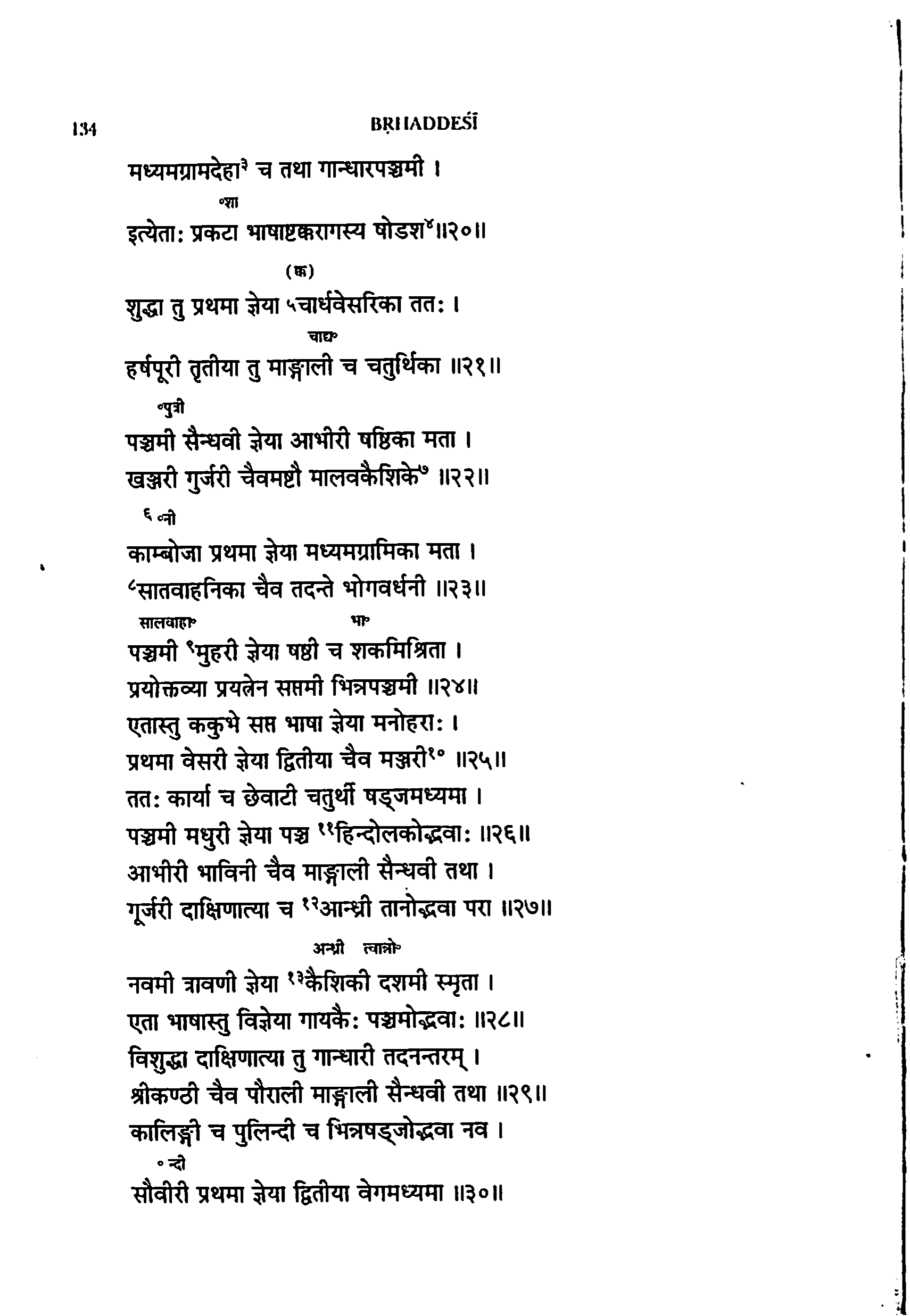
मध्यमग्रामदेहा च तथा गान्धारपञ्चमी
इत्येता: प्रकटा भाषाष्टकरागस्य षोडश10॥२०॥ (田)
शुद्धा तु प्रथमा ज्ञेया ५चार्धवेसरिका तत:।
हर्षपूरी॰पुत्री तृतीया तु माङ्गाली च चतुर्थिका ॥२१॥
पञ्चमी सैन्धवी ज्ञेया आभीरी षष्टिका मता।
खञ्जरी६ नी गुर्जरी चैवमष्टौ मालवकैशिके11 ॥२२॥
काम्बोजा प्रथमा ज्ञेया मध्यमग्रामिका मता ।
५सातवाहनिकासालवाहा चैव तदन्ते भोगवर्धनी ॥२३॥ чP
पञ्चमी ९मुहरी ज्ञेया षष्ठी च शकमिश्रिता
प्रयोक्तव्या प्रयत्नेन सप्तमी भित्रपञ्चमी ॥२४॥
एतास्तु ककुभे सप्त भाषा ज्ञेया मनोहरा:।
प्रथमा वेसरी ज्ञेया द्वितीया चैव मञ्जरी १० ॥२५॥
ततः कार्या च छेवाटी चतुर्थी षड्जमध्यमा।
पञ्चमी मधुरी ज्ञेया पञ्च ११हिन्दोलकोद्भवाः ॥२६॥
आभीरी भाविनी चैव माङ्गाली सैन्धवी तथा।
गूर्जरी दाक्षिणात्या१२आन्ध्रीअन्ध्री त्वात्रो॰ तानोद्भवा परा ॥२७॥
नवमी त्रावणी ज्ञेया १३कैशिकी दशमी स्मृता ।
एता भाषास्तु विज्ञेया गायकै: पञ्चमोद्भवा: ॥२८॥
विशुद्धा दाक्षिणात्या तु गान्धारी तदनन्तरम् ।
श्रीकण्ठी चैव पौराली माङ्गाली सैन्धवी तथा ॥२९॥
कालिङ्गी॰ न्दो च पुलिन्दी च भित्रषड्जोद्भवा नव।
सौवीरी प्रथमा ज्ञेया द्वितीया वेगमध्यमा ॥३०॥
English — Sharma (translation)
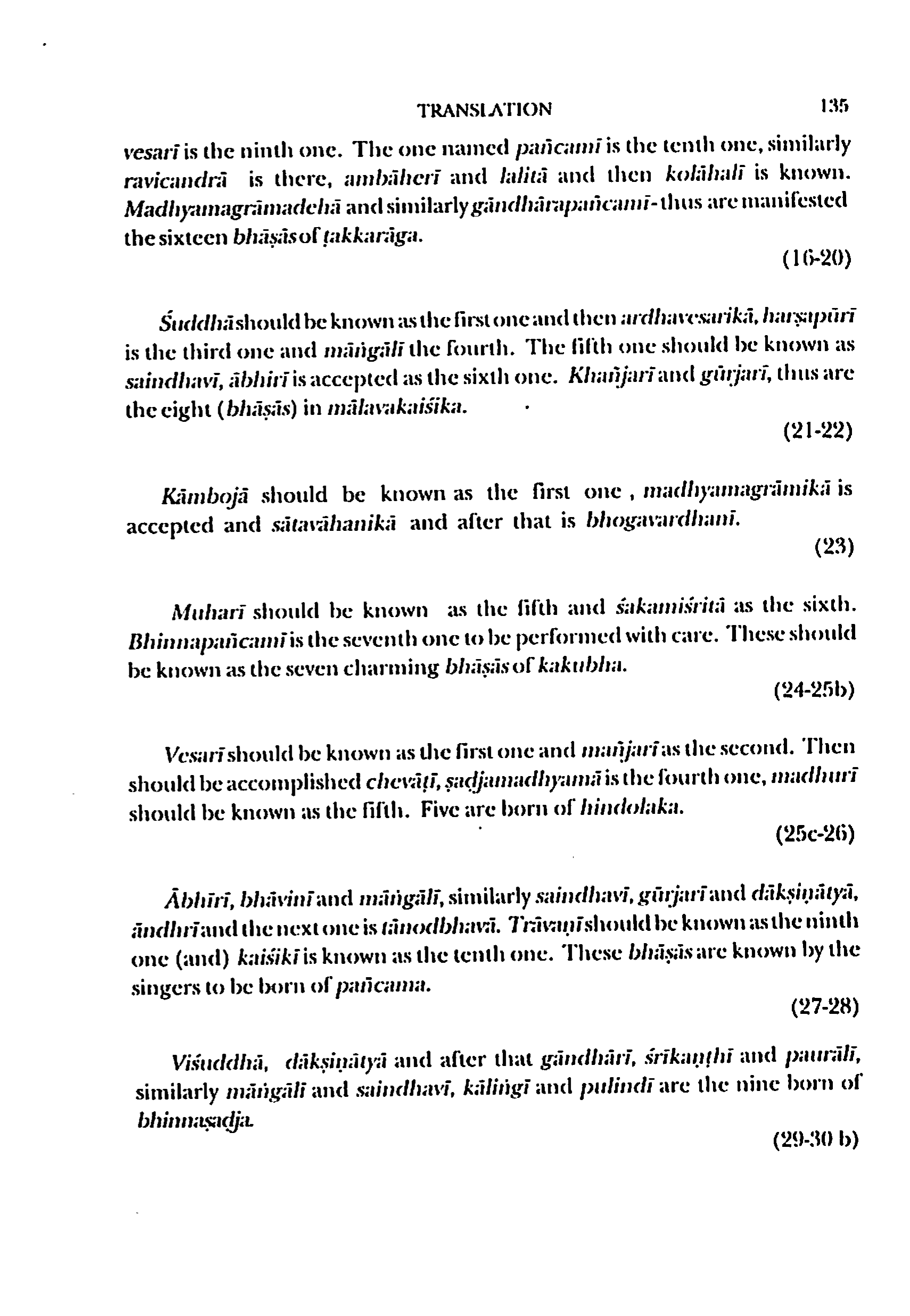
vesarī is the ninth one. The one named pañcamī is the tenth one, similarly ravicandrā is there, ambāherī and lalitā and then kolāhalī is known. Madhyamagrāmadehā and similarly gāndhārapañcamī-thus are manifested the sixteen bhāṣās of ṭakkarāga.10 (16-20) Śuddhāshould be known as the first one and then ardhavesarikā, harṣapūrī is the third one and māngālī the fourth. The fifth one should be known as saindhavī, ābhirī is accepted as the sixth one. Khañjarī and gūrjarī, thus are the eight (bhāṣās) in mālavakaišika.2 (21-22) Kāmbojā should be known as the first one, madhyamagrāmikā is accepted and sātavāhanikā and after that is bhogavardhani.
(23)
Muharī should be known as the fifth and śakamiśritā as the sixth. Bhinnapañcami is the seventh one to be performed with care.3
These should be known as the seven charming bhāṣās of kakubha.12 (24-25b) Vesari should be known as the first one and manjari as the second. Then should be accomplished chevāṭī, ṣaḍjamadhyamā is the fourth one, madhurī should be known as the fifth. Five are born of hindolaka.4 (25c-26) Ābhīrī, bhāvinī and māṅgālī, similarly saindhavī, gūrjarī and dākṣiṇātyā, āndhrī and the next one is tānodbhavā. Trāvaņī should be known as the ninth one (and) kaišiki is known as the tenth one. These bhāṣās are known by the singers to be born of pañcama.5 (27-28) Visuddhā, dākṣiṇātyā and after that gāndhārī, śrīkaṇṭhī and paurālī, similarly māngāli and saindhavī, kālingī and pulindī are the nine born of bhinnaşadja.6 (29-30 b)
10.[structural]ṭakkarāga has sixteen bhāṣāsइत्येताः प्रकटा भाषाष्टकरागस्य षोडश
11.[structural] mālavakaišika contains eight bhāṣāsखञ्जरी गुर्जरी चैवमष्टौ मालवकैशिके
1.[definition]bhāṣās are varieties associated with different rāgas and musical systemsThese bhāṣās are known by the singers to be born of pañcama.
2.[enumeration]The eight bhāṣās of mālavakaišika are: śuddha, ardhavesarikā, harṣapūrī, māngālī, saindhavī, ābhirī, khañjarī, and gūrjarīŚuddhāshould be known as the first one and then ardhavesarikā, harṣapūrī is the third one and māngālī the fourth. The fifth one should be known as saindhavī, ābhirī is accepted as the sixth one. Khañjarī and gūrjarī, thus are the eight (bhāṣās) in mālavakaišika.
3.[enumeration]The seven bhāṣās of kakubha are: kāmbojā, madhyamagrāmikā, sātavāhanikā, bhogavardhani, muharī, śakamiśritā, and bhinnapañcamiKāmbojā should be known as the first one, madhyamagrāmikā is accepted and sātavāhanikā and after that is bhogavardhani. (23) Muharī should be known as the fifth and śakamiśritā as the sixth. Bhinnapañcami is the seventh one to be performed with care.
4.[enumeration]The five bhāṣās of hindolaka include: vesari, manjari, chevāṭī, ṣaḍjamadhyamā, and madhurīVesari should be known as the first one and manjari as the second. Then should be accomplished chevāṭī, ṣaḍjamadhyamā is the fourth one, madhurī should be known as the fifth. Five are born of hindolaka.
5.[enumeration]The bhāṣās born of pañcama include: ābhīrī, bhāvinī, māṅgālī, saindhavī, gūrjarī, dākṣiṇātyā, āndhrī, tānodbhavā, trāvaņī, and kaišikiĀbhīrī, bhāvinī and māṅgālī, similarly saindhavī, gūrjarī and dākṣiṇātyā, āndhrī and the next one is tānodbhavā. Trāvaņī should be known as the ninth one (and) kaišiki is known as the tenth one. These bhāṣās are known by the singers to be born of pañcama.
6.[enumeration]The nine bhāṣās born of bhinnaşadja include: visuddhā, dākṣiṇātyā, gāndhārī, śrīkaṇṭhī, paurālī, māngāli, saindhavī, kālingī, and pulindīVisuddhā, dākṣiṇātyā and after that gāndhārī, śrīkaṇṭhī and paurālī, similarly māngāli and saindhavī, kālingī and pulindī are the nine born of bhinnaşadja.
7.[relation]Five bhāṣās are born of hindolakaFive are born of hindolaka.
8.[relation]bhāṣās associated with pañcama are known by singersThese bhāṣās are known by the singers to be born of pañcama.
9.[relation]Nine bhāṣās are born of bhinnaşadjakālingī and pulindī are the nine born of bhinnaşadja.
10.[structural] ṭakkarāga has sixteen bhāṣāsthus are manifested the sixteen bhāṣās of ṭakkarāga.
11.[structural]mālavakaišika contains eight bhāṣāsKhañjarī and gūrjarī, thus are the eight (bhāṣās) in mālavakaišika.
12.[structural]kakubha has seven charming bhāṣāsThese should be known as the seven charming bhāṣās of kakubha.