Source scans · vol_II_p105
recto · open full
scan recto
verso · open full
scan verso
Bṛhaddeśī · Volume II
pp. 192–193folio 105
Devanāgarī (Bṛhaddeśī)
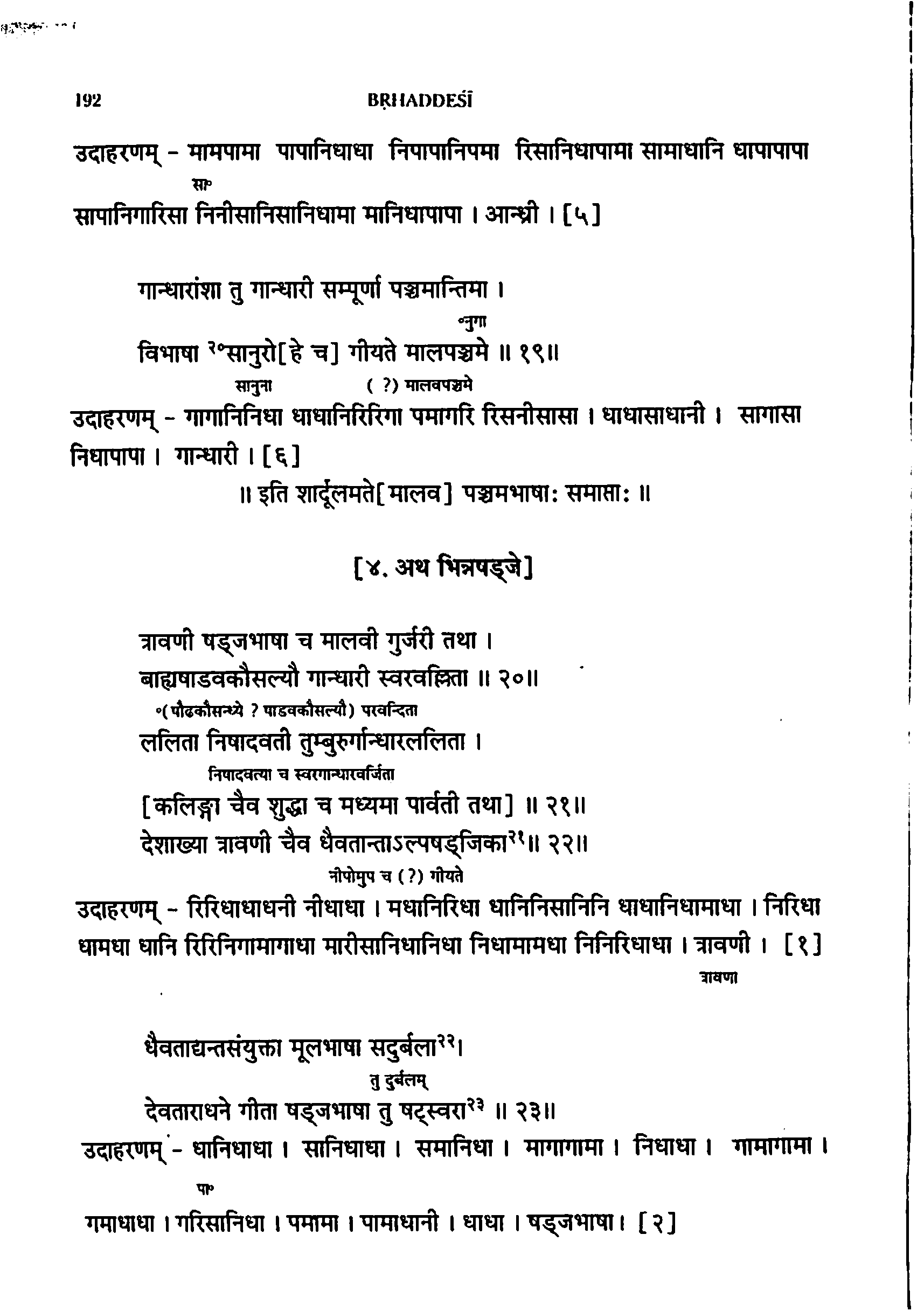
उदाहरणम् - मामपामासः पापानिधाधा निपापानिपमा रिसानिधापामा सामाधानि धापापापा सापानिगारिसा निनीसानिसानिधामा मानिधापापा । आन्ध्री । [५] गान्धारांशा तु गान्धारीसानुना सम्पूर्णा पञ्चमान्तिमा9(?) मालवपञ्चमे8 विभाषा र॰सानुरो[हे च] गीयते मालपञ्चमे5 ॥१९॥ उदाहरणम् - गागानिनिधा धाधानिरिरिगा पमागरि रिसनीसासा । धाधासाधानी । सागासा निधापापा । गान्धारी । [६] ॥ इति शार्दुलमते[मालव] पञ्चमभाषा: समाप्ता: ॥61
[४. अथ भित्रपड्जे]
त्रावणी षड्जभाषा च मालवी गुर्जरी तथा । बाह्यषाडवकौसल्यौ॰(पौढकौसन्थ्ये ? पाडवकौसल्यौ) परवन्दिता गान्धारी स्वरविक्रता2 ॥२०॥
लिलता निषादवती तुम्बुरुगिन्धारलिलतानिषादवत्या च स्वरगान्धारवर्जिता
[कलिङ्गा चैव शुद्धा च मध्यमा पार्वती तथा] ॥२१॥ देशाख्या त्रावणी चैव धैवतान्ताऽल्पषड्जिकारा10नीपोम्प च (?) गीयते॥२२॥ उदाहरणम् - रिरिधाधाधनी नीधाधा । मधानिरिधा धानिनिसानिनि धाधानिधामाधात्रीवणी । निरिधा धामधा धानि रिरिनिगामागाधा मारीसानिधानिधा निधामामधा निनिरिधाधा । त्रावणी । [१]
धैवताद्यन्तसंयुक्ता मूलभाषा सदुर्बला3२२तु दुर्बलम्
देवताराधने गीता षड्जभाषा तु षट्स्वरा4२३ ॥२३॥
उदाहरणम् - धानिधाधापा । सानिधाधा । समानिधा । मागागामा । निधाधा । गामागामा ।
गमाधाधा । गरिसानिधा । पमामा । पामाधानी । धाधा । षड्जभाषा । [२]
English — Sharma
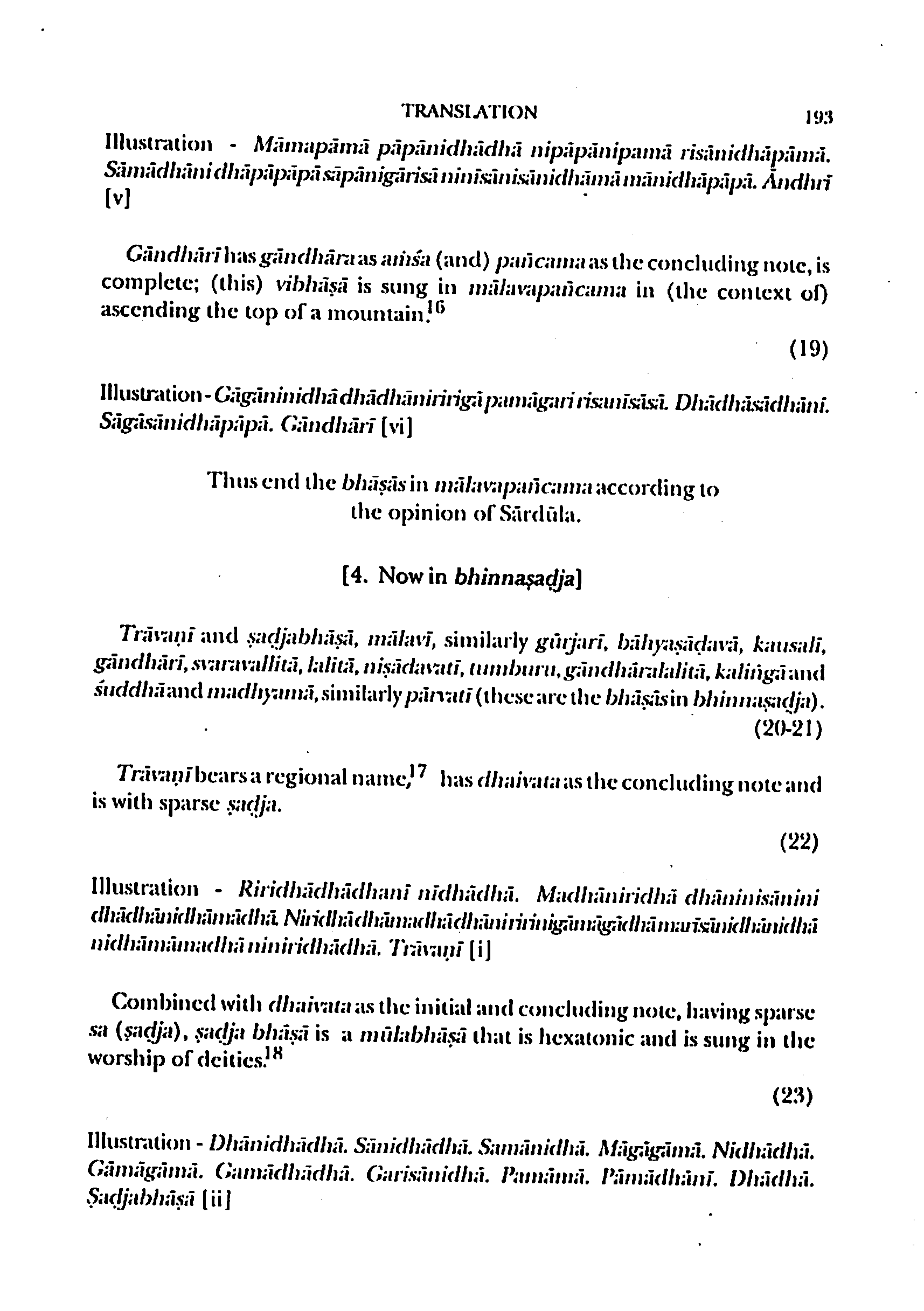
Illustration - Māmapāmā pāpānidhādhā nipāpānipamā risānidhāpāmā. Sāmādhāni dhāpāpāsāpānigārisā ninīsānisānidhāmā mānidhāpāpā. Āndhrī
[v]
Gāndhārī has gāndhāra as amśa (and) pancama as the concluding note, is complete; (this) vibhāṣā is sung in mālavapañcama in (the context of)
ordered sequence list
list of bhāṣās in bhinnaṣaḍja — verses (20-21); enumeration of bhāṣās belonging to bhinnaṣaḍja grāmarāga
t · r · ā · v · a · ṇ · ī
ṣ · a · ḍ · j · a · b · h · ā · ṣ · ā
m · ā · l · a · v · ī
g · ū · r · j · a · r · ī
b · ā · h · y · a · ṣ · ā · ḍ · a · v · ā
k · a · u · s · a · l · ī
g · ā · n · d · h · ā · r · ī
s · v · a · r · a · v · a · l · l · i · t · ā
l · a · l · i · t · ā
n · i · ṣ · ā · d · a · v · a · t · ī
t · u · m · b · u · r · u
g · ā · n · d · h · ā · r · a · l · a · l · i · t · ā
k · a · l · i · ṅ · g · ā
ś · u · d · d · h · ā
m · a · d · h · y · a · m · ā
p · ā · r · v · a · t · ī
— [4. Now in bhinnaṣaḍja]
Trāvaṇī bears a regional name, 17 has dhaivata as the concluding note and is with sparse şadja.
(22)
Illustration - Riridhādhādhanī nīdhādhā. Madhāniridhā dhāninisānini dhādhānidhāmādhā. Niridhādhāmadhādhāmiririnigāmāgādhāmarīsānidhāmidhā nidhāmāmadhā niniridhādhā. Trāvaņī [i] Combined with dhaivata as the initial and concluding note, having sparse sa (ṣadja), ṣadja bhāṣā is a mūlabhāṣā that is hexatonic and is sung in the worship of deities.18
(23)
Illustration - Dhānidhādhā. Sānidhādhā. Samānidhā. Māgāgāmā. Nidhādhā. Gāmāgāmā. Gamādhādhā. Garisānidhā. Pamāmā. Pāmādhānī. Dhādhā. Ṣaḍjabhāṣā [ii]
1.[attribution] The bhāṣās in mālavapañcama are attributed to the opinion of Sārdūla॥ इति शार्दुलमते[मालव] पञ्चमभाषाः समाप्ताः ॥
2.[enumeration] bhinnaṣaḍja is a classification that encompasses multiple named bhāṣās including Trāvaņī, śadjabhāṣā, mālavī, and othersत्रावणी षड्जभाषा च मालवी गुर्जरी तथा । बाह्यषाडवकौसल्यौ गान्धारी स्वरविक्रता
3.[relation] ṣaḍja bhāṣā is classified as a mūlabhāṣāधैवताद्यन्तसंयुक्ता मूलभाषा सदुर्बला
4.[relation] mūlabhāṣā is sung in the worship of deitiesदेवताराधने गीता षड्जभाषा तु षट्स्वरा
5.[relation] vibhāṣā is sung in mālavapañcama in the context of ascending the top of a mountainविभाषा र॰सानुरो[हे च] गीयते मालपञ्चमे
6.[structural] mālavapañcama is a musical context in which certain bhāṣās are performed॥ इति शार्दुलमते[मालव] पञ्चमभाषाः समाप्ताः ॥
8.[structural] Gāndhārī has gāndhāra as its aṁśa (characteristic note/component)गान्धारांशा तु गान्धारी सम्पूर्णा पञ्चमान्तिमा ।
9.[structural] Gāndhārī has pancama as its concluding noteगान्धारांशा तु गान्धारी सम्पूर्णा पञ्चमान्तिमा
10.[structural] Trāvaņī in bhinnaṣaḍja has dhaivata as the concluding note and is characterized by sparse ṣaḍjaदेशाख्या त्रावणी चैव धैवतान्ताऽल्पषड्ज?िकारा
1.[attribution]The bhāṣās in mālavapañcama are attributed to the opinion of SārdūlaThus end the bhāṣās in mālavapañcama according to the opinion of Sārdūla.
2.[enumeration]bhinnaṣaḍja is a classification that encompasses multiple named bhāṣās including Trāvaņī, śadjabhāṣā, mālavī, and othersNow in bhinnaṣaḍja] Travaņī and şadjabhāṣā, mālavī, similarly gūrjarī, bāhyaṣāḍavā, kausalī, gāndhārī, svaravallitā, lalitā, niṣādavatī, tumburu, gāndhāralalitā, kaliṅgā and śuddhā and madhyamā, similarly pārvatī
3.[relation]ṣaḍja bhāṣā is classified as a mūlabhāṣāṣaḍja bhāṣā is a mūlabhāṣā
4.[relation]mūlabhāṣā is sung in the worship of deitiesṣaḍja bhāṣā is a mūlabhāṣā that is hexatonic and is sung in the worship of deities.
5.[relation]vibhāṣā is sung in mālavapañcama in the context of ascending the top of a mountainthis vibhāṣā is sung in mālavapañcama in (the context of) ascending the top of a mountain.
6.[structural]mālavapañcama is a musical context in which certain bhāṣās are performedThus end the bhāṣās in mālavapañcama according to the opinion of Sārdūla.
7.[structural]mūlabhāṣā has the structural property of being hexatonic and having dhaivata as initial and concluding note with sparse ṣaḍjaCombined with dhaivata as the initial and concluding note, having sparse sa (ṣaḍja), ṣaḍja bhāṣā is a mūlabhāṣā that is hexatonic
8.[structural]Gāndhārī has gāndhāra as its aṁśa (characteristic note/component)Gāndhārī has gāndhāra as aṁśa (and) pancama as the concluding note, is complete
9.[structural]Gāndhārī has pancama as its concluding noteGāndhārī has gāndhāra as aṁśa (and) pancama as the concluding note
10.[structural]Trāvaņī in bhinnaṣaḍja has dhaivata as the concluding note and is characterized by sparse ṣaḍjaTrāvaṇī bears a regional name, 17 has dhaivata as the concluding note and is with sparse şadja.