Source scans · vol_II_p138
recto · open full
scan recto
verso · open full
scan verso
Bṛhaddeśī · Volume II
pp. 258–259folio 138
Devanāgarī (Bṛhaddeśī)
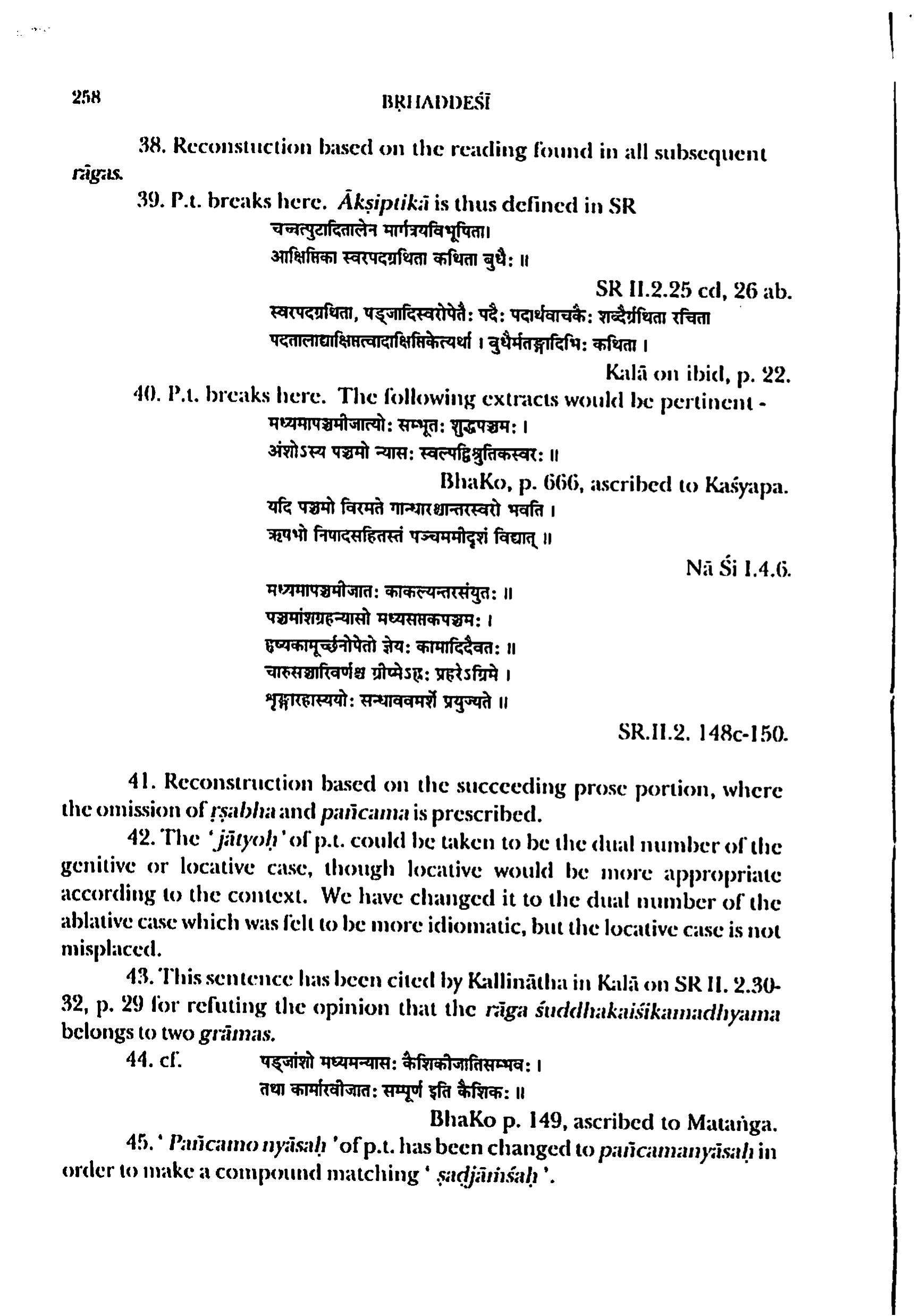
1. ***** 38. Reconstuction based on the reading found in all subsequent rāgas. 39. P.t. breaks here. Ākṣiptikā is thus defined in SR
चच्चत्पुटादितालेन मार्गत्रयविभूपिता।
आक्षिप्तिका स्वरपदग्रथिता कथिता बुधै: ॥
SR II.2.25 cd, 26 ab. स्वरपदग्रधिता, पड्जादिस्वरोपेतै: पदै: पदार्थवाचकै: शब्दैग्रंथिता रचिता11
पदतालाद्याक्षिप्तत्वादाक्षिप्तिकेत्यर्था । वुधैर्मतङ्गादिभि: कथिता ।
Kalā on ibid, p. 22. 40. P.t. breaks here. The following extracts would be pertinent - मध्यमापञ्चमीजात्यो: सम्भूत: शुद्धपञ्चम: । अंशोऽस्य पञ्चमो न्यास: स्वल्पद्विश्रुतिकस्वर:॥ BhaKo, p. 666, ascribed to Kaśyapa.5
यदि पञ्चमो विरमते गान्धारधान्तरस्वरो भवति ।
ऋपभो निपादसहितस्तं पञ्चममीदृशं विद्यात् ॥
Nā Śi 1.4.6.
मध्यमापञ्चमीजातः काकल्यन्तरसंयुतः ॥
पञ्चमांशग्रहन्यासो मध्यसप्तकपञ्चम:।
ष्यकामूर्च्छनोपेतो ज्ञेय: कामादिदैवत: ॥
चारुसञ्चारिवर्णश्च ग्रीप्मेऽहः प्रहरेऽग्रिमे ।
शृङ्गारहास्ययो: सन्धाववमर्शे प्रयुज्यते ॥
SR.II.2. 148c-150. 41. Reconstruction based on the succeeding prose portion, where the omission of rṣabha and pañcama is prescribed. 42. The 'jātyoḥ' of p.t. could be taken to be the dual number of the genitive or locative case, though locative would be more appropriate according to the context. We have changed it to the dual number of the ablative case which was felt to be more idiomatic, but the locative case is not misplaced. 43. This sentence has been cited by Kallinātha in Kalā on SR II. 2.30- 32, p. 29 for refuting the opinion that the rāga śuddhakaiśikamadhyama belongs to two grāmas.
पड्जांशो मध्यमन्यासः कैशिकीजातिसम्भवः।
44. cf.
तथा कार्मारवीजात: सम्पूर्ण इति कैशिक: ॥
BhaKo p. 149, ascribed to Matanga. 45. ' Pañcamo nyāsaḥ 'of p.t. has been changed to pañcamanyāsaḥ in order to make a compound matching ' ṣadjāmśaḥ '.
English — Sharma
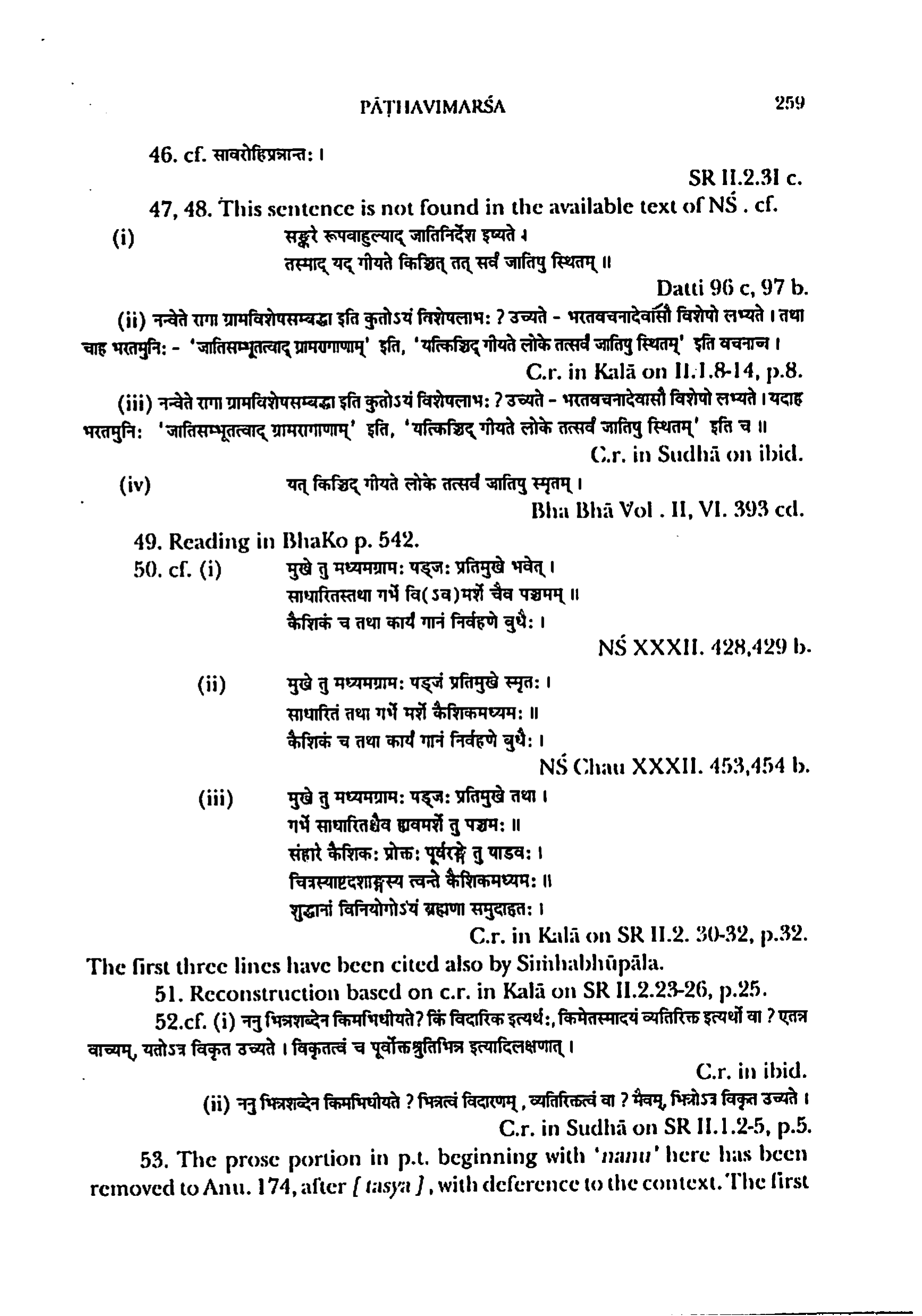
PĀŢHAVIMARŚA
46. cf. सावरोहिप्रनान्तः ।
SR 11.2.31 c. 47, 48. This sentence is not found in the available text of NS. cf.
सङ्करे रूपवाहुल्याद् ज?ातिनिर्देश इप्यते ।
(i)
तस्माद् यद् गीयते किञ्चित् तत् सर्वं ज?ातिषु स्थितम् ॥
Datti 96 c, 97 b. (ii) नन्वेते रागा ग्रामविशेषसम्बद्धा इति कुतोऽयं तिशेषलाभः ? उच्यते - भरतवचनादेवाँसौ विशेषो लभ्यते । तथा
चाह भरतमुनिः - 'ज?ातिसम्भूतत्वाद् ग्रामगगाणाम्' इति, 'यत्किञ्चिद् गीयते लोके तत्सर्वं ज?ातिषु स्थितम्' इति वचनाच ।
C.r. in Kalā on II.1.8-14, p.8. (iii) नन्वेते रागा ग्रामविशेषसम्बद्धा इति कुतोऽयं विशेषलाभः ? उच्यते - भरतवचनादेवासौ विशेषो लभ्यते । यदाह
भरतमुनिः 'ज?ातिसम्भूतत्वाद् ग्रामरागाणाम्' इति, 'यत्किञ्चिद् गीयते लोके तत्सर्वं ज?ातिषु स्थितम्' इति च ॥
C.r. in Sudhā on ibid.8
यत् किञ्चिद् गीयते लोके तत्सर्वं ज?ातिषु स्मृतम् ।
(iv) Bha Bhā Vol . II, VI. 393 cd. 49. Reading in BhaKo p. 542.
मुखे तु मध्यमग्रामः पड्ज?ः प्रतिमुखे भवेत् ।
50. cf. (i)
साधारितस्तथा गर्भे वि(ऽव)मर्शे चैव पञ्चमम् ॥
कैशिकं च तथा कार्यं गानं निर्वहणे वुधैः।
NŚ XXXII. 428,429 b.
मुखे तु मध्यमग्रामः पड्ज? प्रतिमुखे स्मृतः ।
(ii)
साधारितं तथा गर्भे मर्शे कैशिकमध्यमः॥
कैशिकं च तथा कार्यं गानं निर्वहणे बुधैः ।
NŠ Chau XXXII. 453,454 b.
मुखे तु मध्यमग्रामः पड्ज?: प्रतिमुखे तथा ।
(iii)
गर्भे साधारितधैव ह्यवमर्शे तु पञ्चमः॥
संहारे कैशिकः प्रोक्तः पूर्वरङ्गे तु पाडवः ।
चित्रस्याष्टदशाङ्गस्य त्वन्ते कैशिकमध्यमः॥
शुद्धाना विनियोगोऽयं ग्रह्मणा समुदाहतः ।
C.r. in Kalā on SR II.2. 30-32, p.32.7 The first three lines have been cited also by Simhabhūpāla.9 51. Reconstruction based on c.r. in Kalā on SR II.2.23-26, p.25. 52.cf. (i) ननु भित्रशब्देन किमभिधीयते? कि विदारिक इत्यर्थः, किमेतस्मादयं व्यतिरिक्त इत्यर्थो वा ? एतत्र
वाच्यम्, यतोऽत्र विकृत उच्यते । विकृतत्वं च पूर्वोक्तश्रुतिभित्र इत्यादिलक्षणात् ।
C.r. in ibid.
(ii) ननु भित्रशब्देन किमभिधीयते ? भित्रत्वं विदारणम् , व्यतिरिक्तवं वा ? मैवम्, भित्रोऽत्र विकृत उच्यते ।
C.r. in Sudhā on SR II.1.2-5, p.5. 53. The prose portion in p.t. beginning with 'nanu' here has been removed to Anu. 174, after [ tasya ], with deference to the context. The first
1.[attribution] Matanga is attributed with authorship of teachings on the Kaiśikī rāga and madhyama structureपड्ज?ांशो मध्यमन्यासः कैशिकीज?ातिसम्भवः। तथा कार्मारवीज?ातः सम्पूर्ण इति कैशिकः ॥ BhaKo p. 149, ascribed to Matanga.
5.[citation] BhaKo (Bhaṭṭa-Kowāla or Bhairava-Kovarṇa) contains teachings on pañcama formation from madhyama and pañcamī jātiमध्यमापञ्चमीज?ात्योः सम्भूतः शुद्धपञ्चमः । अंशोऽस्य पञ्चमो न्यासः स्वल्पद्विश्रुतिकस्वरः॥ BhaKo, p. 666, ascribed to Kaśyapa.
10.[definition]Ākṣiptikā is defined as musical phrases constructed with metrical and tonal elements arranged according to three modesचच्चत्पुटादितालेन मार्गत्रयविभूपिता। आक्षिप्तिका स्वरपदग्रथिता कथिता बुधैः
11.[definition]Ākṣiptikā is constructed from words denoting semantic meaning combined with tonal notes beginning with padaस्वरपदग्रधिता, पड्ज?ादिस्वरोपेतैः पदैः पदार्थवाचकैः शब्दैग्रंथिता रचिता
12.[relation]Pañcamanyāsaḥ (the fifth note as a resting point) is a structural element that can originate from the Kaiśikī jātiपड्ज?ांशो मध्यमन्यासः कैशिकीज?ातिसम्भवः।
1.[attribution]Matanga is attributed with authorship of teachings on the Kaiśikī rāga and madhyama structureBhaKo p. 149, ascribed to Matanga.
2.[attribution]Kaśyapa is credited with teachings on the formation of śuddha-pañcama from madhyama and pañcamī jātiBhaKo, p. 666, ascribed to Kaśyapa.
3.[citation]SR (Saṅgītaratnākara) is a treatise that defines ĀkṣiptikāSR II.2.25 cd, 26 ab.
4.[citation]Kallinātha cites a sentence in his commentary Kalā on SR II.2.30-32 to refute opinions about rāga grāma classificationThis sentence has been cited by Kallinātha in Kalā on SR II. 2.30- 32, p. 29 for refuting the opinion that the rāga śuddhakaiśikamadhyama belongs to two grāmas.
5.[citation]BhaKo (Bhaṭṭa-Kowāla or Bhairava-Kovarṇa) contains teachings on pañcama formation from madhyama and pañcamī jātiमध्यमापञ्चमीज?ात्योः सम्भूतः शुद्धपञ्चमः । अंशोऽस्य पञ्चमो न्यासः स्वल्पद्विश्रुतिकस्वरः॥ BhaKo, p. 666, ascribed to Kaśyapa.
6.[citation]Nā Śi (Nāṭya-Śāstra) contains teachings on pañcama formation related to gāndhāra intervalयदि पञ्चमो विरमते गान्धारधान्तरस्वरो भवति । ऋपभो निपादसहितस्तं पञ्चममीदृशं विद्यात् ॥ Nā Śi 1.4.6.
7.[citation]Kalā is a commentary text on SR that discusses rāga and grāma relationshipsC.r. in Kalā on SR II.2. 30-32, p.32.
8.[citation]Sudhā is a commentary that quotes doctrinal positions on the relationship between rāga and grāma specificityC.r. in Sudhā on ibid.
9.[citation]Simhabhūpāla cites the first three lines of teaching on grāma assignment in different song structuresThe first three lines have been cited also by Simhabhūpāla.
13.[relation]Śuddhakaiśikamadhyama is a rāga whose grāma classification is disputedfor refuting the opinion that the rāga śuddhakaiśikamadhyama belongs to two grāmas.
14.[structural]Ṣadjāmśaḥ (the sixth note as a portion) is paired structurally with pañcamanyāsaḥ in compound form' Pañcamo nyāsaḥ 'of p.t. has been changed to pañcamanyāsaḥ in order to make a compound matching ' ṣadjāmśaḥ '.