Source scans · vol_II_p013
recto · open full
scan recto
verso · open full
scan verso
Bṛhaddeśī · Volume II
pp. 8–9folio 013
Devanāgarī (Bṛhaddeśī)
F
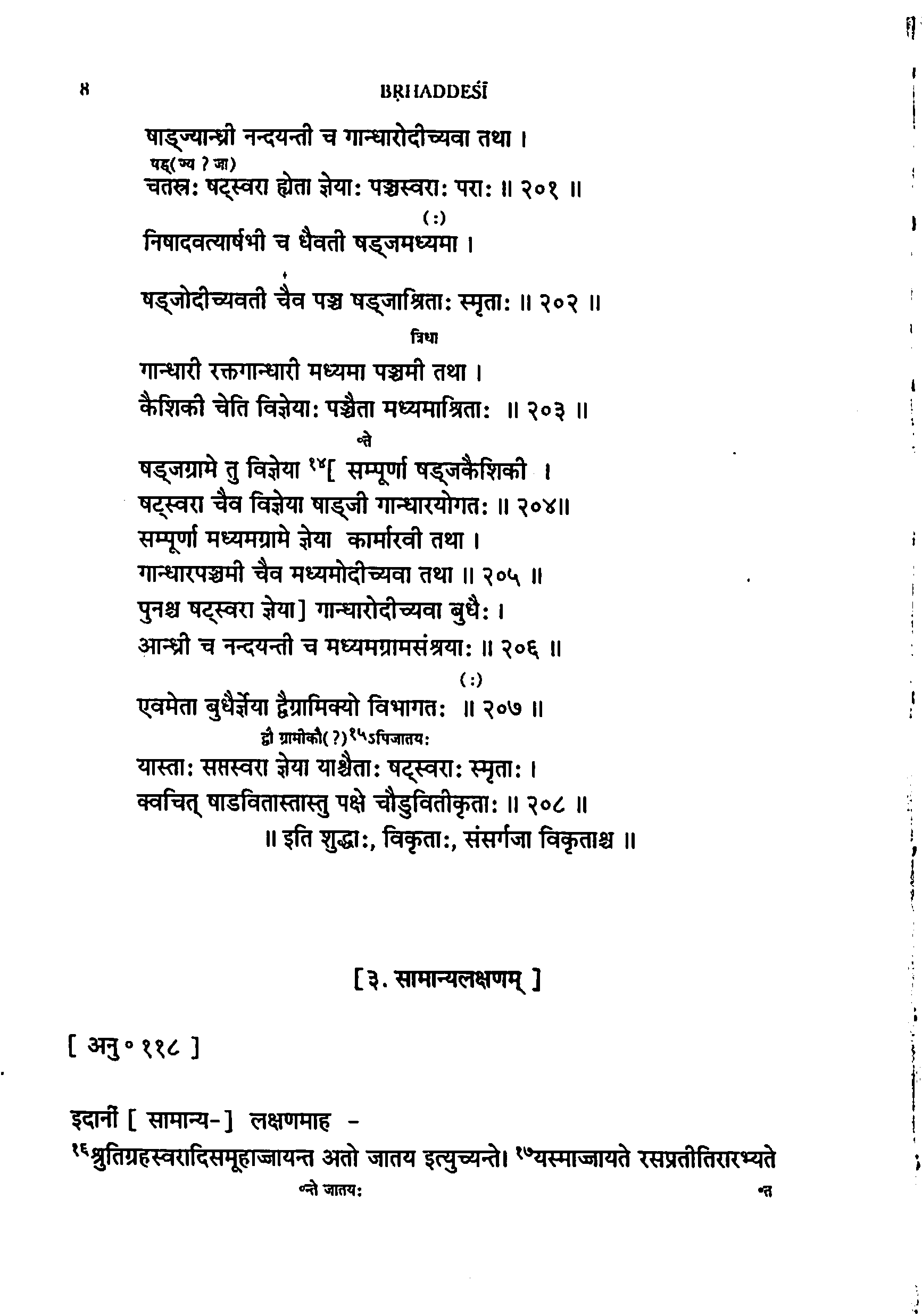
षाड्ज्यान्ध्रीपह्(ज्य ? जा) नन्दयन्तीगान्धारोदीच्यवा तथा।
चतेस्रः षट्स्वरा होता ज्ञेयाः पञ्चस्वराः पराः ॥२०१॥ निषादवत्यार्षभी च धैवती षड्जमध्यमा षड्जोदीच्यवती चैव पञ्च षड्जाश्रिता:त्रिधा स्मृता:4 ॥२०२॥6 गान्धारी रक्तगान्धारी मध्यमा पञ्चमी तथा । कैशिकी चेति विज्ञेया: पञ्जैता मध्यमाश्रिता:5 ॥२०३॥ षड्जग्रामे तु विज्ञेया १४[ सम्पूर्णा षड्जकैशिकी9 षट्स्वरा चैव विज्ञेया षाड्जी गान्धारयोगत:10 ॥२०४॥ सम्पूर्णा मध्यमग्रामे ज्ञेया कार्मारवी तथा11 गान्धारपञ्चमी चैव मध्यमोदीच्यवा तथा ॥२०५॥87
पुनश्च षट्स्वरा ज्ञेया] गान्धारोदीच्यवा बुधै:।
आन्ध्री च नन्दयन्ती च मध्यमग्रामसंश्रया: ॥२०६॥ (:) एवमेता बुधैर्ज्ञेया द्वैग्रामिक्यो विभागत: ॥२०७॥15 द्वी ग्रामीकौ(?)१५ऽपिजातय: यास्ता: सप्तस्वरा ज्ञेया याश्चेता: षट्स्वरा: स्मृता: । क्वचित् षाडवितास्तास्तु12 पक्षे चौडुवितीकृता13॥२०८॥
॥ इति शुद्धाः, विकृताः, संसर्गजा विकृताश्च ॥
इदानीं [ सामान्य-] लक्षणमाह - १६श्रुतिग्रहस्वरादिसमूहाज्जायन्त<b>न्ते जातय:</b> अतो जातय इत्युच्यन्ते1१७यस्माज्जायते रसप्रतीतिरारभ्यतेन्त
English — Sharma (translation)
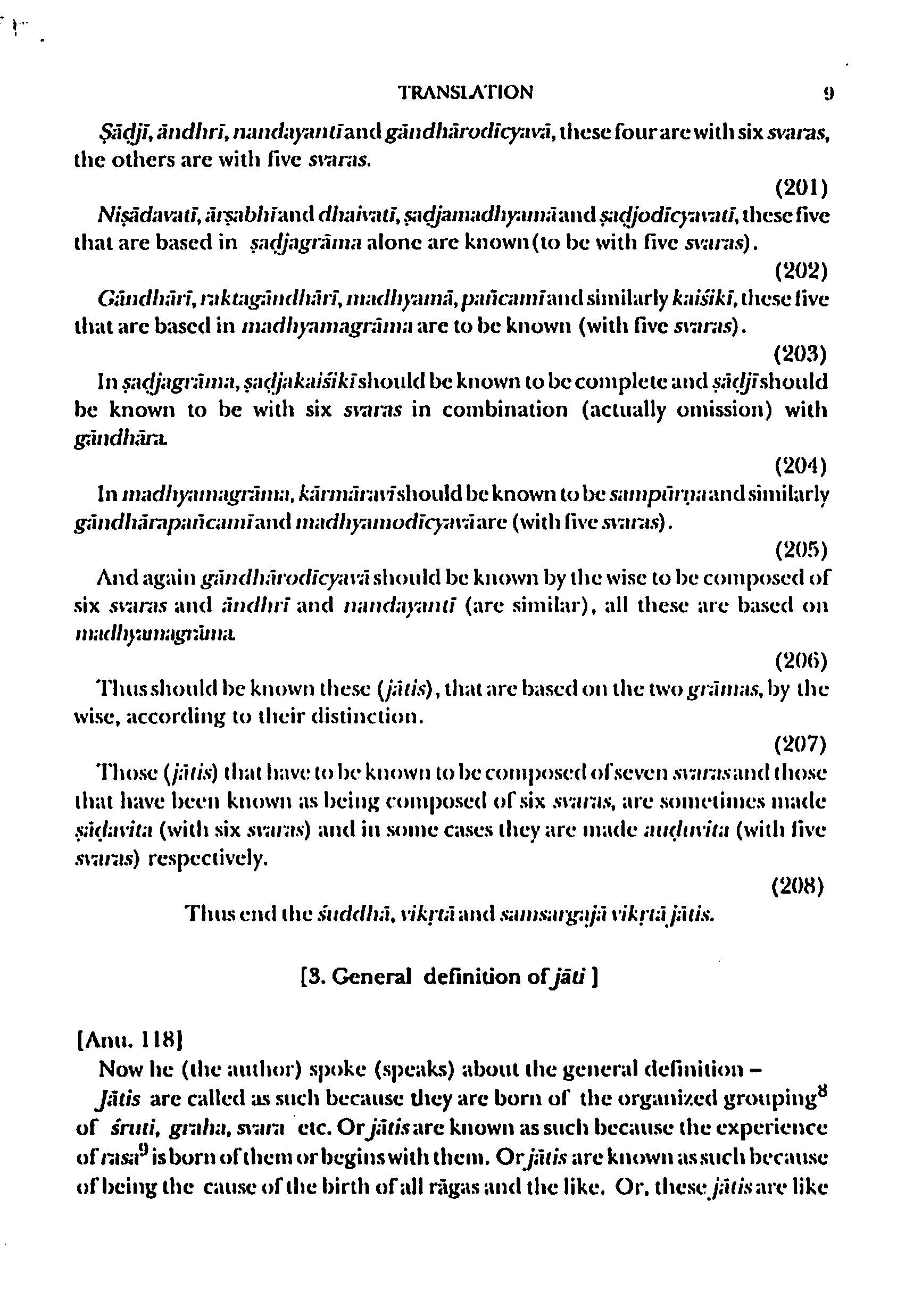
Şādjī, āndhrī, nandayantī and gāndhārodīcyavā, these four are with six svaras2, the others are with five svaras.
(201)
Niṣādavatī, ārṣabhī and dhaivatī, ṣadjamadhyamā and ṣadjodīcyavatī, these five that are based in sadjagrāma alone are known (to be with five svaras).4
(202)
Gändhārī, raktagāndhārī, madhyamā, pañcamī and similarly kaiśikī, these five that are based in madhyamagrāma5 are to be known (with five svaras).
(203)
In şadjagrāma, şadjakaišikī should be known to be complete9 and şādjī should be known to be with six svaras in combination (actually omission) with gāndhāra.
(204)
In madhyamagrāma, kārmāravī should be known to be sampūrņa and similarly gāndhārapañcamī and madhyamodīcyavā are (with five svaras).7
(205)
And again gāndhārodīcyavā should be known by the wise to be composed of six svaras and andhri and nandayanti (are similar), all these are based on madhyunagriina.
(206)
Thus should be known these (j\bar{a}tis), that are based on the two gr\bar{a}mas, by the wise, according to their distinction.
(207)
Those (jātis) that have to be known to be composed of seven svaras and those that have been known as being composed of six svaras, are sometimes made ṣāḍavita (with six svaras)12 and in some cases they are made auḍuvita (with five svaras) respectively.
(208)
Thus end the śuddhā, vikṛtā and samsargajā vikṛtā jātis. [3. General definition of jāti]14
[Anu. 118]
Now he (the author) spoke (speaks) about the general definition - Jātis are called as such because they are born of the organized grouping8 of sruti, graha, svara etc.1 Or jātis are known as such because the experience of rasa9 is born of them or begins with them. Or jātis are known as such because of being the cause of the birth of all ragas and the like. Or, these jatis are like
1.[definition] Jātis are born of (generated from) the organized grouping of śruti, graha, svara and similar elementsश्रुतिग्रहस्वरादिसमूहाज?्ज?ायन्त अतो ज?ातय इत्युच्यन्ते
2.[enumeration] Śādjī, āndhrī, nandayantī and gāndhārodīcyavā are four jātis with six svarasषाड्ज?्यान्ध्री नन्दयन्तीगान्धारोदीच्यवा तथा। पह्(ज?्य ? ज?ा) चतेस्रः षट्स्वरा होता
3.[enumeration] Gāndhārodīcyavā is one of four jātis with six svaras and also known as six-svara jāti based on madhyamagrāmaषाड्ज?्यान्ध्री नन्दयन्तीगान्धारोदीच्यवा तथा। पह्(ज?्य ? ज?ा) चतेस्रः षट्स्वरा होता
4.[enumeration] Niṣādavatī and ārṣabhī are among five jātis based in śadjagrāma with five svarasनिषादवत्यार्षभी च धैवती षड्जमध्यमाषड्ज?ोदीच्यवती चैव पञ्च षड्ज?ाश्रिताः स्मृताः
5.[enumeration] Raktagāndhārī is one of five jātis based in madhyamagrāmaगान्धारी रक्तगान्धारी मध्यमा पञ्चमी तथा । कैशिकी चेति विज?्ञेयाः पञ्ज?ैता मध्यमाश्रिताः
6.[enumeration] Ṣadjamadhyamā is one of five jātis based in śadjagrāma with five svarasनिषादवत्यार्षभी च धैवती षड्जमध्यमाषड्ज?ोदीच्यवती चैव पञ्च षड्ज?ाश्रिताः स्मृताः ॥ २०२ ॥
7.[enumeration] Gāndhārapañcamī is a five-svara jāti based in madhyamagrāmaसम्पूर्णा मध्यमग्रामे ज?्ञेया कार्मारवी तथा। गान्धारपञ्चमी चैव मध्यमोदीच्यवा तथा ॥ २०५ ॥
8.[enumeration] Madhyamodīcyavā is a five-svara jāti in madhyamagrāmaसम्पूर्णा मध्यमग्रामे ज?्ञेया कार्मारवी तथा। गान्धारपञ्चमी चैव मध्यमोदीच्यवा तथा ॥ २०५ ॥
9.[structural] Śadjakaishikī is complete (sampūrṇa) in śadjagrāmaषड्जग्रामे तु विज?्ञेया १४[ सम्पूर्णा षड्जकैशिकी
10.[structural] Śadjakaishikī is complete in śadjagrāma and śādjī has six svaras in combination with gāndhāraषड्जग्रामे तु विज?्ञेया १४[ सम्पूर्णा षड्जकैशिकी । षट्स्वरा चैव विज?्ञेया षाड्ज?ी गान्धारयोगतः
11.[structural] Kārmāravī is sampūrṇa (complete) in madhyamagrāmaसम्पूर्णा मध्यमग्रामे ज?्ञेया कार्मारवी तथा
12.[structural] Seven-svara jātis are sometimes made ṣāḍavita (with six svaras)यास्ताः सप्तस्वरा ज?्ञेया याश्चेताः षट्स्वराः स्मृताः । क्वचित् षाडवितास्तास्तु
13.[structural] Six-svara jātis are sometimes made auḍuvita (with five svaras) in some casesक्वचित् षाडवितास्तास्तु पक्षे चौडुवितीकृता
14.[structural] The section on general definition of jāti follows the classification by grāmas[३. सामान्यलक्षणम् ]
15.[structural] Jātis are classified and distinguished according to their basis in two grāmasएवमेता बुधैर्ज?्ञेया द्वैग्रामिक्यो विभागतः ॥ २०७ ॥
1.[definition]Jātis are born of (generated from) the organized grouping of śruti, graha, svara and similar elementsJātis are called as such because they are born of the organized grouping of sruti, graha, svara etc.
2.[enumeration]Śādjī, āndhrī, nandayantī and gāndhārodīcyavā are four jātis with six svarasŞādjī, āndhrī, nandayantī and gāndhārodīcyavā, these four are with six svaras
3.[enumeration]Gāndhārodīcyavā is one of four jātis with six svaras and also known as six-svara jāti based on madhyamagrāmaŞādjī, āndhrī, nandayantī and gāndhārodīcyavā, these four are with six svaras
4.[enumeration]Niṣādavatī and ārṣabhī are among five jātis based in śadjagrāma with five svarasNiṣādavatī, ārṣabhī and dhaivatī, ṣadjamadhyamā and ṣadjodīcyavatī, these five that are based in sadjagrāma alone are known (to be with five svaras).
5.[enumeration]Raktagāndhārī is one of five jātis based in madhyamagrāmaGändhārī, raktagāndhārī, madhyamā, pañcamī and similarly kaiśikī, these five that are based in madhyamagrāma
6.[enumeration]Ṣadjamadhyamā is one of five jātis based in śadjagrāma with five svarasNiṣādavatī, ārṣabhī and dhaivatī, ṣadjamadhyamā and ṣadjodīcyavatī, these five that are based in sadjagrāma alone are known (to be with five svaras).
7.[enumeration]Gāndhārapañcamī is a five-svara jāti based in madhyamagrāmaIn madhyamagrāma, kārmāravī should be known to be sampūrņa and similarly gāndhārapañcamī and madhyamodīcyavā are (with five svaras).
8.[enumeration]Madhyamodīcyavā is a five-svara jāti in madhyamagrāmaIn madhyamagrāma, kārmāravī should be known to be sampūrņa and similarly gāndhārapañcamī and madhyamodīcyavā are (with five svaras).
9.[structural]Śadjakaishikī is complete (sampūrṇa) in śadjagrāmaIn şadjagrāma, şadjakaišikī should be known to be complete
10.[structural]Śadjakaishikī is complete in śadjagrāma and śādjī has six svaras in combination with gāndhāraIn şadjagrāma, şadjakaišikī should be known to be complete and şādjī should be known to be with six svaras in combination (actually omission) with gāndhāra.
11.[structural]Kārmāravī is sampūrṇa (complete) in madhyamagrāmaIn madhyamagrāma, kārmāravī should be known to be sampūrņa
12.[structural]Seven-svara jātis are sometimes made ṣāḍavita (with six svaras)Those (jātis) that have to be known to be composed of seven svaras and those that have been known as being composed of six svaras, are sometimes made ṣāḍavita (with six svaras)
13.[structural]Six-svara jātis are sometimes made auḍuvita (with five svaras) in some casesare sometimes made ṣāḍavita (with six svaras) and in some cases they are made auḍuvita (with five svaras) respectively.
14.[structural]The section on general definition of jāti follows the classification by grāmas[3. General definition of jāti]
15.[structural]Jātis are classified and distinguished according to their basis in two grāmasThus should be known these (jar{a}tis), that are based on the two grar{a}mas, by the wise, according to their distinction.