Source scans · vol_II_p057
recto · open full
scan recto
verso · open full
scan verso
Bṛhaddeśī · Volume II
pp. 96–97folio 057
Devanāgarī (Bṛhaddeśī)
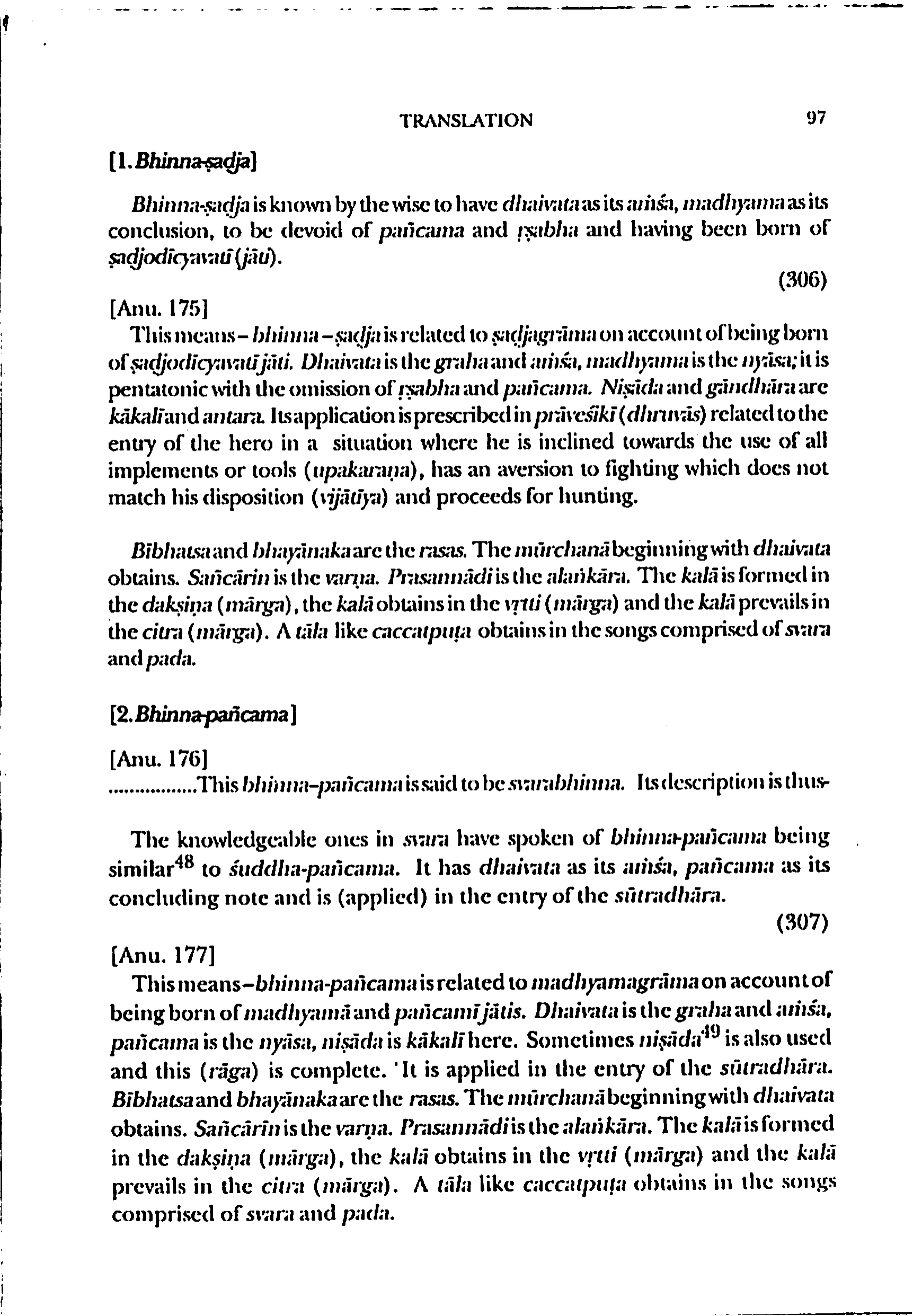
[१. भिन्नषड्जः]
धैवतांशो मध्यमान्तः पञ्चमर्षभवर्जितः1110
षड्जोदीच्यवतीजातो(जमा?जातो) भिन्नषड्ज: स्मृतो बुधै:2 ॥३०६॥
[अनुः १७५]
[अस्यार्थ:-]भित्रषड्जः पड्जग्रामसम्बन्धः षड्जोदीच्यवतीजातेर्जातत्वात्। धैवतो
ग्रहोंऽशश्च। मध्यमो न्यासः। ऋषभपञ्चमहीन औडुवितः। निषादगान्धारौ काकल्यन्तरौ14
सर्वोपकरणप्रवृत्तस्य ५७विजातीयाद्रणान्निवृत्तस्यविजातीयो निरणानियृत्तस्य (?) मृगयायां प्रवृत्तस्य नायकस्य प्रावेशिकीषु अस्य
विनियोगः। ५८बीभत्सभयानकौ रसौ । धैवतादिमूर्छना12 । सञ्चारी वर्णः । ५९प्रसन्नादिरलङ्कारः4
दक्षिणे कला, वृत्तौ कला, चित्रे कला । स्वरपदगीते चच्चत्पुटादिताल:5
[२.भिन्नपञ्चमः]
[अन्॰ १७६]
.असौ भिन्नपञ्चम: स्वरभिन्नोऽभिधीयते1 । लक्षणं च तद्यथा -
शुद्धपञ्चमवत् प्रोक्तः स्वरज्ञैर्भित्रपञ्चमः8स्वर(न्ग्रे?ई)
धैवतांशः पञ्चमान्तः सूत्रधारप्रवेशने13 ॥३०७॥
[अन्॰ १७७]
अस्यार्थः - भित्रपञ्चमोभिन्न(सं?)पञ्चमो मध्यमग्रामसम्बन्धः,ण्या(म) मध्यमापञ्चमीजात्योर्जातत्वात्96पङ्जोदीच्यवतीजाते: मध्यमा(पञ्चमी) जात्यो॰ ग्रहोंऽशश्च धैवतः। पञ्चमो न्यासः। निषादोऽत्र काकली15। क्वचित्रिषादस्यापि प्रयोगः । सम्पूर्ण-
श्चायम् । सूत्रधारप्रवेशेऽस्य विनियोगः7 । बीभत्सभयानकौ रसौ । धैवतादिमूर्छना । सञ्चारी वर्णः ।
प्रसन्नादिख्लङ्कारः । दक्षिणे कला, वृत्तौ कला, चित्रे कला, स्वरपदगीते चच्चत्पुटादितालः ।
English — Sharma (translation)
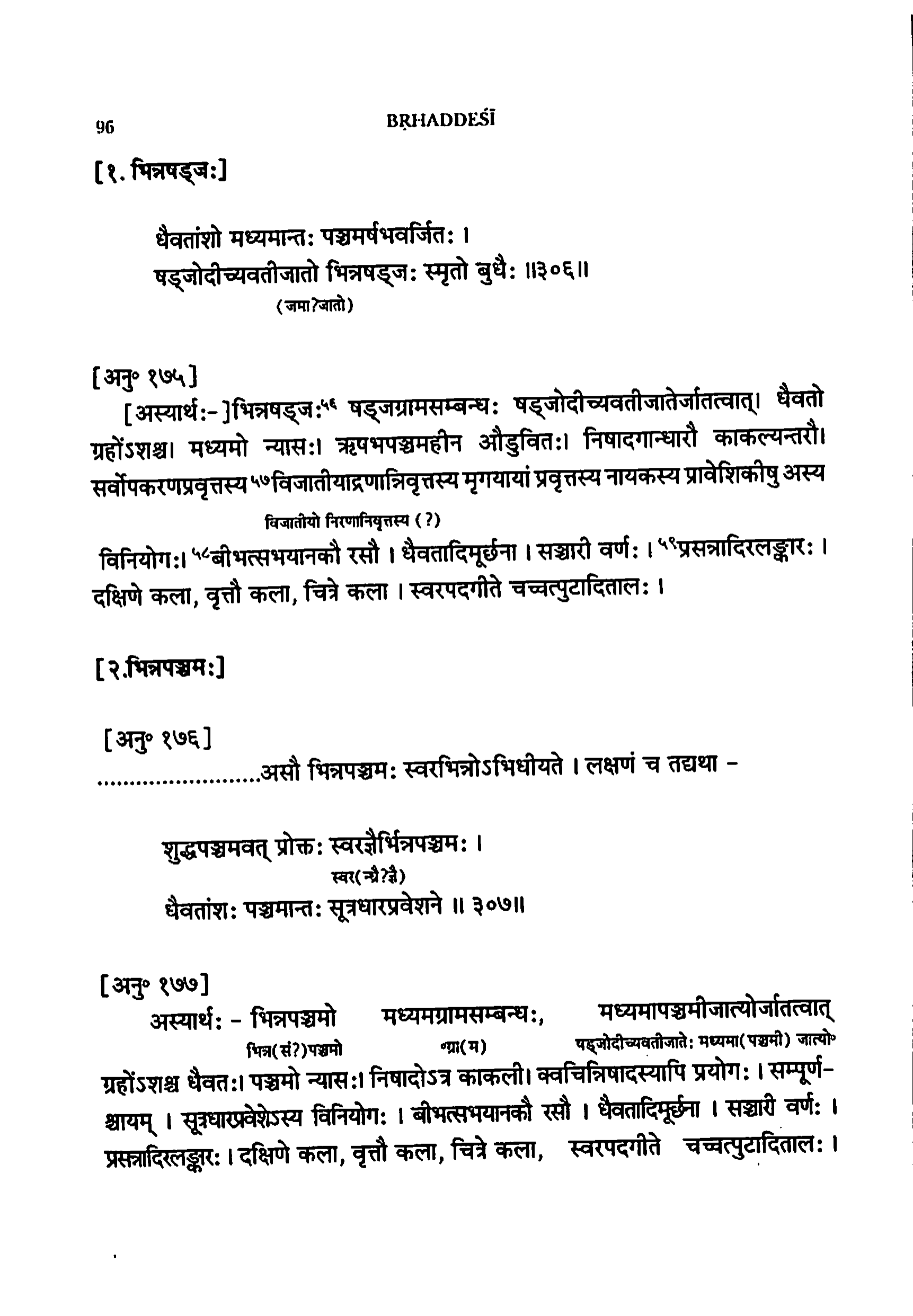
Bhinna-ṣadja is known by the wise to have dhaivata as its amśa, madhyama as its conclusion, to be devoid of pañcama and ṛṣabha11 and having been born of ṣadjodicyavati (jāti).
(306)
[Anu. 175]
This means – bhinna – şadja is related to şadjagrāma on account of being born of ṣadjodicyavatī jāti. Dhaivata is the graha and aniśa, madhyama is the nyāsa; it is pentatonic with the omission of ṛṣabha and pañcama. Niṣāda and gāndhāra are kākalī and antara. Its application is prescribed in prāvešikī (dhruvās) related to the entry of the hero in a situation where he is inclined towards the use of all implements or tools (upakaraṇa), has an aversion to fighting which does not match his disposition (vijātīya) and proceeds for hunting. Bībhatsaand bhayānakaare the rasas. The mūrchanā beginning with dhaivata obtains12. Sañcārin is the varņa. Prasannādi is the alankāra. The kalā is formed in the dakṣiṇa (mārga), the kalā obtains in the vṛtti (mārga) and the kalā prevails in the citra (mārga). A tāla like caccatpuṭa obtains in the songs comprised of svara and pada.
[Anu. 176]
......This bhinna-pañcama is said to be svarabhinna.1 Its description is thus- The knowledgeable ones in svara have spoken of bhinna-pañcama being similar48 to śuddha-pañcama. It has dhaivata as its ainśa, pañcama as its concluding note and is (applied) in the entry of the sūtradhāra13.
(307)
[Anu. 177]
This means-bhinna-pañcama is related to madhyamagrāma on account of being born of madhyamā and pañcamī jātis6.9 Dhaivata is the graha and amśa, pañcama is the nyāsa, niṣāda is kākalī here. Sometimes niṣāda49 is also used and this (rāga) is complete. It is applied in the entry of the sūtradhāra.7 Bībhatsaand bhayānakaare the rasas. The mūrchanā beginning with dhaivata obtains. Sañcārīn is the varņa. Prasannādi is the alankāra. The kalā is formed in the dakṣiṇa (mārga), the kalā obtains in the vṛtti (mārga) and the kalā prevails in the citra (mārga). A tāla like caccatpuța obtains in the songs comprised of svara and pada.
1.[definition]Bhinna-pañcama is said to be svarabhinna (differentiated by note modification)भिन्नपञ्चमः स्वरभिन्नोऽभिधीयते
2.[relation]Bhinna-ṣaḍja is born from the jāti ṣadjodicyavatiषड्ज?ोदीच्यवतीज?ातो भिन्नषड्ज?: स्मृतो बुधैः
3.[relation]Bhinna-ṣaḍja is prescribed for application in prāvešikī (dhruvās) related to the hero's entry in specific dramatic situationsनायकस्य प्रावेशिकीषु अस्य विज?ातीयो निरणानियृत्तस्य (?) विनियोगः
4.[relation]Prasannādi is the alaṅkāra (embellishment) for bhinna-ṣaḍjaप्रसन्नादिरलङ्कारः
5.[relation]Caccatpuṭa is a type of tāla used in songs comprised of svara and pada for bhinna-ṣaḍjaस्वरपदगीते चच्चत्पुटादितालः
6.[relation]Bhinna-pañcama is related to madhyamagrāma by being born of madhyamā and pañcamī jātisभित्रपञ्चमो मध्यमग्रामसम्बन्धः, मध्यमापञ्चमीज?ात्योर्ज?ातत्वात्
7.[relation]Bhinna-pañcama is applied in the entry of the sūtradhāra (stage manager/narrator)सूत्रधारप्रवेशेऽस्य विनियोगः
8.[relation]The knowledgeable ones have spoken of bhinna-pañcama as being similar to śuddha-pañcamaशुद्धपञ्चमवत् प्रोक्तः स्वरज्ञैर्भित्रपञ्चमः
9.[relation]Bhinna-pañcama is born from madhyamā and pañcamī jātisमध्यमापञ्चमीज?ात्योर्ज?ातत्वात्
10.[structural]Bhinna-ṣaḍja has dhaivata as its aṁśa (characteristic note) and madhyama as its nyāsa (concluding note)धैवतांशो मध्यमान्तः पञ्चमर्षभवर्ज?ितः
11.[structural]Bhinna-ṣaḍja is devoid of pañcama and ṛṣabhaपञ्चमर्षभवर्ज?ितः
12.[structural]For bhinna-ṣaḍja, the mūrchanā begins with dhaivataधैवतादिमूर्छना
13.[structural]Bhinna-pañcama has dhaivata as its aṁśa (characteristic note) and pañcama as its nyāsa (concluding note)धैवतांशः पञ्चमान्तः सूत्रधारप्रवेशने
14.[structural]Niṣāda and gāndhāra are kākalī (secondary notes) in bhinna-ṣaḍjaनिषादगान्धारौ काकल्यन्तरौ
15.[structural]In bhinna-pañcama, niṣāda is kākalīनिषादोऽत्र काकली
1.[definition] Bhinna-pañcama is said to be svarabhinna (differentiated by note modification)This bhinna-pañcama is said to be svarabhinna.
4.[relation] Prasannādi is the alaṅkāra (embellishment) for bhinna-ṣaḍjaPrasannādi is the alaṅkāra
5.[relation] Caccatpuṭa is a type of tāla used in songs comprised of svara and pada for bhinna-ṣaḍjaA tāla like caccatpuṭa obtains in the songs comprised of svara and pada
6.[relation] Bhinna-pañcama is related to madhyamagrāma by being born of madhyamā and pañcamī jātisbhinna-pañcama is related to madhyamagrāma on account of being born of madhyamā and pañcamī jātis
7.[relation] Bhinna-pañcama is applied in the entry of the sūtradhāra (stage manager/narrator)It is applied in the entry of the sūtradhāra.
9.[relation] Bhinna-pañcama is born from madhyamā and pañcamī jātisbhinna-pañcama is related to madhyamagrāma on account of being born of madhyamā and pañcamī jātis.
10.[structural] Bhinna-ṣaḍja has dhaivata as its aṁśa (characteristic note) and madhyama as its nyāsa (concluding note)Bhinna-ṣaḍja is known by the wise to have dhaivata as its aṁśa, madhyama as its conclusion, to be devoid of pañcama and ṛṣabha
11.[structural] Bhinna-ṣaḍja is devoid of pañcama and ṛṣabhato be devoid of pañcama and ṛṣabha
12.[structural] For bhinna-ṣaḍja, the mūrchanā begins with dhaivataThe mūrchanā beginning with dhaivata obtains
13.[structural] Bhinna-pañcama has dhaivata as its aṁśa (characteristic note) and pañcama as its nyāsa (concluding note)It has dhaivata as its ainśa, pañcama as its concluding note and is (applied) in the entry of the sūtradhāra
14.[structural] Niṣāda and gāndhāra are kākalī (secondary notes) in bhinna-ṣaḍjaNiṣāda and gāndhāra are kākalī and antara
15.[structural] In bhinna-pañcama, niṣāda is kākalīniṣāda is kākalī here