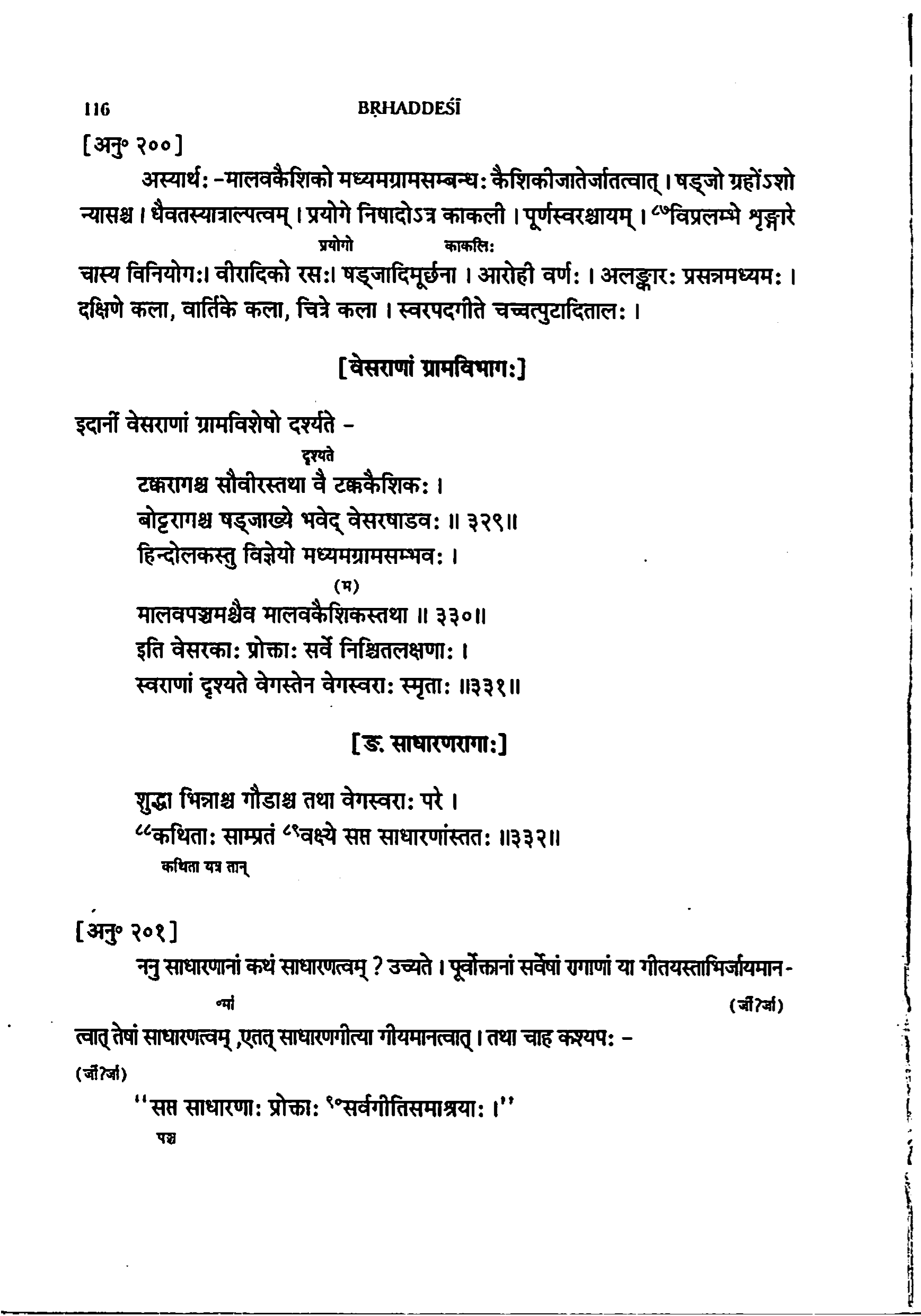
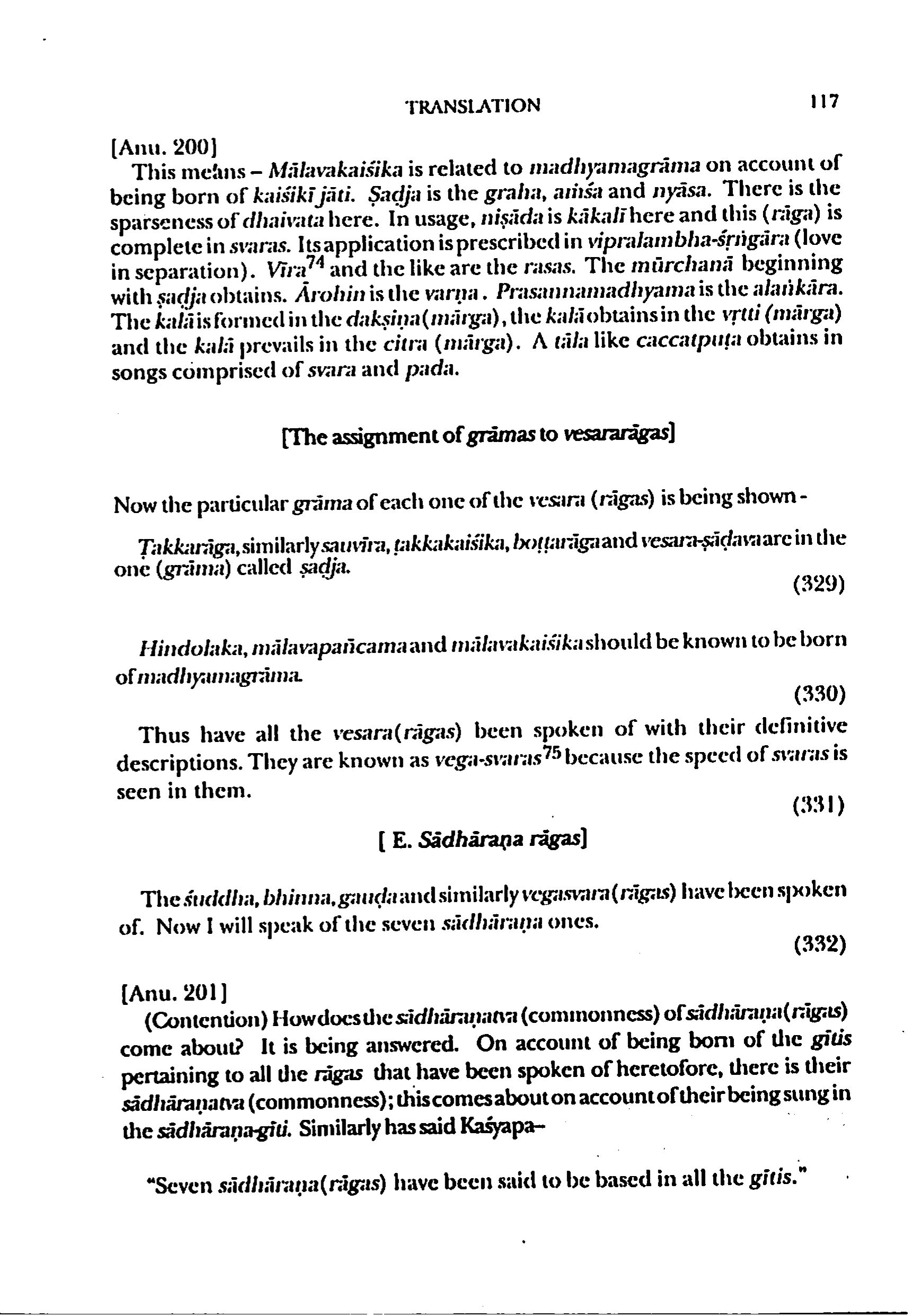
[Anu. 200]
This means -
Mālavakaišika is related to madhyamagrāma on account of
being born of kaiśikī jāti.75 Ṣadja is the graha, aniśa and nyāsa. There is the
sparseness of
dhaivata here. In usage, niṣāda is kākalī here and this (rāga) is
complete in svaras.
Its application is prescribed in vipralambha-śṛṅgāra (love in separation).9 Vīra
74 and the like are the rasas. The
mūrchanā beginning
with sadja obtains. Ārohin is the varņa.
Prasannamadhyama is the
alankāra.
The kalāis formed in the
dakṣiṇa (mārga), the kalā obtains in the
vṛtti (mārga)
and the kalā prevails in the
citra (mārga). A tāla like
caccatpuṭa obtains in
songs comprised of svara and pada.
[The assignment of gramas to vesararagas]
Now the particular grāma of each one of the vesara (rāgas) is being shown -
Ţakkarāga, similarly sauvīra, ṭakkakaišika, boṭṭarāga and vesara-ṣāḍava are in the
one (grāma) called sadja.
(329)
Hindolaka, mālavapancama and mālavakaišika should be known to be born
of madhyamagrāma.8
(330)64
Thus have all the vesara(rāgas) been spoken of with their definitive
descriptions. They are known as
vega-svaras 75 because the speed of svaras is
seen in them.
(331)
The śuddha, bhinna, gauḍa and similarly vegasvara (rāgas) have been spoken
of. Now I will speak of the seven
sādhāraņa ones.
(332)
[Anu. 201]
(Contention) Howdoes the sidhāraṇatva (commonness) of
sādhāraṇa (rāgas)
come about? It is being answered.
On account of being born of the gitis
pertaining to all the ragas that have been spoken of heretofore, there is their
sādhāraņatva (commonness); this comes about on account of their being sung in
the sādhāraṇa-giti.3 Similarly has said
Kasyapa-
"
Seven sādhāraņa (rāgas) have been said to be based in all the gitis.1"